The New York State Nurses Association (NYSNA) announced on 12/1 that nurses within the Mount Sinai hospital system began striking at 6 a.m., while nurses at other hospitals started picketing and setting up protest barriers at 7 a.m.
The strike involves approximately 15,000 nurses and impacts three major New York healthcare systems: Montefiore, New York-Presbyterian, and Mount Sinai. Local media describes this as the largest strike in New York's healthcare history, potentially lasting for weeks.
NYSNA president Nancy Hagans stated that "striking is the last resort," following stalled negotiations between the association and private hospitals. The organization argues that "greedy" management at wealthy private hospitals left nurses with no alternative.
Hagans reiterated key demands for nurses to return to work: a commitment from management to appropriate staffing levels and patient safety, increased protection for workers against workplace violence, guaranteed healthcare for frontline nurses, and higher wages.
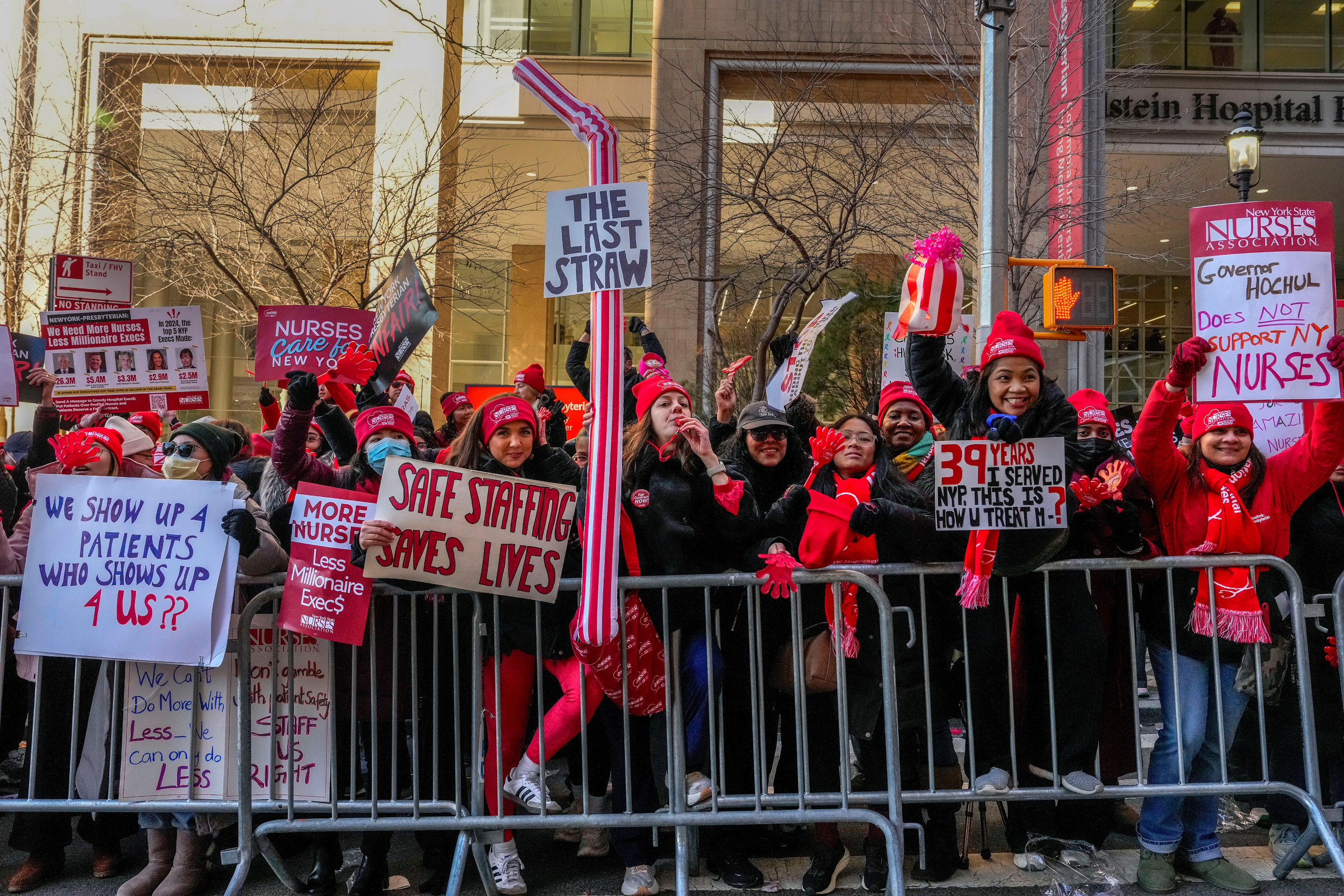 |
Nurses protest outside New York-Presbyterian hospital on 12/1. Photo: AP
NYSNA presented these demands as nurses increasingly face workplace violence. According to a 2023 survey by the National Nurses United (NNU), over 80% of nurses reported experiencing or witnessing violence within one year, perpetrated by patients or their families.
New York governor Kathy Hochul declared a state of emergency, citing the risk the strike poses to essential care for thousands of patients. She urged both parties to reach an agreement quickly and stated that state health officials have been dispatched to hospitals to monitor patient care quality.
New York mayor Zohran Mamdani appeared with protestors, siding with the nurses on the strike's first day. He called for both sides to return to the negotiating table and bargain in good faith to reach an agreement that "ensures nurses working in the city can afford to live in this city."
New York attorney general Letitia James emphasized that nurses "are only asking for the basics," noting that healthcare workers are being stretched to their limits.
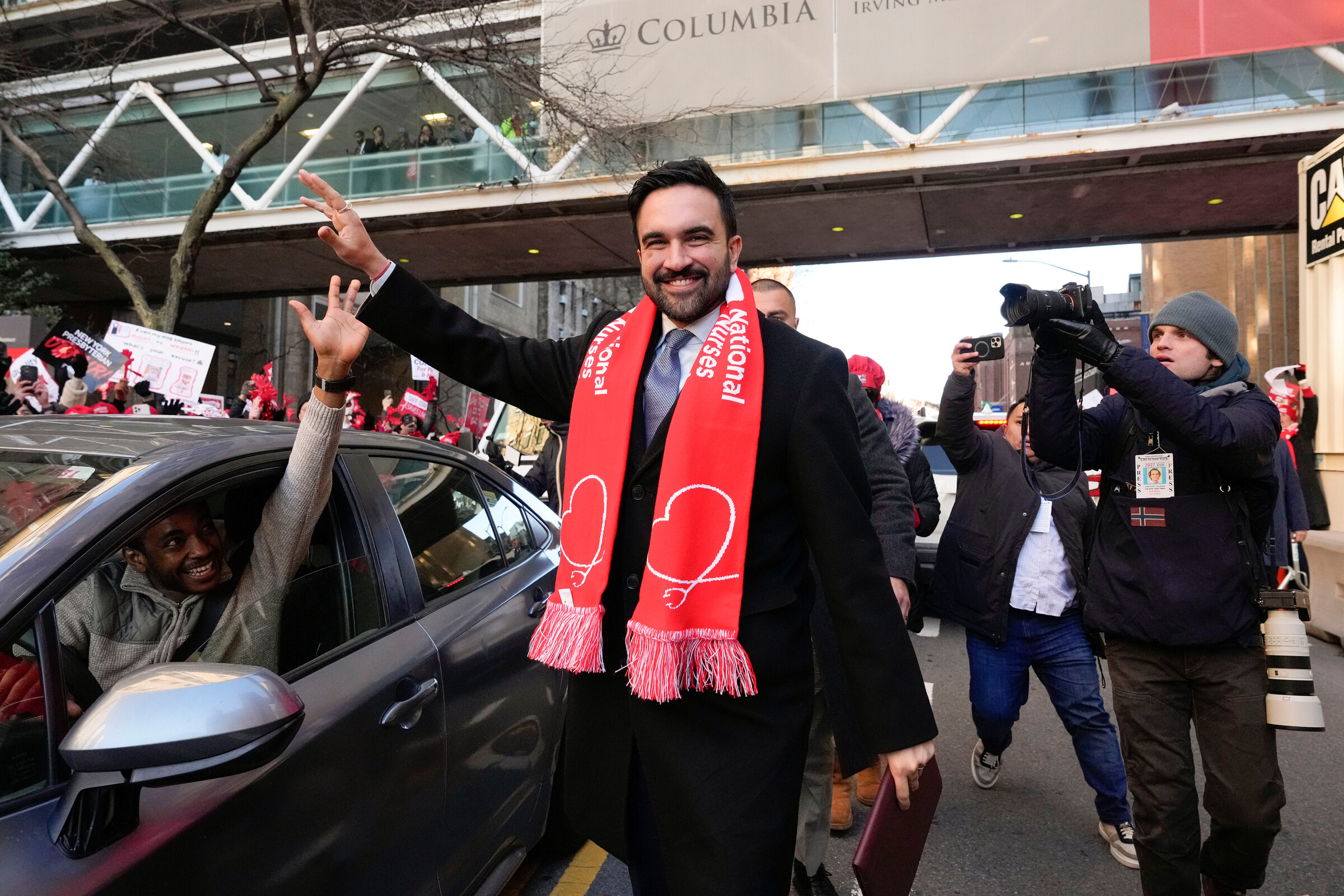 |
New York mayor Zohran Mamdani meets protesting nurses outside New York-Presbyterian hospital on 12/1. Photo: AP
Meanwhile, hospital representatives rejected many union demands, calling them extreme and a risk to operations. The three hospital systems opposing NYSNA are committed to providing "safe and continuous" medical care to patients, regardless of how long the nurses' strike lasts.
Joe Solmonese, senior vice president for strategic communications at the Montefiore hospital system, stated that meeting NYSNA's demands could result in total costs of up to USD 3.6 billion, including a nearly 40% wage increase and some controversial proposals like "not firing nurses even if they are found to be working after using drugs or alcohol."
New York-Presbyterian criticized NYSNA for "encouraging nurses to abandon patients." The organization expressed readiness to continue negotiating a "fair and reasonable contract" with nurses based on mutual good faith. It also noted having proposed significant wage increases, improved employer-paid benefits, and new workplace safety measures.
Some smaller hospitals in and near New York city recently reached agreements with NYSNA to avoid disruption. Union organizations also reassured patients that they need not worry about "crossing picket lines to enter hospitals."