"We are trying to track down and control the rogue elephant that has caused multiple fatalities", Aditya Narayan, an Indian forestry official, stated on 13/1.
Officials in Jharkhand state, eastern India, reported that the aggressive, one-tusked male elephant, believed to be separated from its herd, has killed 22 people in villages across West Singhbhum district since the beginning of the year.
The attacks primarily occurred at night as the elephant entered small villages. The first victim was a 35-year-old man in Bandijhari village, who died on 1/1. Subsequent victims include a couple, their two small children, and a forestry official.
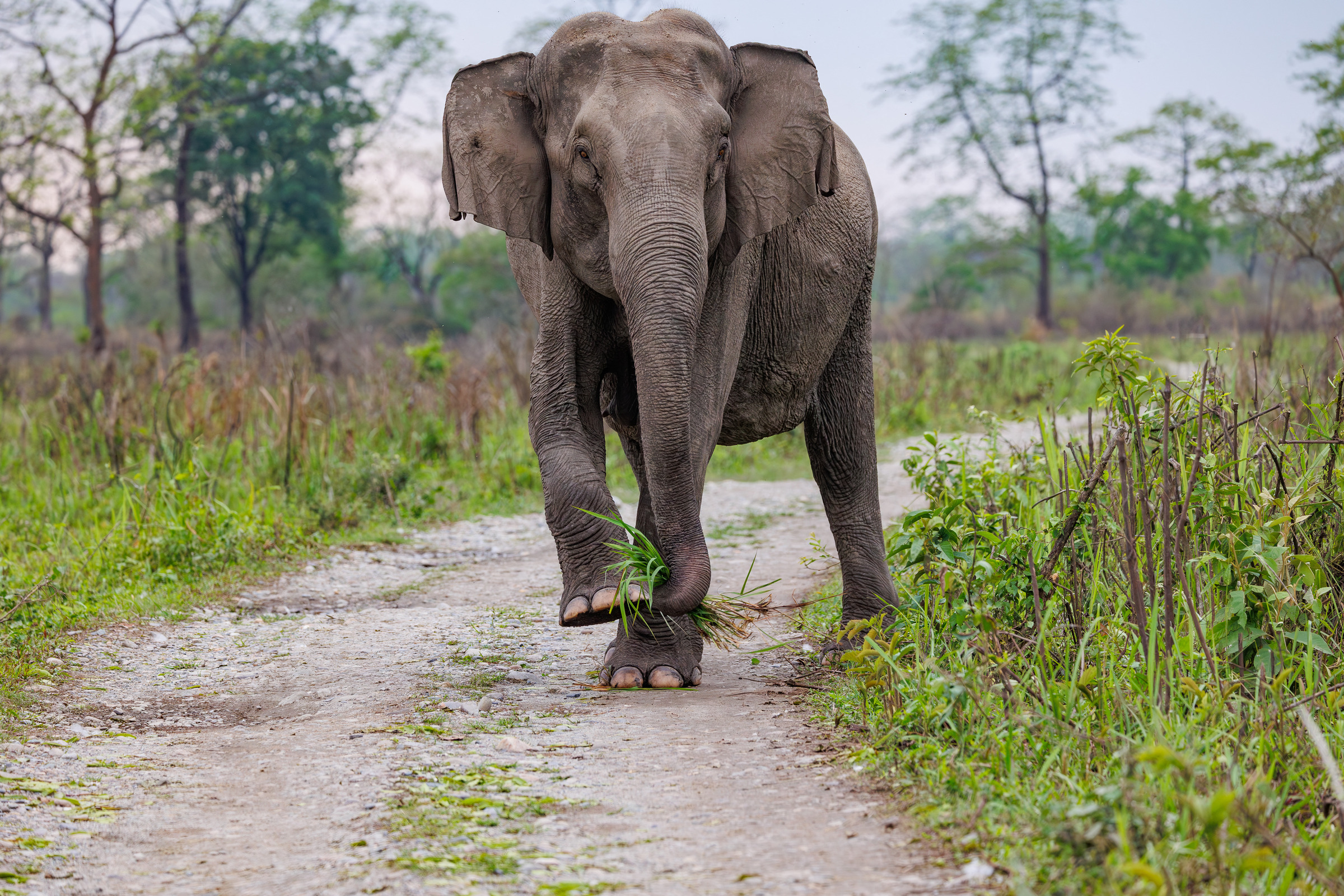 |
An elephant searches for food in Manas National Park, India, 2024. Photo: *AFP* |
The elephant was last seen on 9/1, and local authorities have not found any trace of it despite deploying numerous patrol teams. The administration has raised the alert level in the area, urging residents to stay away from Chaibasa district, where the elephant was last sighted, to avoid entering dense forests, and not to leave their homes at night.
Forest rangers have attempted to sedate the elephant three times without success. Wildlife experts from three other states have arrived in Jharkhand to provide assistance.
The elephant travels nearly 30 km daily on an unpredictable route, with an unstable temperament, complicating tracking efforts. "We are maintaining a high level of vigilance and will continue our efforts to sedate it", Narayan stated.
This incident occurs amid increasing human-elephant conflict in India, attributed to deforestation, scarcity of food and water resources, and the expansion of residential areas into traditional elephant migration corridors.
Over 2,800 people have died in elephant attacks across India over the past five years. In some states like Andhra Pradesh, authorities have implemented AI-powered early warning systems in villages to detect elephant incursions and protect residents.
By Duc Trung (According to *Guardian*, *Times of India*, *Hindustan Times*)