Exit poll results from the Mecklenburg-Vorpommern state election on 20/9 showed the Christian Democratic Union (CDU) garnered only about 5% of voter support. In contrast, the far-right Alternative for Germany (AfD) led with 37,9% of the votes.
The center-left Social Democratic Party (SPD) closely trailed the far-right party with 35,7% of the votes.
In the Berlin local elections, the left-wing Die Linke party also led with about 25,6%, while the CDU achieved 19,7%, according to poll results. AfD ranked third with approximately 16,3% of the votes.
These results in two states placed political pressure on the CDU, coming just two weeks after AfD secured a historic victory in Sachsen-Anhalt with about 44% of the votes.
"We cannot evade the results in Mecklenburg-Vorpommern. This is a disaster", Chancellor Friedrich Merz said in Berlin after the poll results were announced, stating that the CDU was "crushed" in the race against the SPD and AfD.
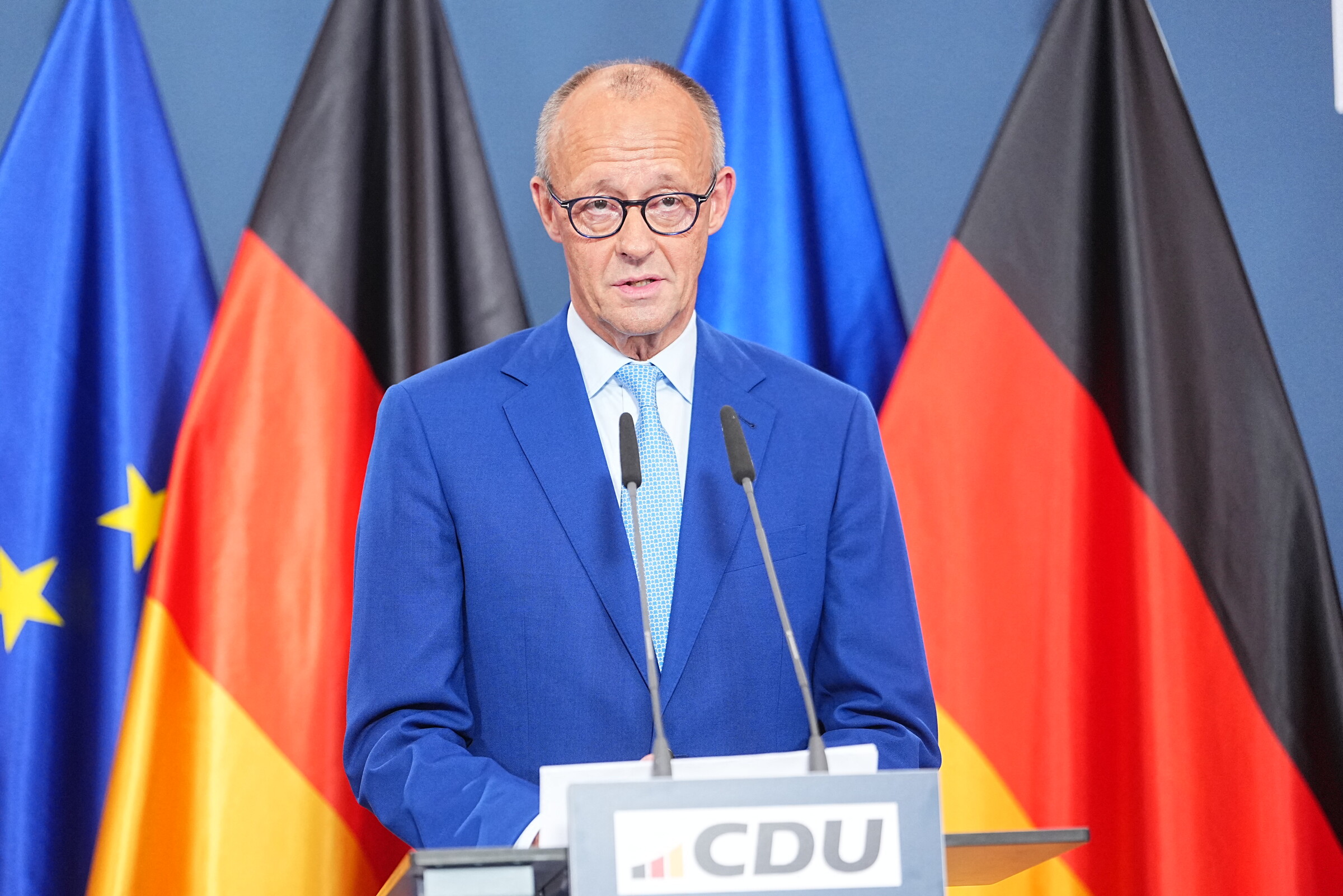 |
German chancellor Friedrich Merz, also chairman of the CDU party, speaks in Berlin on 20/9 about the election results in two states. Photo: AFP |
Chancellor Merz assessed that Germany needs reforms to address economic issues and deepening divisions. He stressed that the current situation demands greater "courage, determination, and patience" from the CDU.
"I will demonstrate that as CDU chairman and, above all, as chancellor of the country", he said at the party's emergency meeting.
In Mecklenburg-Vorpommern, analysts believe that AfD effectively capitalized on public dissatisfaction with the economy and social issues during its campaign. The party also proposed: mass deportation of undocumented immigrants, ending military aid to Ukraine, and strengthening relations with Russia.
AfD leader Alice Weidel was enthusiastic about the results, declaring that the party had become the "strongest force" in politics and entered the societal "mainstream". "We have surpassed the CDU. The German people clearly want a change in policy", Weidel said, while also declaring that AfD had become "the new representative for the German people".
ING economist Carsten Brzeski commented that the results indicate an increasingly fragmented German political landscape, with a populist right-wing party winning in one state and a left-wing party winning in another. He suggested that years of economic stagnation contributed to this situation.
Thanh Danh (According to AFP, CNN)