The US Department of State issued a travel advisory on 19/9, warning of a potential for rapid escalation in the military conflict in the Middle East. US citizens in the region should seriously reconsider their plans to travel to or transit through the area. Those who proceed with their journeys are advised to monitor information regarding airport and airline operations.
A series of US embassies also issued similar security warnings, citing "the potential for unforeseen escalatory developments" and noting that "Iran-backed Houthi forces have engaged in hostile actions against Saudi Arabia, including civilian airports."
Saudi Arabia had earlier confirmed that Houthi forces in Yemen attacked Riyadh with ballistic missiles, causing a fire at the international airport in the country's capital.
Brigadier General Yahya Saree, the Houthi military spokesperson, claimed the group used a large number of ballistic missiles, cruise missiles, and unmanned aerial vehicles to attack Riyadh and facilities of the Saudi Aramco oil company in Yanbu.
This marks the first time Houthi forces have targeted Riyadh since clashes between Saudi Arabia and the group resumed in July. The armed group had previously declared a naval blockade against Saudi Arabia and targeted its vessels in the Red Sea.
Last week, Houthi forces took control of the Red Sea coastal area and several strategic islands blocking the Bab el-Mandeb Strait. They also attacked oil and gas infrastructure in Saudi Arabia. The United Nations reported on 18/9 that renewed fighting in Yemen had displaced over 112,000 people, with nearly 3,000 crossing the sea to Djibouti.
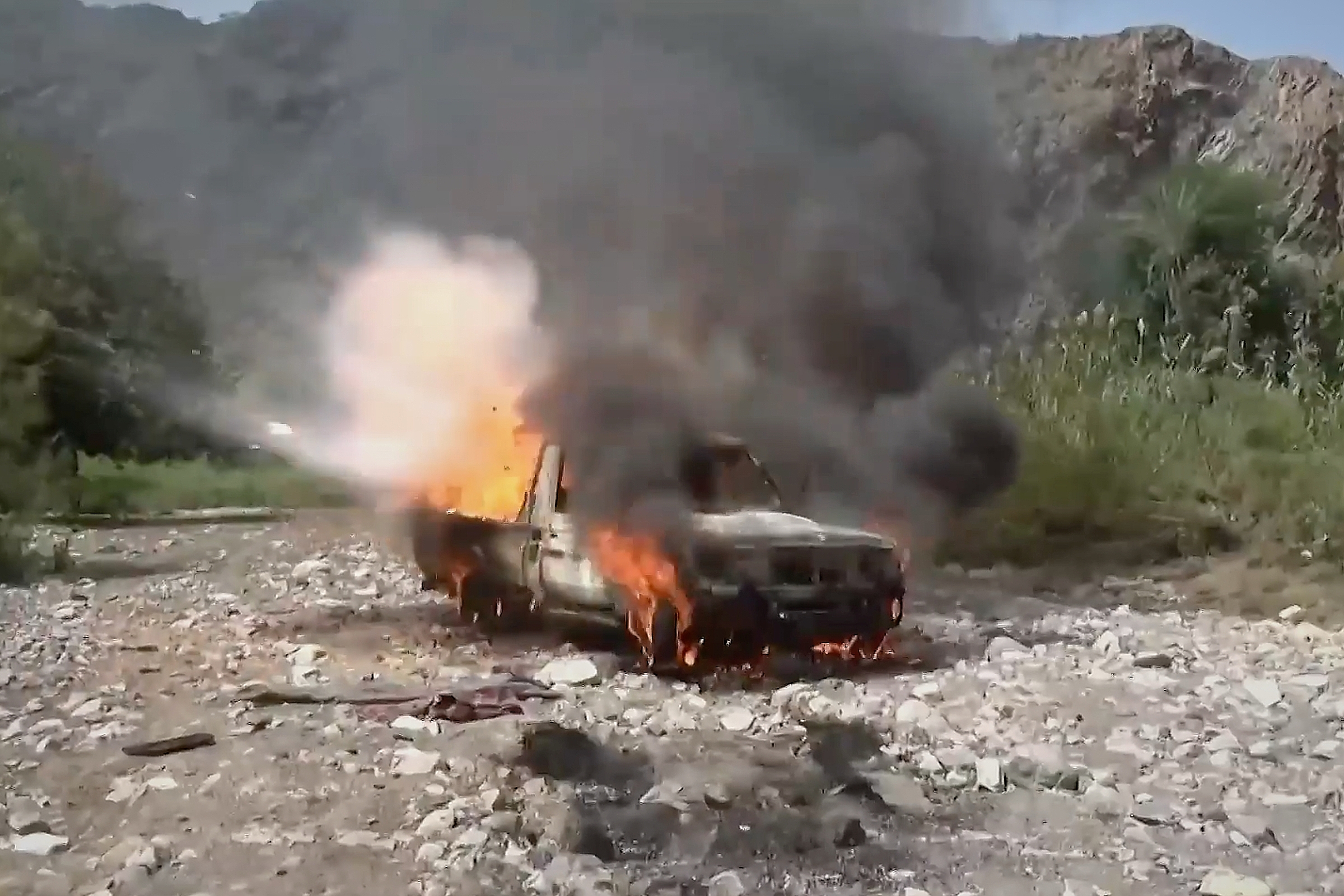 |
A vehicle ablaze after a Houthi attack on Saudi-backed forces in southern Yemen on 12/9. *Photo: Houthi Media Office* |
Following the travel advisory from the US Department of State, President Donald Trump returned to Washington D.C. on the evening of 19/9, cutting short his weekend retreat at Camp David, Maryland. The White House has not stated the reason for the President's early return, a day ahead of schedule.
Trump had previously made it clear that his current "red line" was direct US involvement in airstrikes against Houthi forces. To date, US military support has been limited to providing intelligence and targeting data to Saudi Arabia.
Multiple sources from the Gulf and the US suggest that Trump's messages are signaling to Iran that he is not prepared to fully back regional allies.
"The Houthi have called us and said they don't want to fight. They don't want us to attack or get further involved. They are also allowing most ships to pass. There's only one nation they're not too happy with, and we'll resolve that issue," Trump told reporters in Ireland last weekend, referring to Saudi Arabia.
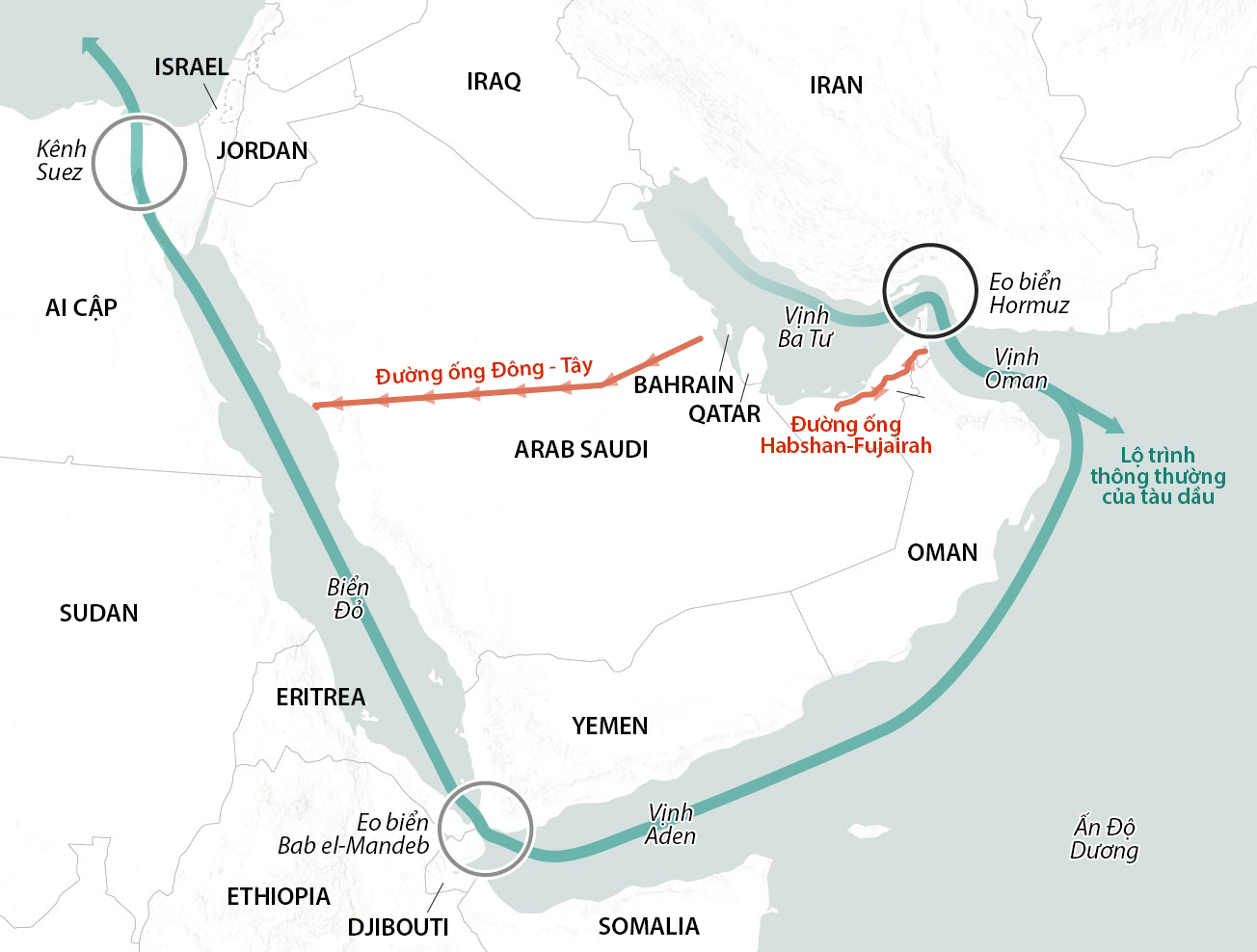 |
Location of the Bab el-Mandeb Strait. *Graphic: CNN* |
By Huyen Le (According to AFP, CNN, Hill)