According to US military operational protocol, the chain of command runs directly from the President to the Secretary of Defense, then down to regional commanders, while the Vice President does not hold direct operational command. Typically, the White House receives battlefield assessments only after they have been compiled and filtered into a unified view by the Joint Chiefs of Staff and the Pentagon.
However, US Vice President JD Vance made calls to directly hear individual commanders' assessments before these opinions were consolidated into a general evaluation, according to sources cited by the NYTimes.
Those Vance called included Admiral Brad Cooper, Commander of US Central Command; Admiral Samuel Paparo, Commander of US Indo-Pacific Command; and commanders in Europe and Asia – regions that had missile stockpiles reduced to support operations in the Middle East. Beyond military commanders, Vance also frequently contacted CIA analysts directly to scrutinize raw intelligence data on Iran.
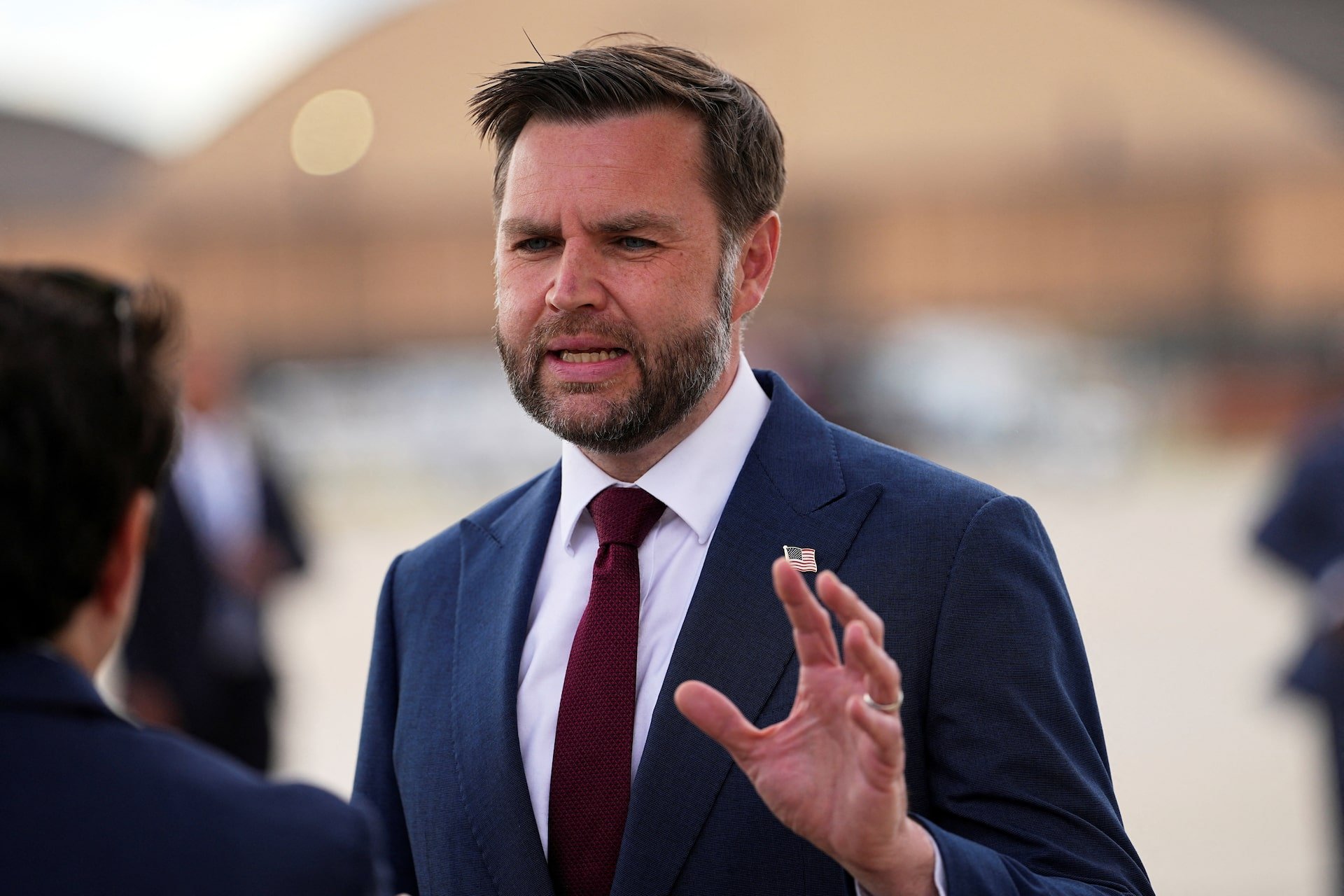 |
US Vice President JD Vance speaks to the media upon arrival at Andrews Air Force Base, Maryland, on 28/5. Photo: Reuters
During these discussions, battlefield commanders openly shared insights into the actual situation and the operation's challenges. A frequently discussed topic was the pressure on equipment stockpiles, as supplies of patriot air defense missiles and long-range munitions like atacms and prsm significantly decreased after transfers to the Middle East. This reduction could impact readiness in other regions, such as Asia and Europe. Commanders also noted that the Iranian military demonstrates flexible adaptation on the ground, and Tehran shows a determination to maintain its stance despite airstrikes, suggesting the conflict may not conclude as quickly as initially hoped.
Sources familiar with the matter indicated that President Trump, Secretary of Defense Pete Hegseth, Chairman of the US Joint Chiefs of Staff Dan Caine, Secretary of State and National Security Advisor Marco Rubio, and White House Chief of Staff Susie Wiles were all aware of Vance's calls.
On 12/9, Vice President Vance confirmed making the calls. "It is entirely normal for a Vice President to call admirals and generals to learn about US foreign policy; of course, I did so," Vance stated.
According to those who spoke with Vance, after several discussions, the Vice President grew particularly concerned about the overall strategy and the operation's prospects for success. Vance then incorporated these assessments into private discussions with Trump and his close advisors.
Vance's opposition to the war was no secret within the White House. In the weeks leading up to 28/2, during meetings in the Oval Office and the Situation Room, he repeatedly argued against the operation, at times greatly irritating Trump, according to officials who discussed the matter with the President.
However, after Trump made his decision, Vance publicly defended the President's choice, even during intense television interviews.
The Vice President also became the face of peace efforts, leading a series of negotiations that resulted in a memorandum of understanding in June. However, the 60-day deadline specified in the document expired in August without any agreement being reached. The two sides appeared even further apart than when negotiations began.
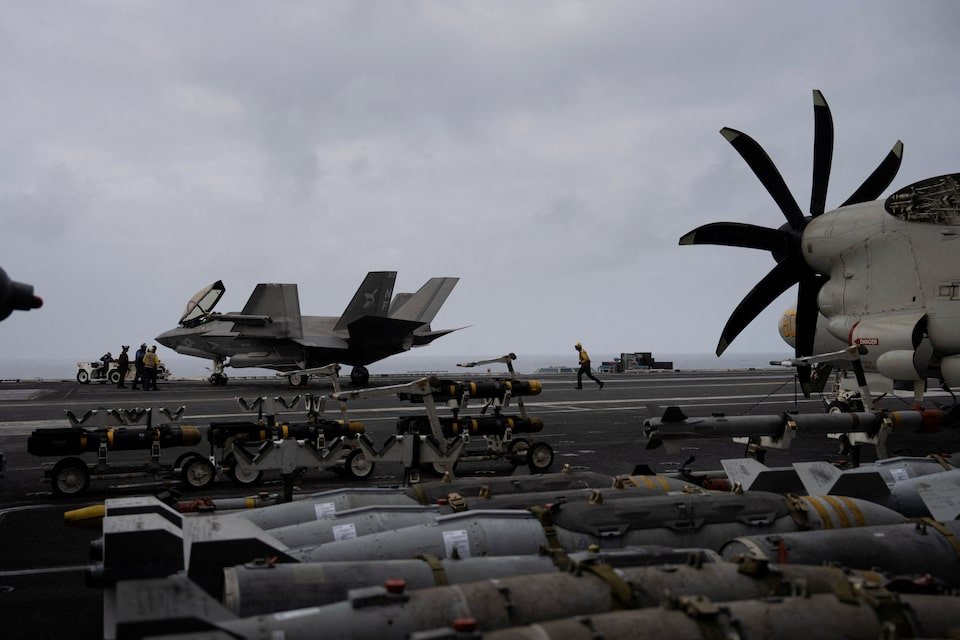 |
The aircraft carrier USS George Washington enforces the US naval blockade against Iran and escorts commercial vessels through the Strait of Hormuz on 11/9. Photo: Reuters
Vance is not the first Vice President to play an active role in national security matters. President Barack Obama chose Biden as his deputy partly due to Biden's foreign policy experience. Vice President Dick Cheney was also a highly influential figure in initiating and managing the wars in Afghanistan and Iraq under the George W. Bush administration.
Vance, who served in the Marine Corps during the Iraq War, told colleagues that he positioned himself as one of the President's key advisors on national security issues.
This direct approach to battlefield generals reveals a hallmark of JD Vance's management style: meticulous, favoring raw data, and a tendency to "delve into specifics." While President Donald Trump's decision-making often appears broad and intuitive, Vance personally tracks every detail regarding weapon stockpiles, maritime routes through the Strait of Hormuz, and intelligence information.
This personal hallmark could significantly shape his political standing within the White House and his future trajectory.
Hoang Lan (According to NYTimes, Hill)