Amid the throngs of people dressed in black bidding farewell to the late Supreme Leader Ali Khamenei in Tehran in early July, the chants were not solely directed at the deceased. When President Masoud Pezeshkian appeared at the funeral, a group of people chanted in unison, "death to the compromiser", viewing Iran's pursuit of negotiations with the US as "betrayal".
Foreign Minister Abbas Araghchi, an architect of the talks with the US, also had to leave the funeral after being criticized by the crowd and called a "traitor who sold out the country".
According to Arash Azizi, an expert on Iran in the US, these reactions highlight deepening rifts within Tehran, especially as Supreme Leader Mojtaba Khamenei has not appeared publicly since his succession.
"Leader Mojtaba's absence means Parliament Speaker Ghalibaf and his allies are effectively running the country. Therefore, the ultra-hardline faction has accused Ghalibaf and Pezeshkian of plotting a 'coup'," Azizi told CNN.
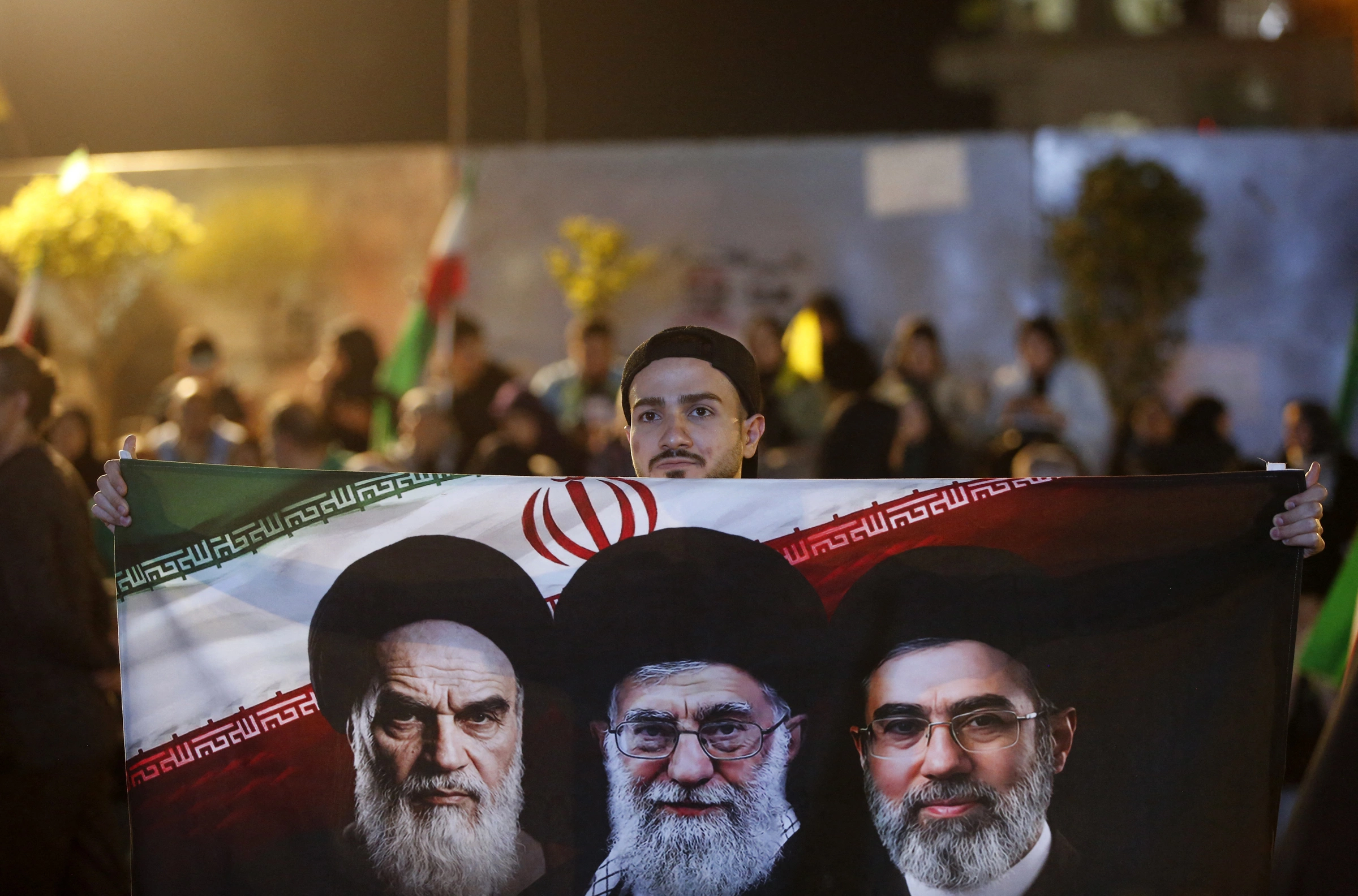 |
Protesters demonstrate against the US and Israel in Tehran on 30/5. Photo: AFP |
The "ultra-hardline" faction is part of Iran's conservative bloc, a force that has long dominated the country's political system. This faction includes members of parliament from Jebhe-ye Paydari (Endurance Front), a segment of the Islamic Revolutionary Guard Corps (IRGC), clerics, judicial officials, and a political network centered around former security official Saeed Jalili.
This faction often sees itself as the protector of the "revolutionary spirit" against the perceived threat of Western influence on Iran. They argue that negotiations are not merely diplomacy, but also ideological concessions. Regarding the nuclear issue, they advocate for Iran to maintain its deterrence capabilities.
After Tehran signed a memorandum with Washington in mid-June, the "ultra-hardline" faction shifted its criticism toward the group directly involved in the diplomatic process. Member of parliament Mahmoud Nabavian, a prominent figure of Jebhe-ye Paydari, repeatedly accused the Iranian government of deviating from the Supreme Leader's directives.
"Warning the people of Iran: Is a coup underway?", Nabavian wrote on social media platform X before the funeral of the late Leader Khamenei. Days later, he further declared that he would "raise the flag of revenge for the late leader and resolutely stand against the coup".
In May, Nabavian publicly criticized the negotiation process with the US over the nuclear program as a "strategic mistake" and called for Foreign Minister Araghchi to be removed from the negotiating team.
Some parliament members from the Paydari faction also argue that the negotiating team is trying to shift the focus of power from the Supreme Leader and parliament to the Supreme National Security Council, the body responsible for critical decisions regarding war and security.
"It is a political coup that they have planned and are gradually implementing", member of parliament Kamran Ghazanfari stated in early July.
Beyond political statements, some individuals associated with the conservative faction have openly threatened moderate senior leaders.
"Mr. President, if the Leader's conditions are not met, we will be the ones to hold a knife to your throat. We will make your life hell", Mohammad Ali Bakhshi, a religious official connected to Iran's security establishment, warned President Pezeshkian during a ceremony.
This statement drew widespread criticism, but there is no information indicating that Bakhshi faced any repercussions.
While the "ultra-hardline" faction intensified pressure on leaders pursuing diplomatic efforts, moderate voices within Iran's political system also began to publicly push back. Instead of merely defending the negotiation process, they argued that the hardline, conservative stance itself contributed to Iran missing numerous opportunities to de-escalate tensions with the West, leading to economic and military losses.
"Part of the reason for the two major wars against Iran is how extremists interpret religion. Now, they continue to distort religion to defeat diplomacy", Heshmatollah Falahatpisheh, former chairman of Iran's Parliamentary National Security Committee, wrote in Toseh Irani newspaper.
According to Falahatpisheh, those who opposed negotiations in the 2021-2022 period, promising a better deal, failed to deliver on that promise. The former official called for accountability for those who turned diplomatic opportunities into military conflicts.
Analyst Abdolrahman Fathollahi offered a different perspective in Iran's Shargh newspaper, focusing on the impact of the conflict on the populace. Fathollahi noted that after days of US airstrikes on ports, airports, and infrastructure in southern Iran, residents of the Persian Gulf provinces are directly bearing the brunt of casualties, power outages, water shortages, and transportation disruptions.
He criticized those in Tehran who call for continued war but do not face the consequences of those decisions.
"You cannot beat the drums of war from a safe place in the capital, then shift all the costs onto those living on the front lines", Fathollahi wrote. He believes that adjusting the approach and utilizing diplomatic channels "is essential to protect national interests and reduce the losses society is enduring".
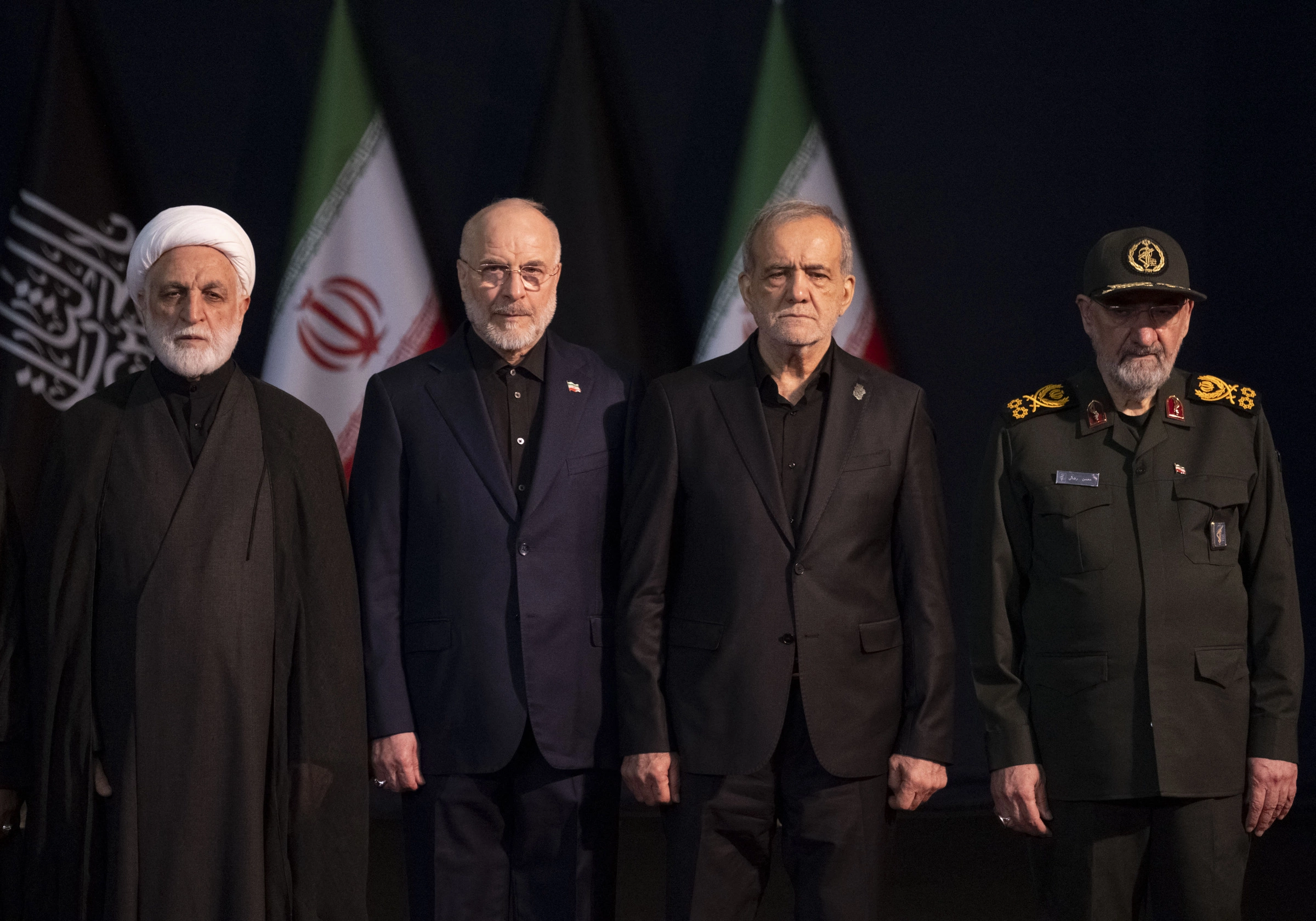 |
From left: Iran's Chief Justice Gholam-Hossein Mohseni-Eje'i, Parliament Speaker Mohammad Bagher Ghalibaf, President Masoud Pezeshkian, and former IRGC commander Mohsen Rezaee in Tehran on 3/7. Photo: AFP |
The "ultra-hardline" faction, though not large in number, holds many important positions in parliament, state media, and other powerful organizations. Jalili, former secretary of Iran's Supreme National Security Council, garnered over 13 million votes in the 2024 presidential election.
Despite their continuous pressure, the "ultra-hardline" faction also faces signs of diminishing influence within the establishment. On 14/7, member of parliament Nabavian and another parliament member with similar views were removed from the National Security Committee.
Expert Azizi suggested that this move reflects Parliament Speaker Ghalibaf's efforts to marginalize the hardline elements.
"We are seeing Ghalibaf trying to sideline these hardline elements. They are becoming a burden on the system and are increasingly openly in conflict, at a time when Iran already faces many instabilities", Azizi said.
The efforts of Iran's moderate faction also face external pressure, namely the expanding US airstrike campaign. In the early hours of 20/7, the US military bombed multiple targets in Iran's northern and central provinces, instead of focusing attacks solely on the area near the Strait of Hormuz as before.
This led President Pezeshkian to declare the start of a "total war" with the US, stating it was an "inevitable consequence" Iran must accept. Nevertheless, Iran has not abandoned diplomatic efforts, and exchanges with the US through intermediaries continue, according to Iranian Foreign Ministry spokesperson Esmaeil Baghaei.
By Nhu Tam (According to CNN, Iran International, Reuters)