Greenland's Premier Jens-Frederik Nielsen stated today that the territory is "under immense pressure" and is "trying to push back external pressure, while also seeking to reassure a fearful population". He made these remarks during a joint discussion with Danish Prime Minister Mette Frederiksen at Sciences Po University in Paris, France.
Premier Nielsen and Prime Minister Frederiksen are in France to meet President Emmanuel Macron. Their goal is to garner support from France in their efforts to counter US ambitions for control of Greenland.
This diplomatic event occurs as officials from Greenland, Denmark, and the US prepare for dialogue to find a solution to the ongoing crisis. Premier Nielsen affirmed his hope for some agreement but warned of "some red lines that cannot be crossed" at the negotiating table. The Greenlandic leader did not specify what those red lines are.
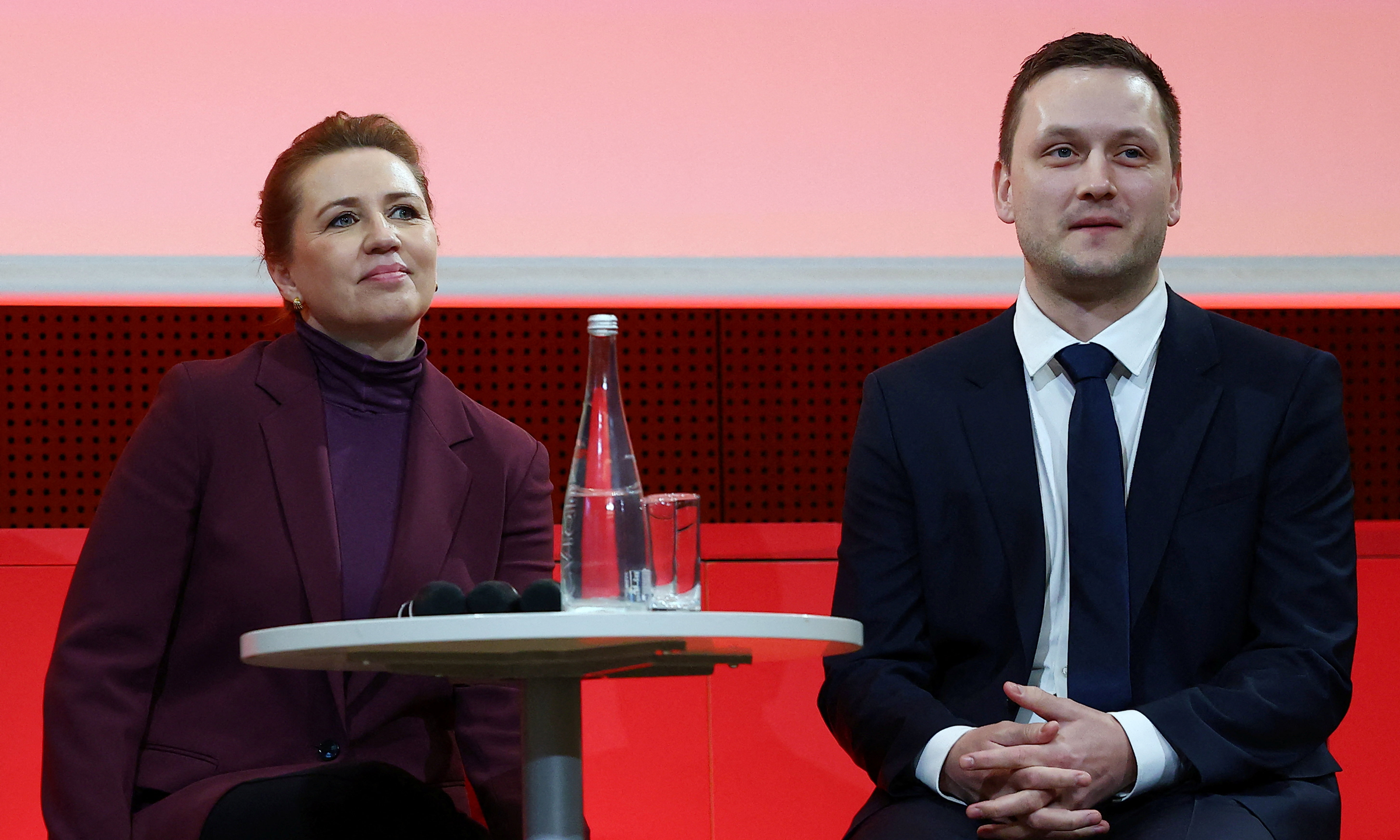 |
Prime Minister Frederiksen (left) and Premier Nielsen at Sciences Po University in Paris, France on 28/1. _Photo: Reuters_. |
He also emphasized the need to strengthen surveillance and security in the region "given Russia's actions".
At the event, Prime Minister Frederiksen observed that the crisis demonstrates most Europeans share a common view and are uniting against the stern demands from US President Donald Trump, especially in the face of tariff threats. She suggested the world order has changed forever, while also questioning what will happen in the US in the future. The Danish Prime Minister affirmed the importance of Europe becoming stronger and called for transatlantic unity, reasoning that "Russia does not want peace".
President Trump has repeatedly stated recently his desire to acquire Greenland, despite opposition from Denmark and European nations. He said that if the US does not control the island, Russia or China will. Russian officials have refuted the notion that Moscow and Beijing pose a threat to Greenland.
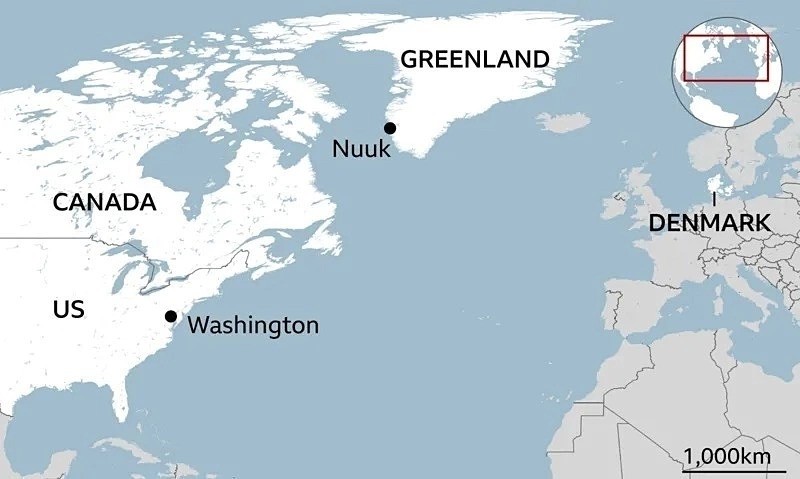 |
Location of Greenland. _Graphic: BBC_. |
US ambitions for control of Greenland are weakening transatlantic relations and prompting European nations to accelerate efforts to reduce dependence on Washington. This is occurring even after Trump withdrew tariff threats and ruled out the use of force to control the island.
By Pham Giang (Reuters)