The Japan Meteorological Agency (JMA) issued a special advisory today, stating that the probability of an "extremely powerful" earthquake occurring at this time is relatively high compared to normal periods.
A Japanese Cabinet Office official, speaking on television, urged residents to take disaster preparedness measures, emphasizing personal responsibility for safety, even as authorities remain uncertain about the likelihood of another strong earthquake.
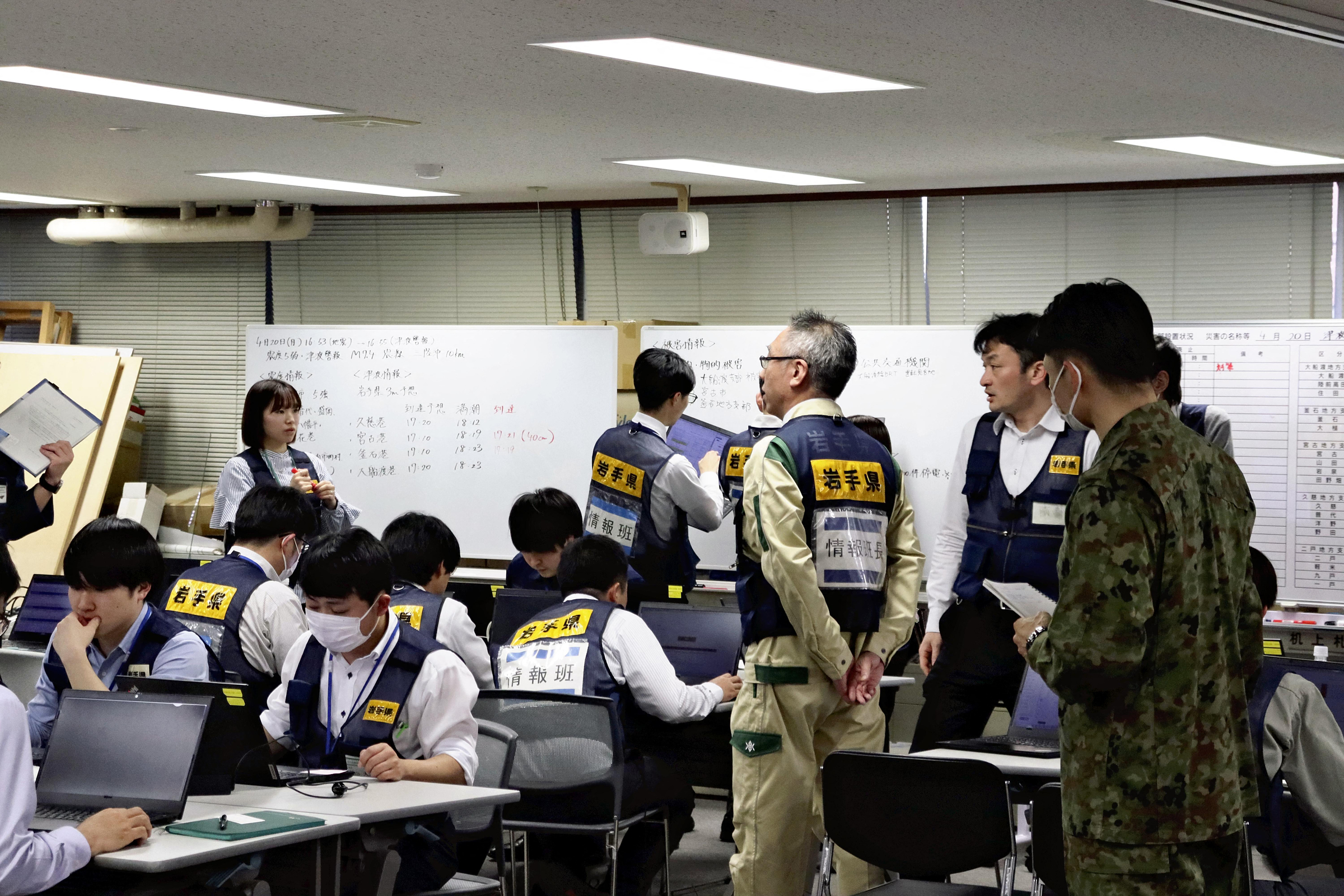 |
Staff gather information about the earthquake and tsunami at the Iwate provincial government building on 20/4. Photo: AFP
The warning applies to northern Japan, issued hours after an earthquake caused a 70-80 cm high tsunami in Iwate province and shook large buildings in Tokyo, hundreds of kilometers from the epicenter.
The earthquake was initially measured at magnitude 7,4, then revised to magnitude 7,5, and further increased to magnitude 7,7. A tsunami warning for waves up to 3 m high was issued for Iwate, Aomori, Miyagi, Fukushima provinces, and parts of Hokkaido.
Japanese Chief Cabinet Secretary Minoru Kihara stated there were no reports of serious casualties or significant damage following the event.
Japan is one of the most seismically active countries globally, situated in a highly complex tectonic region. Four of the dozens of major tectonic plates that form Earth's surface converge in Japan, leading to frequent earthquakes along the fault lines between these plates.
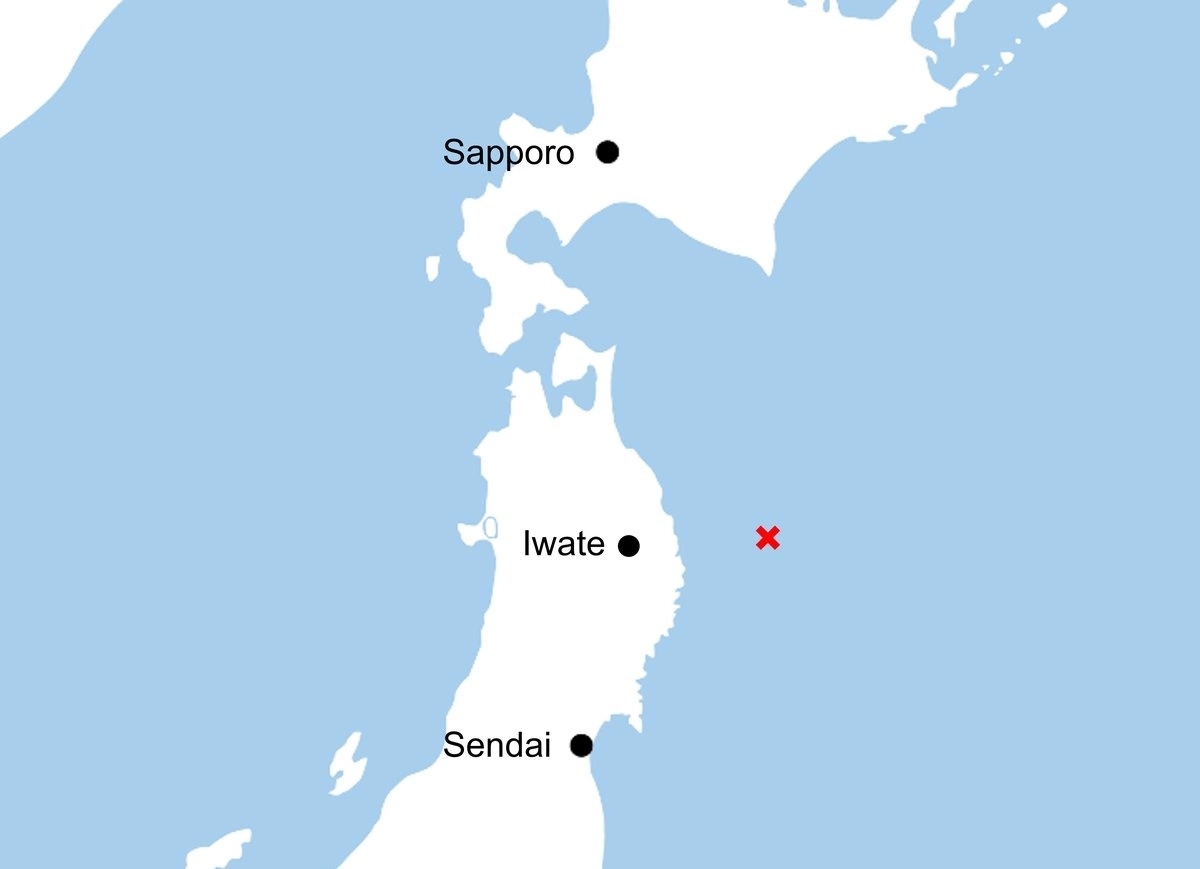 |
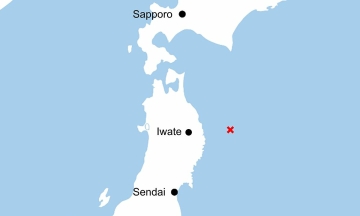
Epicenter location (red mark) off the coast of Honshu island on 20/4. Graphic: Japan News
Located in the Pacific Ring of Fire, Japan experiences about 20% of the world's recorded earthquakes of magnitude 6 or greater.
In 3/2011, a magnitude 9 earthquake off Japan's northeast coast triggered tsunamis up to 40 m high, which struck areas including Iwate province, sweeping 10 km inland and causing the disaster at the Fukushima Daiichi nuclear power plant.
By Ngoc Anh (According to AFP, Reuters)