While May heatwaves are not uncommon in India, this year's heatwave has been particularly intense, with daytime temperatures consistently ranging from 44-46 degrees Celsius over recent days.
Intense heat has gripped much of India, with temperatures soaring across northern, central, and eastern states. The Brahmapuri region of Vidarbha recorded a scorching 47,2 degrees Celsius, while thermal camera images from Delhi revealed surface temperatures exceeding 65 degrees Celsius in direct sunlight.
The India Meteorological Department issued a warning for regions including Delhi, Rajasthan, Uttar Pradesh, Madhya Pradesh, Haryana, Punjab, Telangana, and Odisha. On 25/5, the agency issued an extreme heatwave alert, with daily maximum temperatures expected to range from 43-45,5 degrees Celsius over the coming days.
The most vulnerable groups, including children, the elderly, construction workers, and farmers, are bearing the brunt of the heat. This situation has compelled authorities to establish cooling centers, providing drinking water and other basic necessities.
Hospitals are seeing a rise in cases of dehydration, exhaustion, and heatstroke. Officials reported on 24/5 that at least 16 people have died from heatstroke in southern India so far this summer.
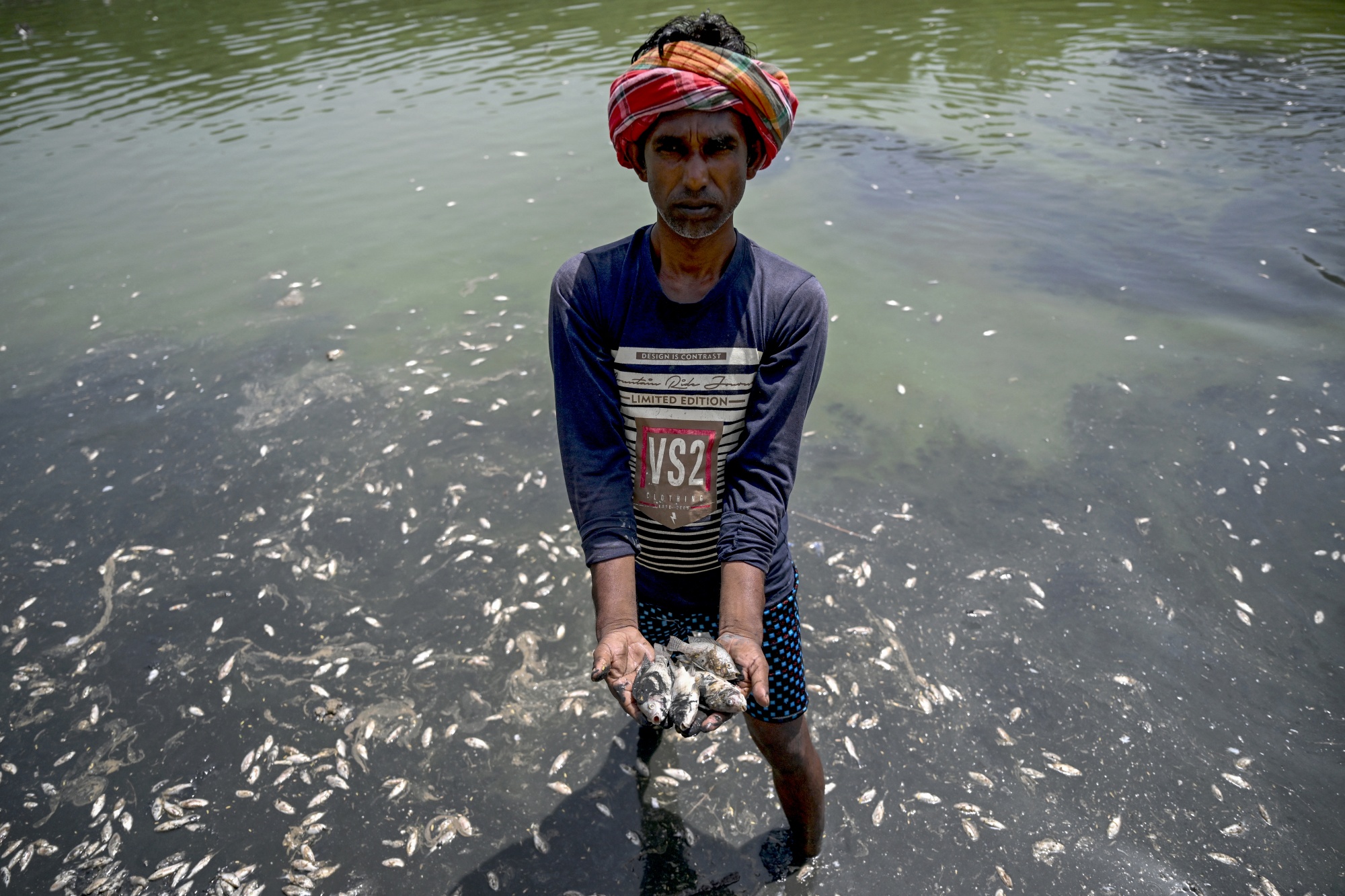 |
Mass fish deaths due to the heatwave in a New Delhi lake on 22/5. Photo: AFP |
Clear skies, dry winds, and delayed monsoon rains have trapped heat across northern India, impacting Delhi, the states of Haryana, Punjab, Uttar Pradesh, Rajasthan, and many areas of Madhya Pradesh.
An "extreme heatwave" occurs when temperatures remain dangerously above normal for several consecutive days, typically at 40 degrees Celsius or higher in plains regions. This weather condition exhausts people even during simple tasks and increases the risk of heat-related illnesses.
With excessively high daytime temperatures and little relief at night, the pace of life for residents has slowed considerably. Millions in Delhi and neighboring states are experiencing one of the harshest early summers in recent memory.
Unusually hot nights prevent the body from recovering. Streets and markets are deserted during afternoon peak hours, outdoor laborers struggle to work, and others try to stay indoors whenever possible. Electricity consumption has surged as most households turn on air conditioners, further reducing the productivity of millions of outdoor workers.
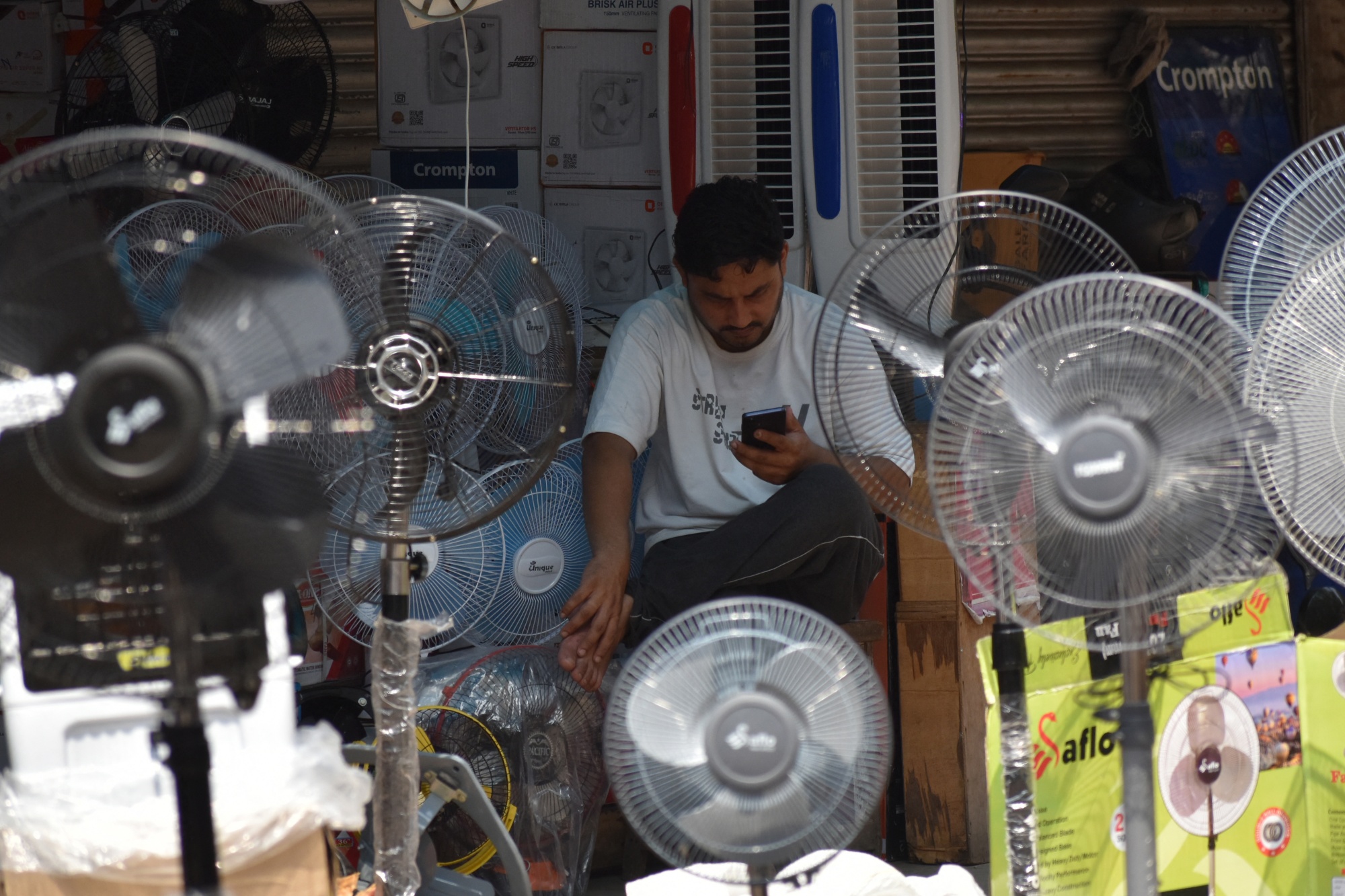 |
A fan shop in Kolkata, West Bengal, during the heatwave on 24/5. Photo: AFP |
According to meteorological experts, a western disturbance could bring temperatures down by 6-8 degrees Celsius from late 28-29/5, also bringing clouds, winds, or scattered rains to break the prolonged dry heat spell.
Nevertheless, northern India is currently in the hottest phase of summer. This year's forecast indicates that some northern and central regions may experience prolonged hot and dry conditions, with daytime temperatures in many areas expected to exceed 40-46 degrees Celsius, potentially reaching 47-48 degrees Celsius in some places. Cities across Punjab, Haryana, Delhi, Uttar Pradesh, and Rajasthan could face intense heat.
India is no stranger to scorching summers, but scientific studies have found that climate change is making heatwaves longer, more frequent, and more severe.
Huyen Le (According to India Today, Indian Express)