 |
The Ansat is known for its reliability, speed, and high maneuverability. The helicopter can take off and land quickly in confined areas without standard helipads, such as highways or urban environments. |
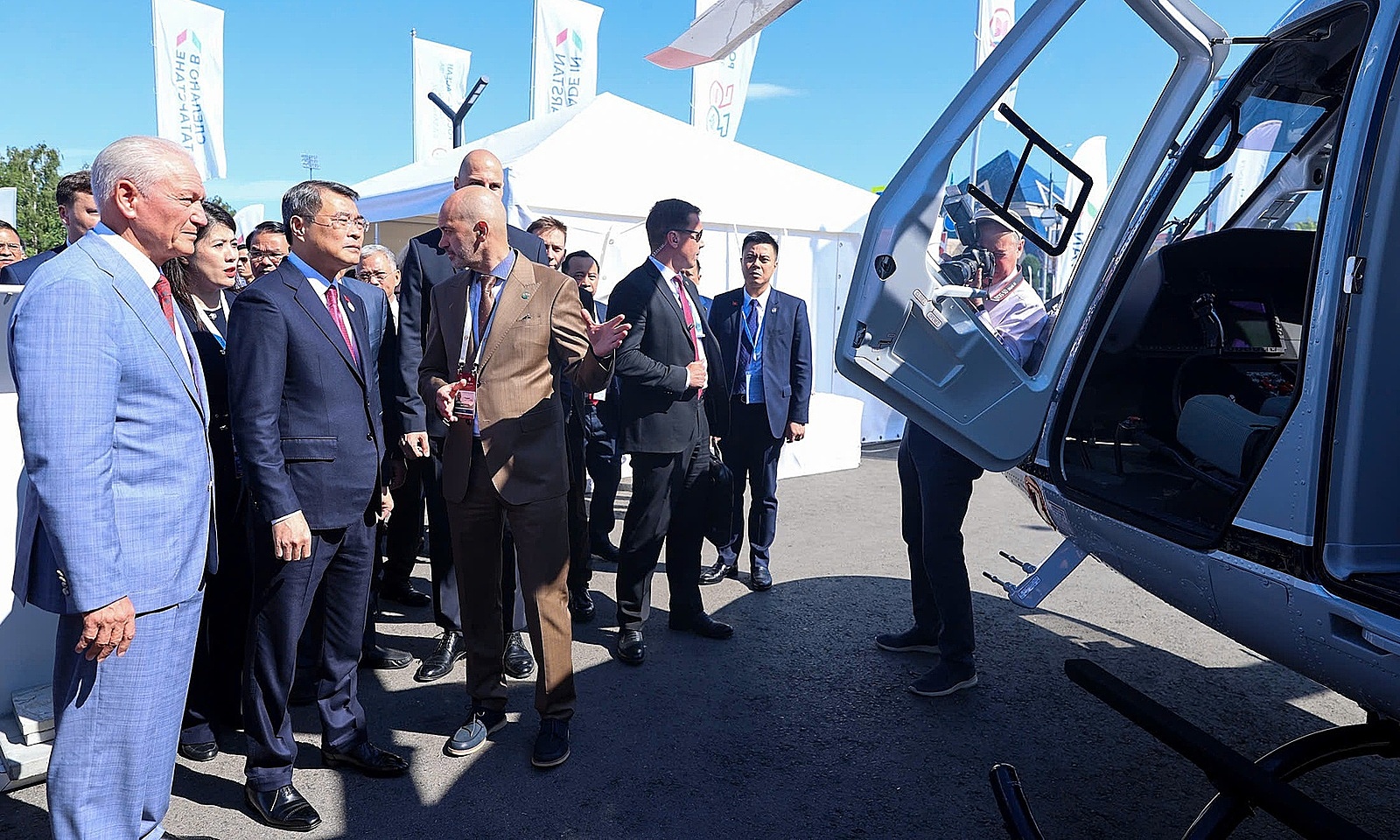
Prime Minister Le Minh Hung visited the "Made in Tatarstan" exhibition in Kazan on 17/6. The event aimed to showcase the full industrial, high-tech, and production capabilities, as well as export potential, of Russia’s Republic of Tatarstan.
The exhibition brought together Tatarstan's leading industrial enterprises, featuring iconic KAMAZ heavy trucks, Aurus luxury cars, Sollers commercial vehicles, and modern aircraft from the Kazan Helicopter Plant (KVZ).
In the photo, Prime Minister Le Minh Hung listened to a presentation about a KVZ helicopter model.
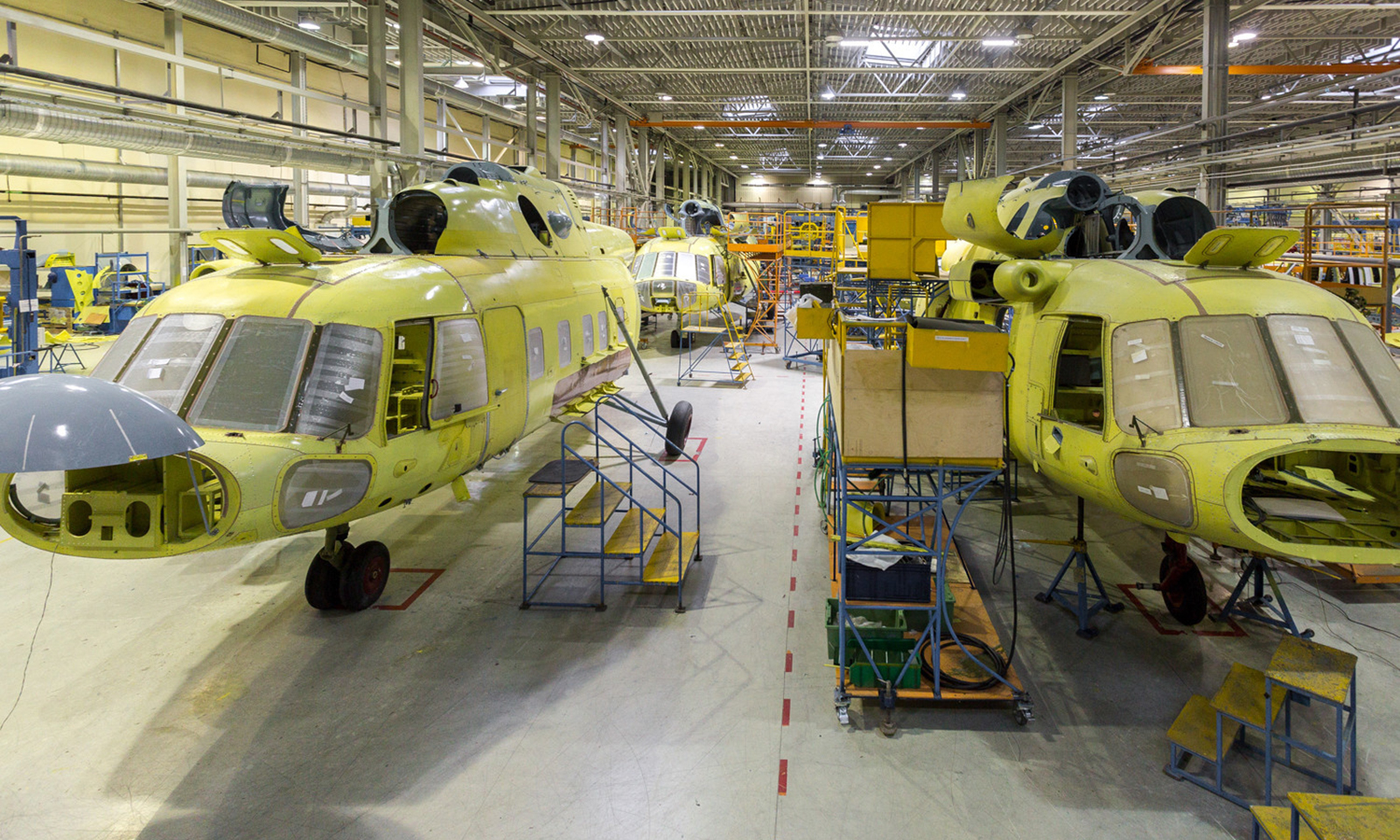 |
Mi-8/17 helicopter fuselage in KVZ's paint shop. |
The Federation of American Scientists ranks KVZ among the world's largest helicopter manufacturers, with the Mi-8/17 medium helicopter series as its main product. To date, KVZ has manufactured approximately 12,000 helicopters across the Mi-4, Mi-8, Mi-14, and Mi-17 series. KVZ helicopters have been used in over 90 countries for both civilian and military purposes.
KVZ's history began in September 1940, when Leningrad Plant No. 387 was transferred to the Soviet Union's Ministry of Aviation Industry. In July 1941, Plant 387 evacuated to Kazan and took over Timber Processing Plant No. 169, marking the start of KVZ's aircraft production journey.
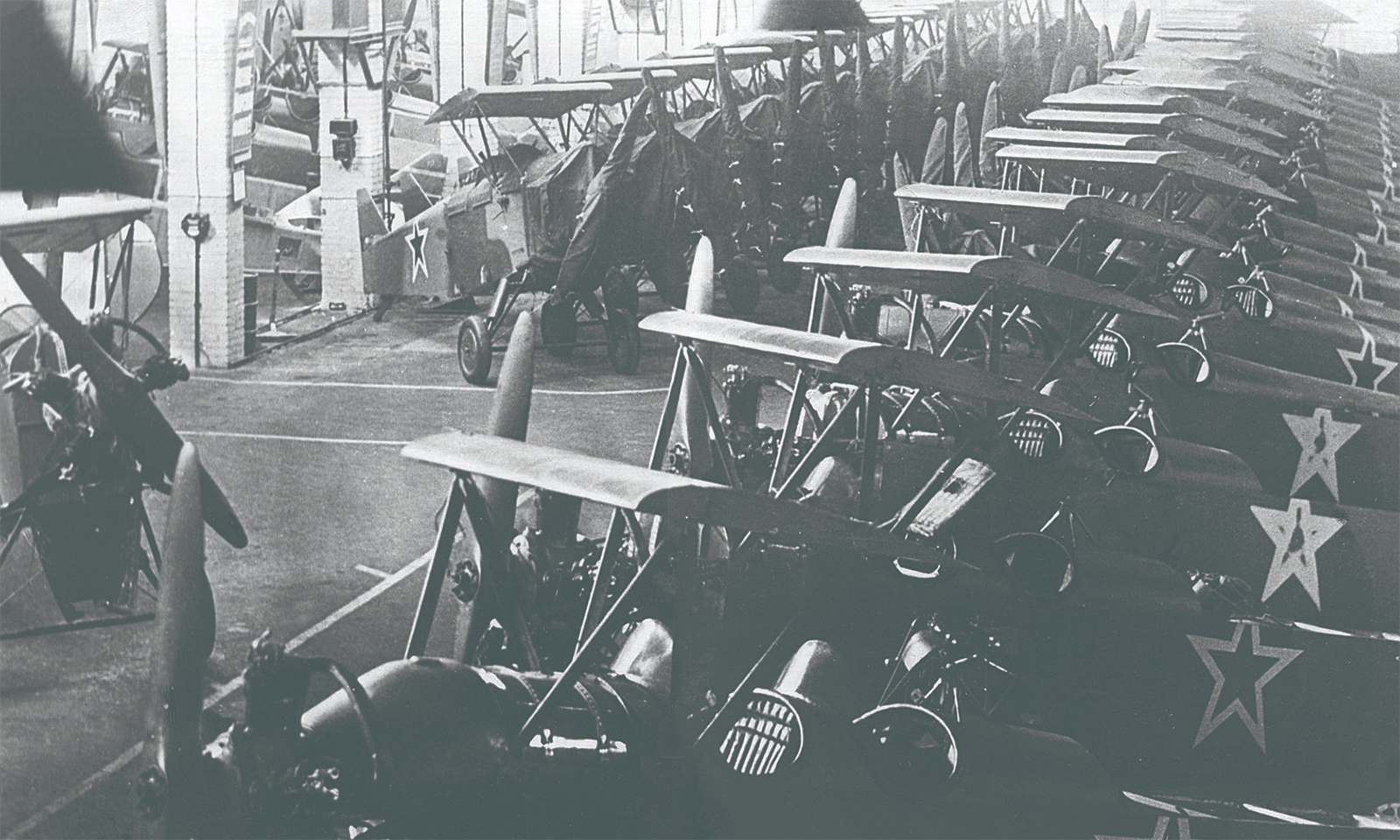 |
Despite its current focus on helicopters, KVZ's first product was the Polikarpov Po-2/U-2 multi-purpose biplane. The Po-2 was a reliable, easy-to-operate, and cost-effective aircraft for role changes. It could perform missions as an attack aircraft, reconnaissance, communication, pilot training, and agricultural support. Between 1941 and 1945, approximately 11,000 Po-2 aircraft were produced at Plant 387 in Kazan. The plant's Po-2 output in 1945 was 350 units per month, a significant increase from 100 aircraft in previous years.
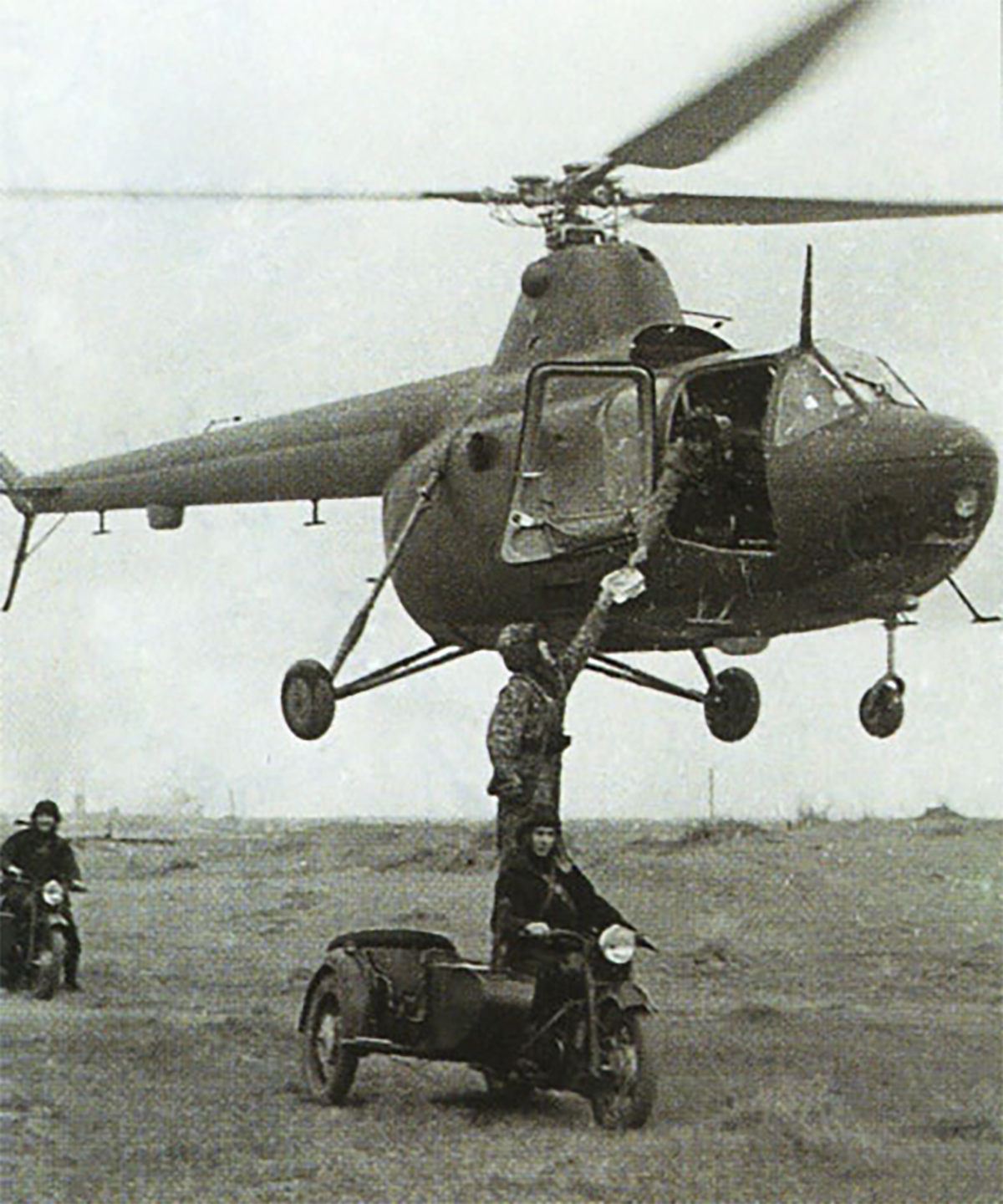 |
Plant 387 began receiving components to assemble 30 Mil Mi-1 helicopters in September 1951, becoming the first facility in the Soviet Union to establish a mass production line for helicopters. In April 1952, Mi-1 helicopters began test flights in Kazan. By 1953, Plant 387 was designated the primary manufacturer for the Mi-4 transport helicopter series. Three years later, the Mi-4 became the first Soviet helicopter to be exported. In May 1961, the factory secured a contract to supply helicopters to India and produced its first large batch of 120 Mi-4s. In total, over 3,200 Mi-4 aircraft were produced in various variants.
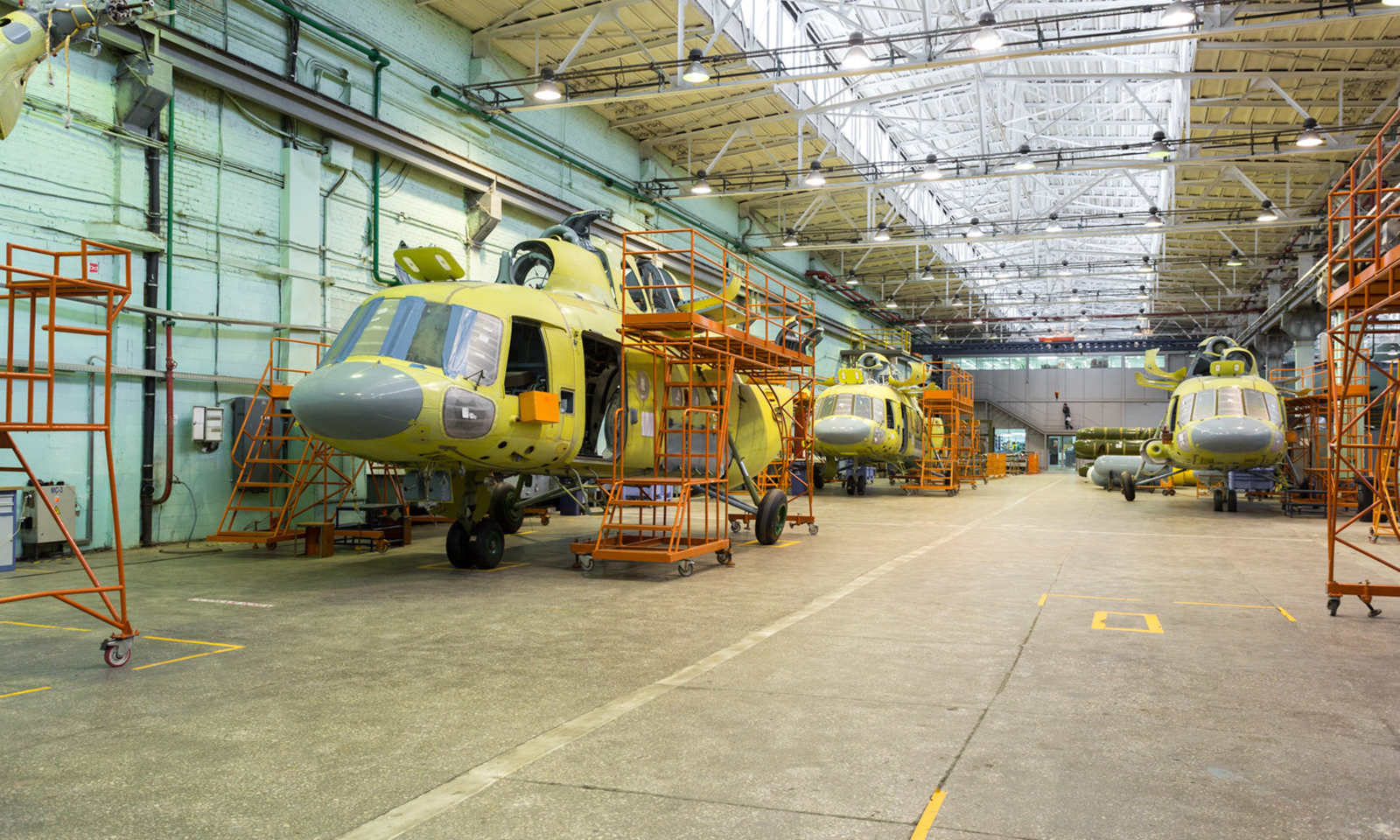 |
On 26/10/1965, the first production series Mi-8 helicopter completed a 12-minute test flight, marking the beginning of KVZ's flagship product line. Soviet officials approved the preliminary design of the modernized Mi-8M variant in 1971, which improved operational performance, including increased flight ceiling and climb rate. By the mid-1980s, the Mi-8MT became the factory's main product. KVZ displayed the Mi-8MT helicopter, designated "Mi-17" for export, at the Le Bourget Air Show in France in 1981. The passenger variant of the Mi-17 was named Mi-172.
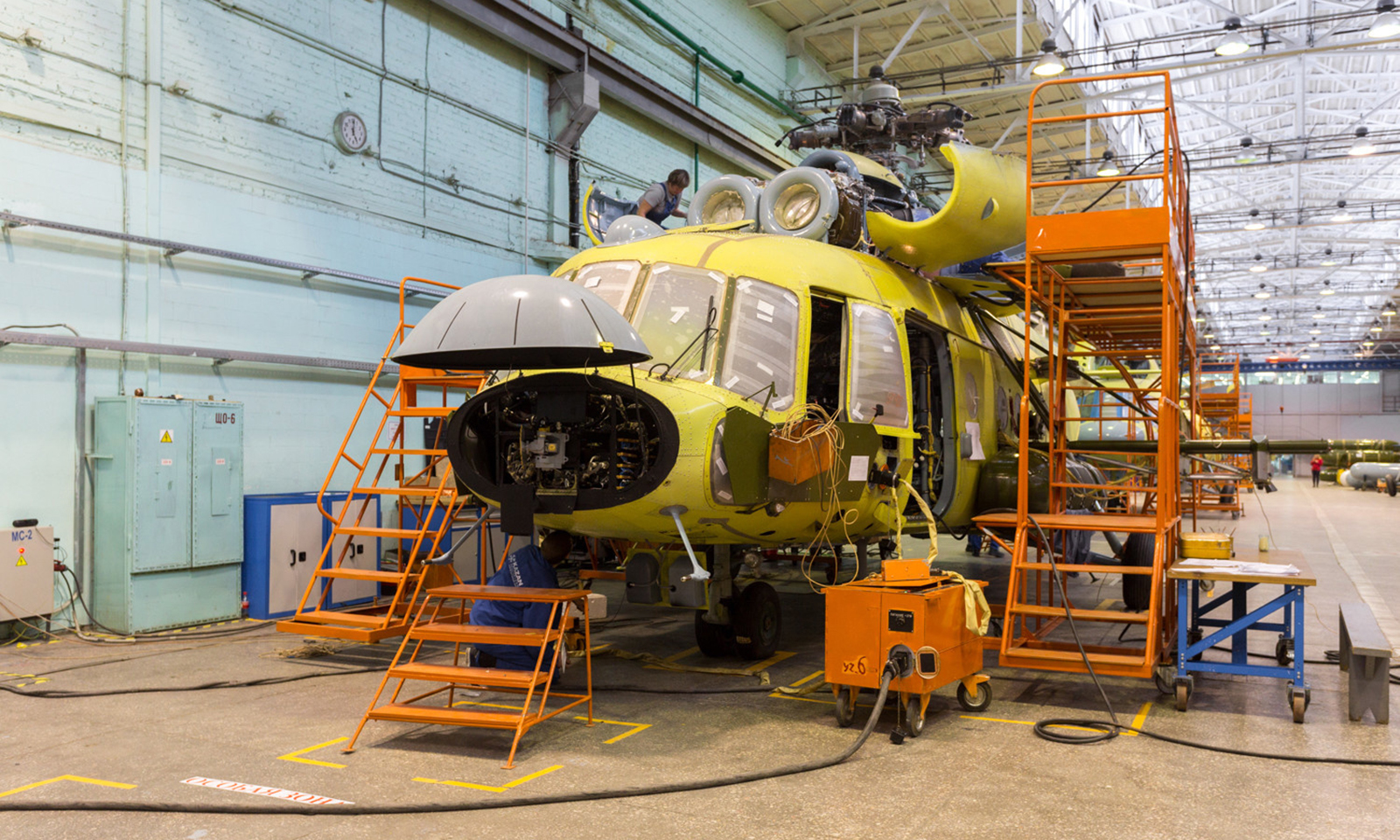 |
The Mi-8/17 is the most produced helicopter series globally, with over 17,000 units in service with nearly 60 countries. Production lines continue to operate in Kazan and Ulan-Ude, with Russia developing numerous modernized versions over the years. The latest military version is the Mi-8AMTSh for the Russian Air Force and the Mi-171Sh variant for the export market, launched in 2020. While the primary mission of the Mi-8/17 is transport, the Soviet Union and Russia have developed many models specialized for ground attack, reconnaissance, airborne command, and search and rescue.
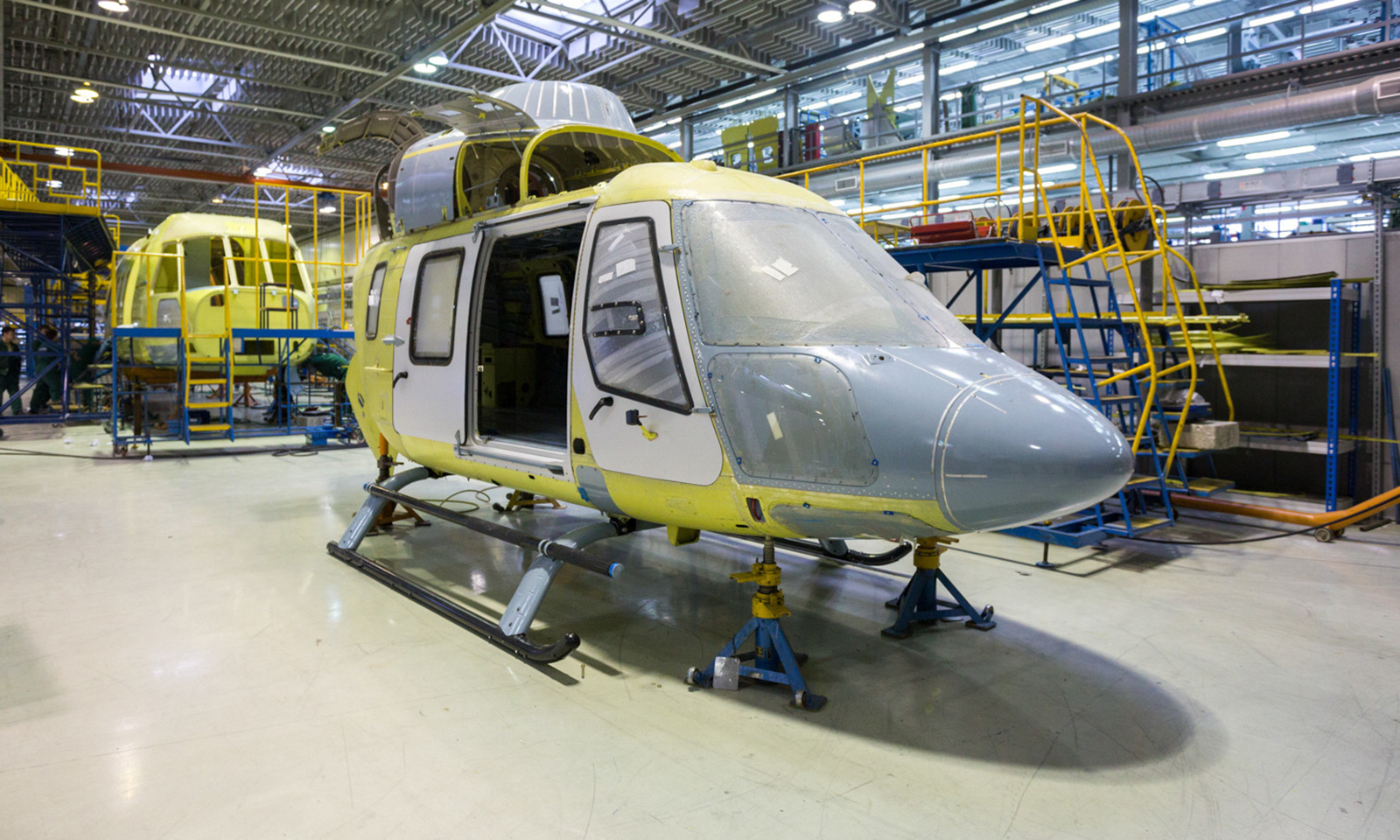 |
Ansat helicopter fuselage at the KVZ factory.
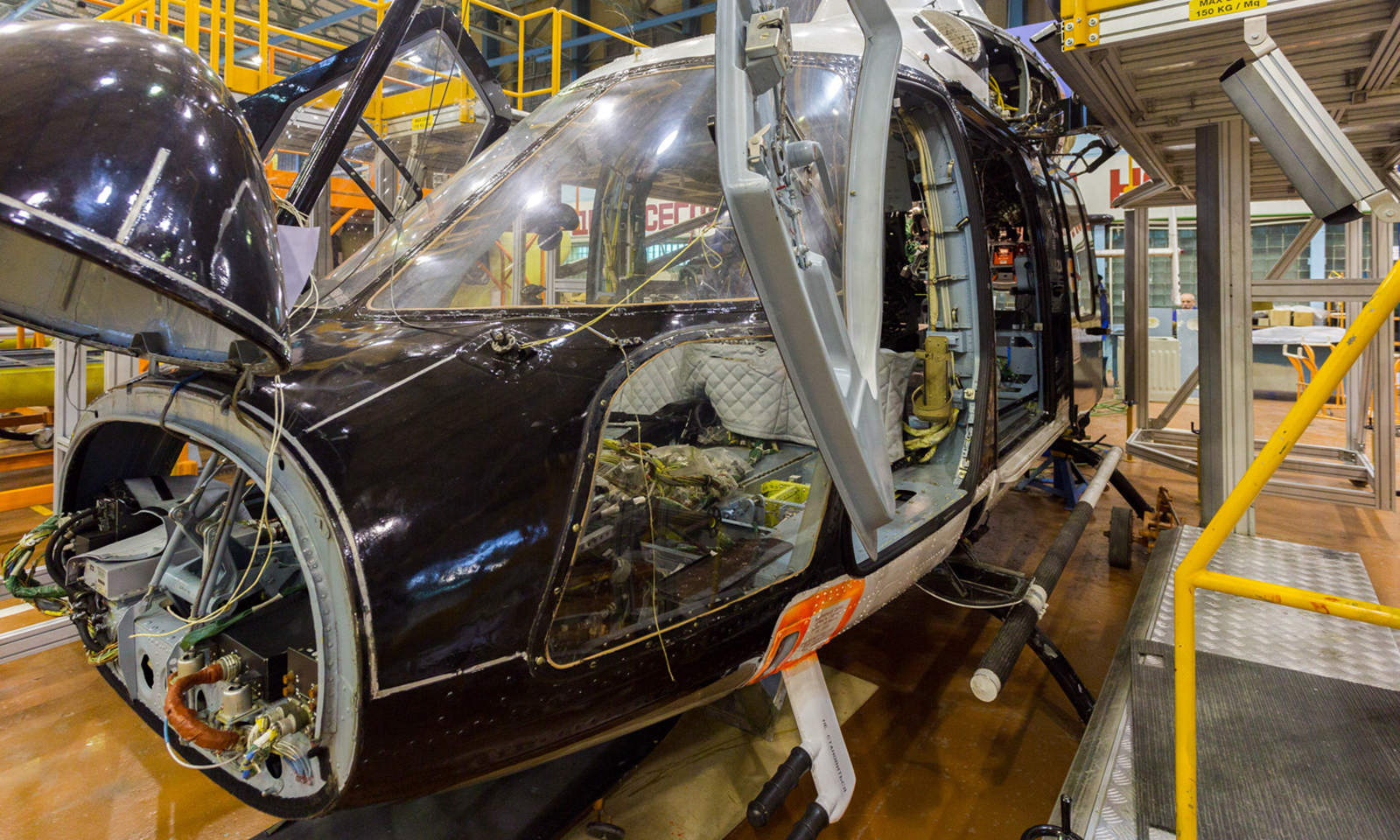
In the early 1990s, KVZ decided to expand its product range and began manufacturing light helicopters. The new helicopter, named Ansat (meaning "light" in Tatar), first flew in August 1999. The Ansat can quickly switch between passenger and cargo transport and can be equipped with a medical module. The helicopter can operate in temperatures ranging from -45 to 50 degrees Celsius.
 |
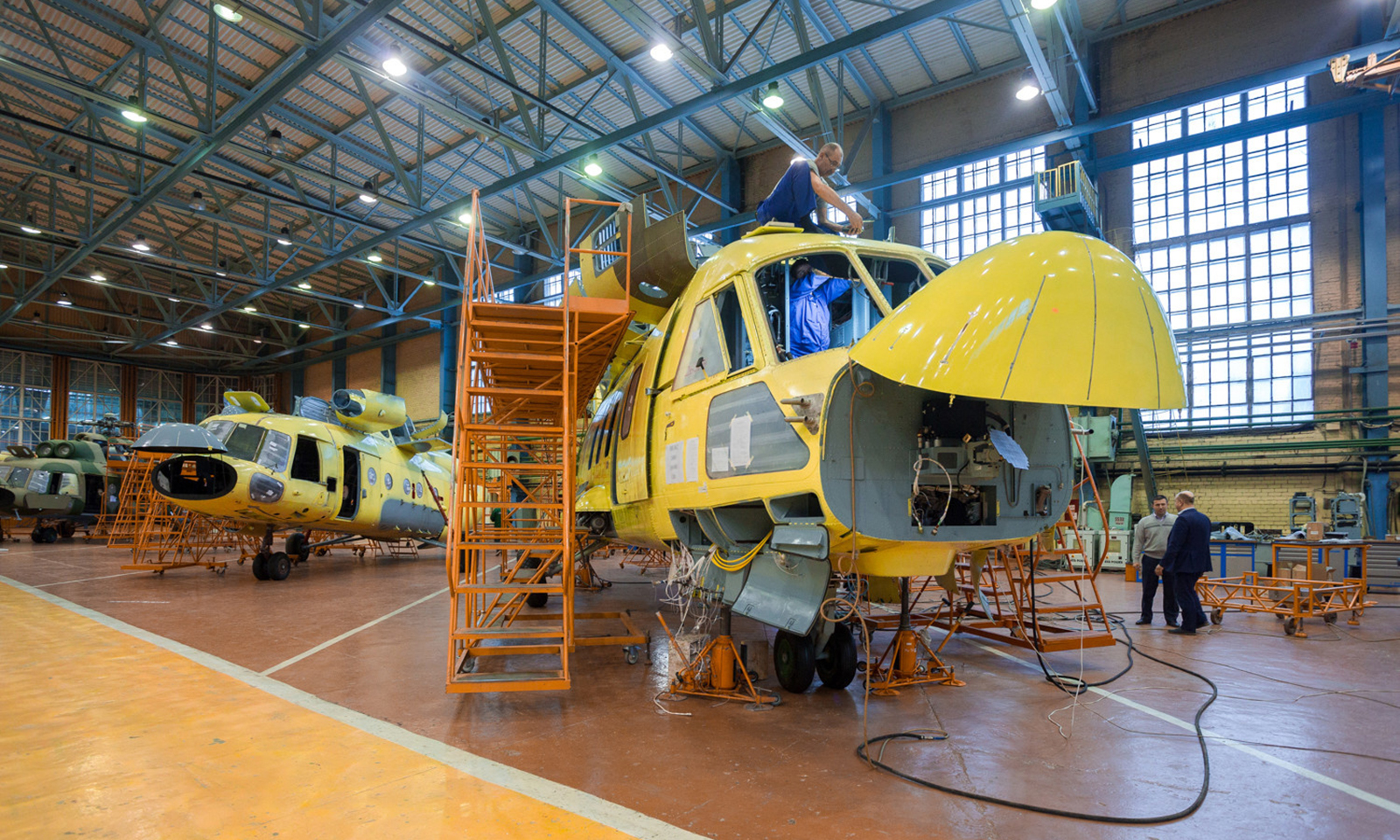 |
Another major project KVZ is undertaking is the multi-purpose heavy-lift Mi-38 helicopter, capable of operating in various environments and climates. The aircraft can transport passengers and cargo, participate in search and rescue missions, and perform offshore flights. The Russian Ministry of Defense received the first production batch of Mi-38T in 2019. One year later, Mi-38 helicopters were delivered to civilian customers.
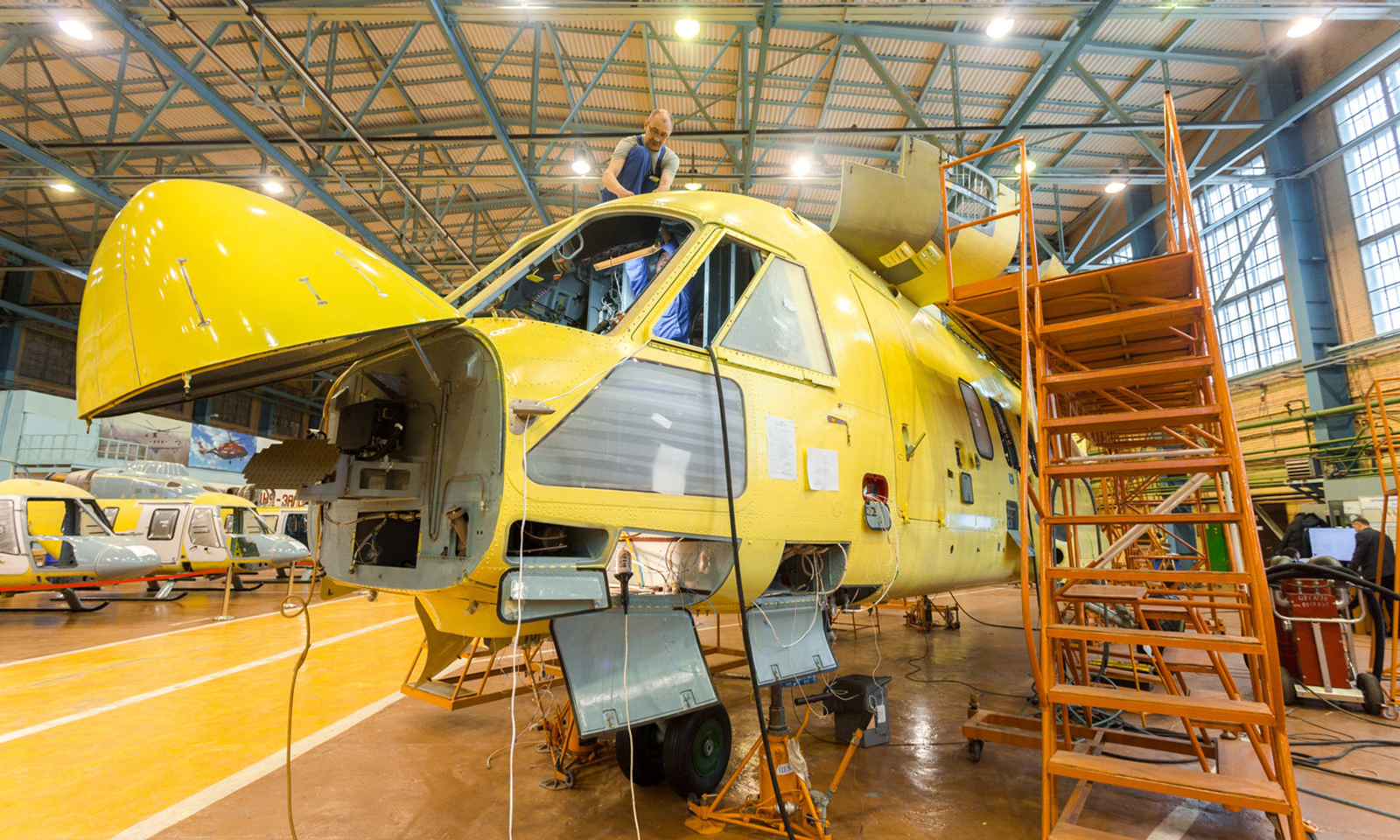 |
A notable design feature of the Mi-38 is its gearbox, positioned behind the engines rather than traditionally in front, which helps reduce noise and drag. The engines also have dust protection grilles with good air filtration capabilities. The main fuselage components are made of aluminum alloy, with other parts constructed from steel, titanium, and composite materials.
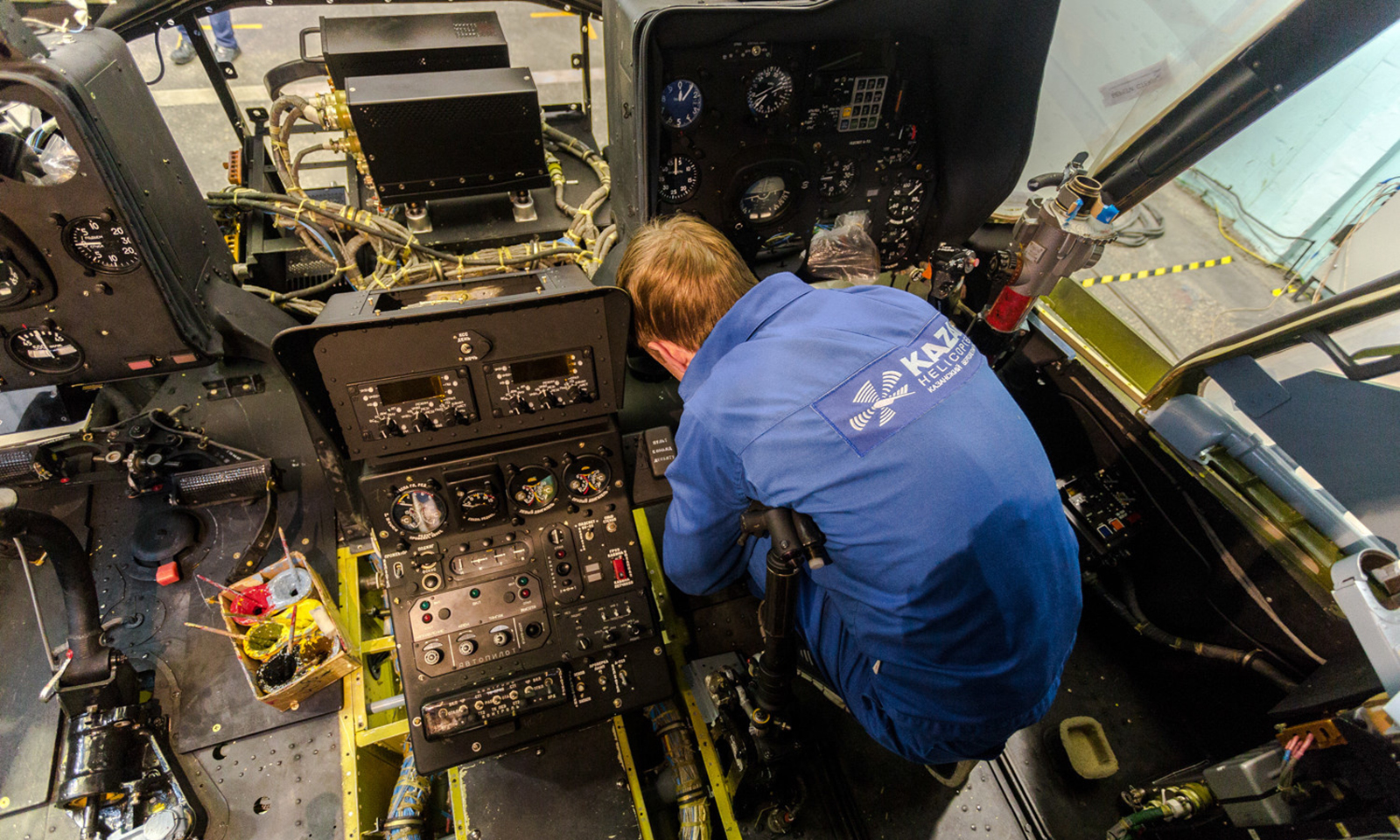 |
Workers assemble equipment in a helicopter cockpit.
 |
Nguyen Tien (Photos: TTXVN, KVZ, Rostec)