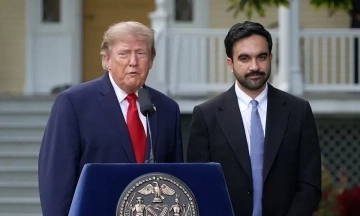
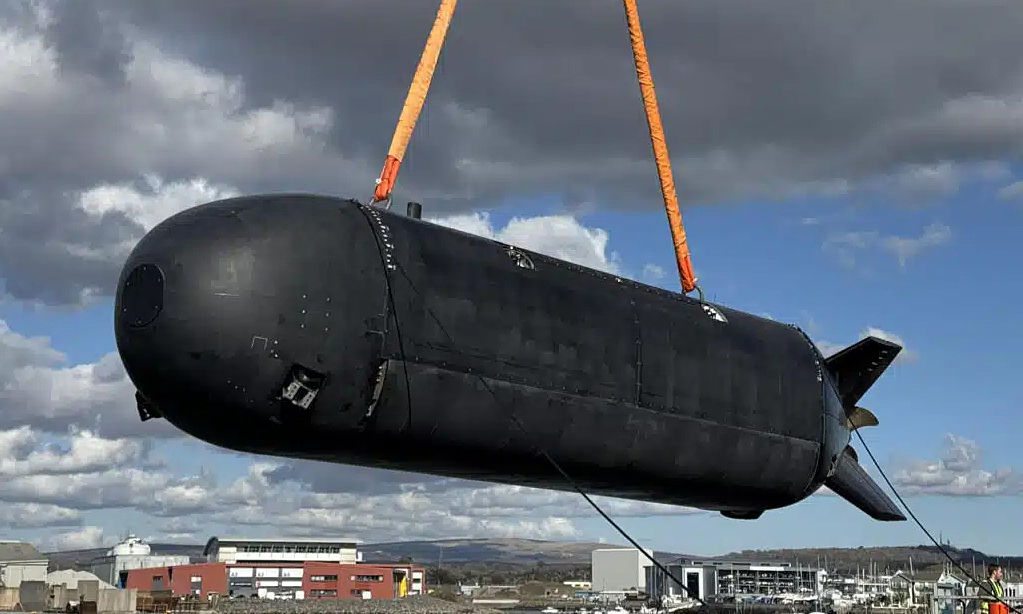
"The US possesses a significant amount of ammunition, particularly certain specific types. Furthermore, large quantities of weapons are currently being produced and shipped to the US as needed," President Donald Trump posted on Truth Social on 5/8, without specifying the exact types.
He asserted that US defense corporations are constructing the largest number of factories and production facilities in the nation's history. "Those who leak treasonous information must be pursued and will face long prison sentences," President Trump stated.
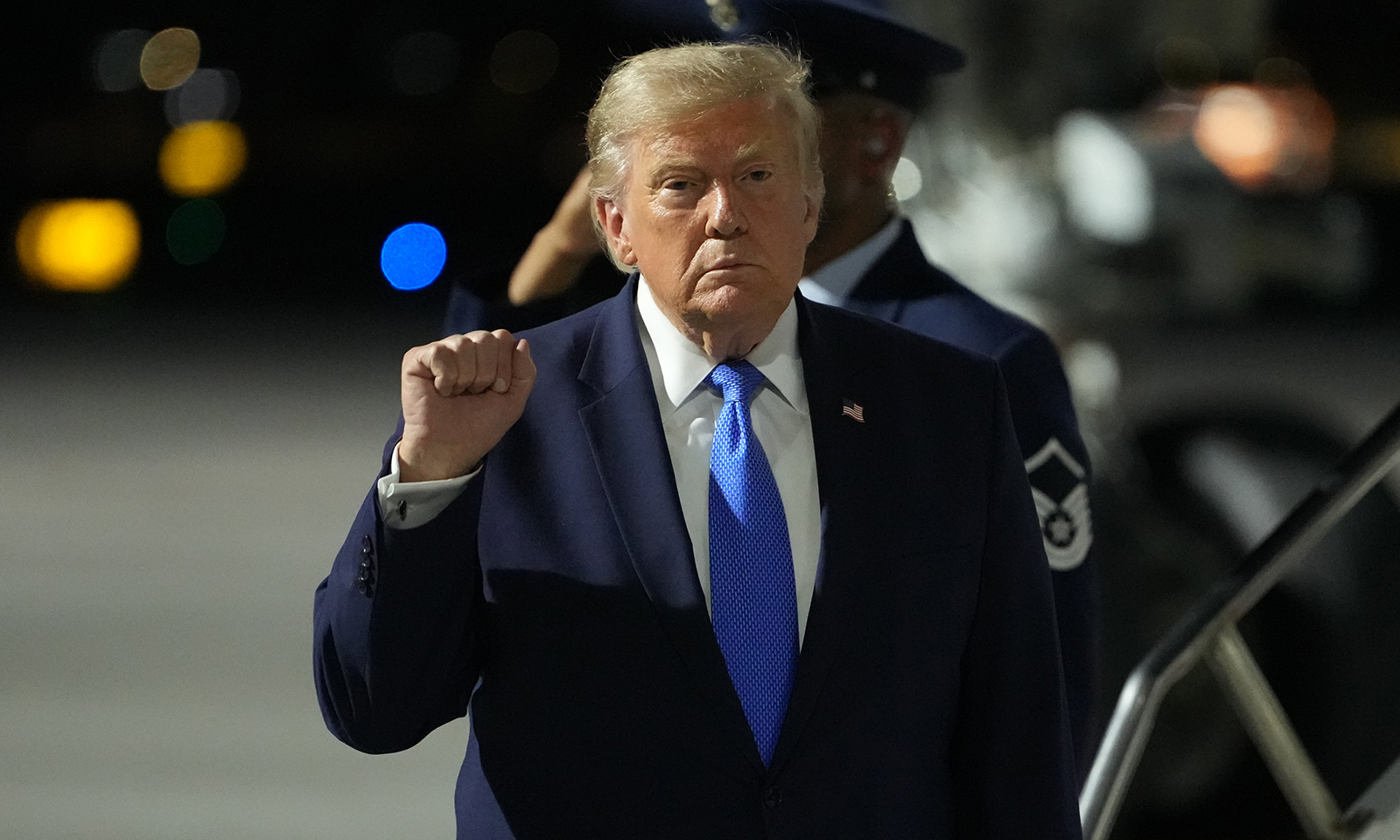 |
President Donald Trump at Harry Reid Airport in Las Vegas, Nevada on 4/8. Photo: AP |
President Donald Trump at Harry Reid Airport in Las Vegas, Nevada on 4/8. Photo: AP
These comments followed a Washington Post report, which cited two sources familiar with the situation, stating that President Trump had a heated exchange with Defense Secretary Pete Hegseth on the sidelines of a cabinet meeting at Camp David on 31/7.
The disagreement reportedly arose from President Trump "receiving inaccurate information about significant ammunition shortages," prompting him to demand an explanation from Secretary Hegseth. Hegseth then attributed the shortcomings and inadequate reporting to his subordinate, Stephen Feinberg, the Washington Post reported.
"The exchange reflected Trump's increasing frustration with Secretary Hegseth, a strong proponent of the campaign against Iran who had assured the US President it would be a swift, relatively easy victory," unnamed officials stated.
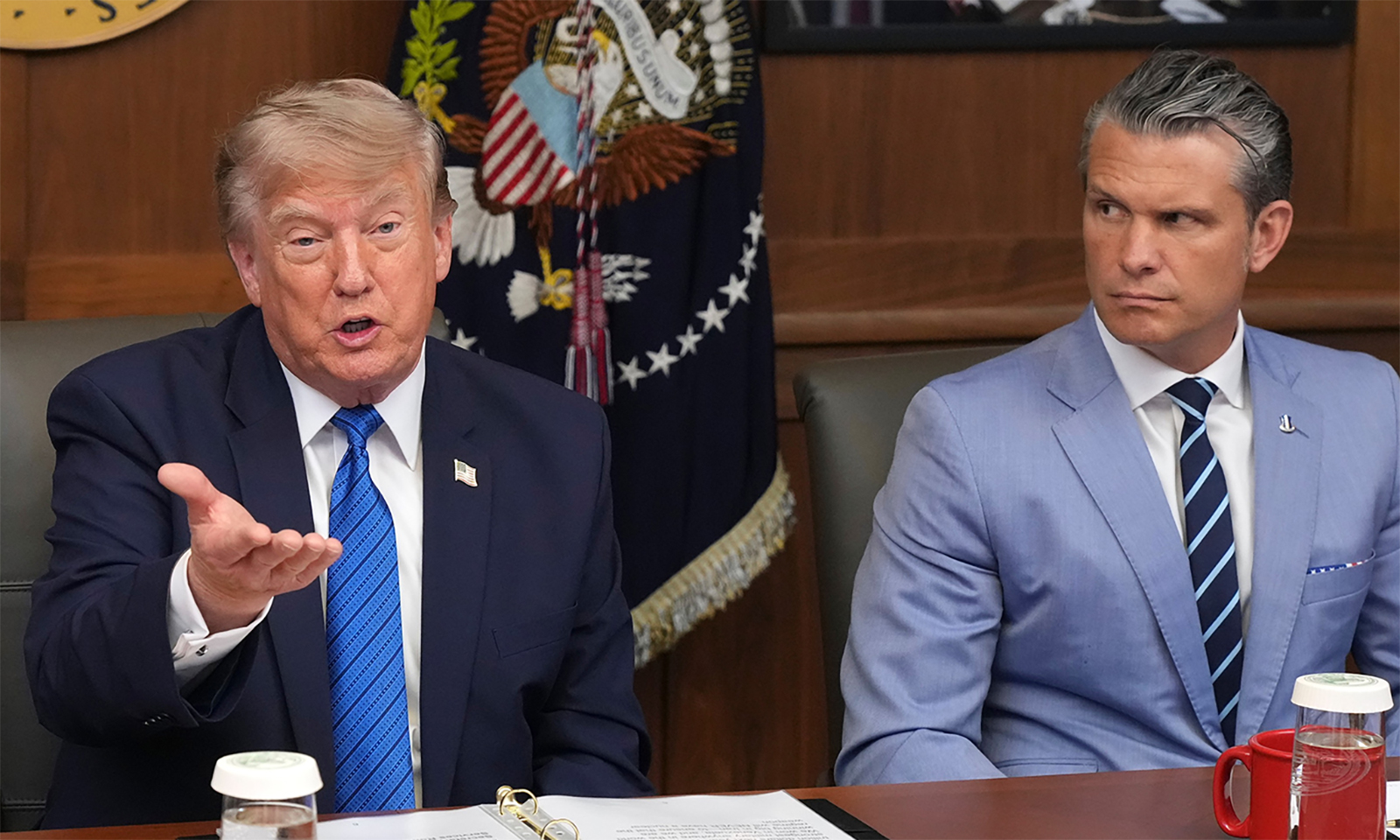 |
President Trump and Secretary Hegseth during a meeting at Camp David on 31/7. Photo: AP |
President Trump and Secretary Hegseth during a meeting at Camp David on 31/7. Photo: AP
One source indicated that ammunition shortages, particularly long-range guided missiles and air defense munitions, contributed to President Trump's decision to postpone a large-scale attack on Iran.
Asked to comment, White House press secretary Karoline Leavitt dismissed the reports as "fake news" and affirmed President Trump's "complete confidence in Secretary Hegseth." Pentagon spokesperson Sean Parnell also asserted that Secretary Hegseth "never misrepresented the state of the arsenal and did not blame Undersecretary Feinberg."
On 4/8, multiple anonymous sources familiar with the situation told CNN that the US military had used nearly 80% of its terminal high altitude area defense (THAAD) missiles and almost 50% of its Patriot rounds stockpiled before the Middle East conflict. Three other unnamed sources informed Reuters on the same day that the US military had expended nearly all its PrSM and ATACMS tactical ballistic missiles from its inventory. Tomahawk cruise missile numbers also saw a significant reduction, now just over 50%, down from over 70% reported by US media in April.
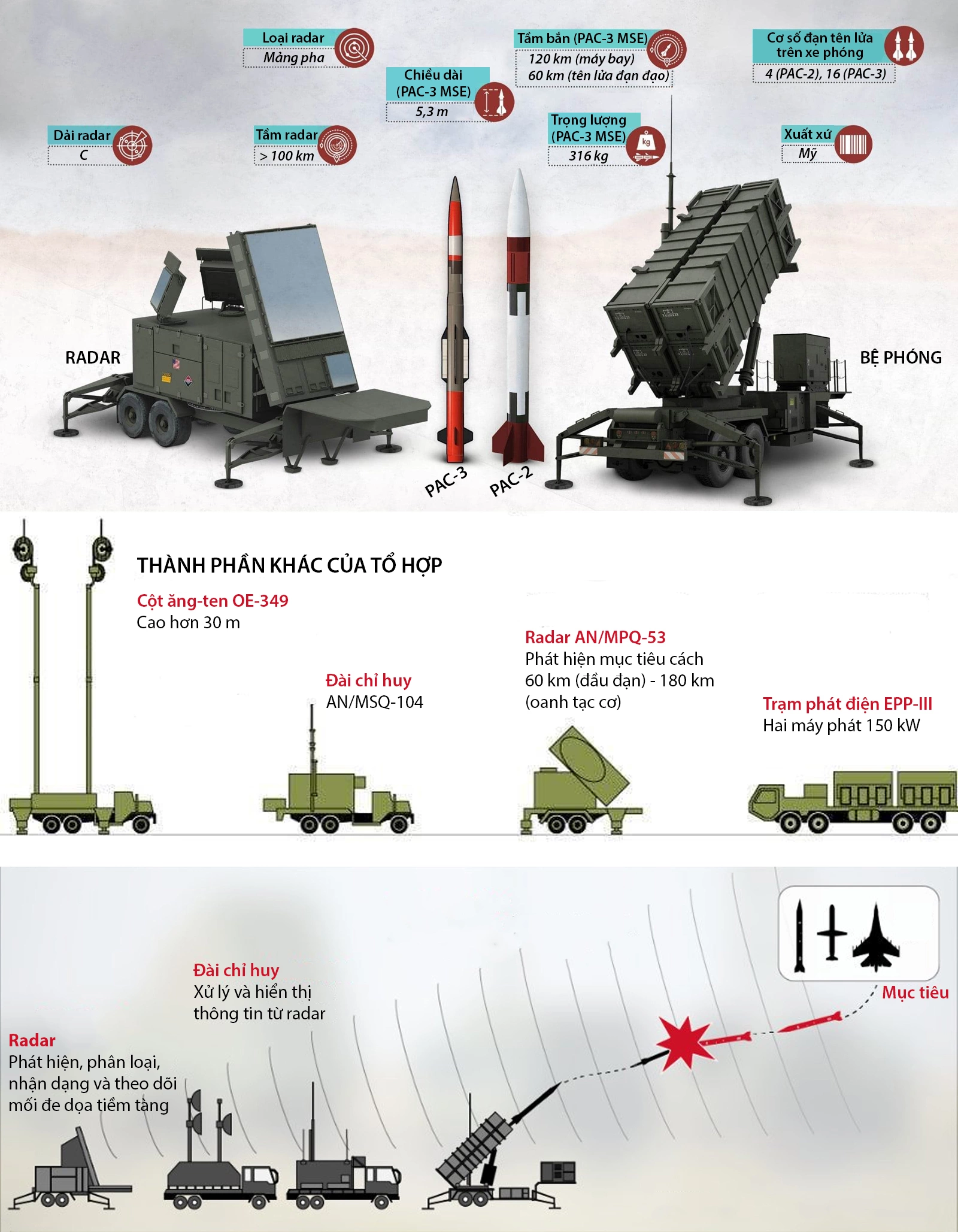 |
Features of the Patriot air defense system. Graphics: Raytheon, RIA Novosti |
Features of the Patriot air defense system. Graphics: Raytheon, RIA Novosti
A study published by the Center for Strategic and International Studies (CSIS) on 27/7 indicated that the US military's inventory currently holds no more than 827 Patriot missiles and 278 THAAD rounds. On 8/4, when the US declared a ceasefire with Iran, these figures were 1,030 and 232-262 rounds, respectively. Prior to the conflict's outbreak, the US military possessed 2,330 Patriot missiles and 452 THAAD rounds.
The scarcity of interceptor missiles has also altered how the US decides to deploy munitions against targets. Field commanders might "intentionally allow" Iranian missiles or unmanned aerial vehicles (UAVs) to pass if they determine these threats would only damage infrastructure and not endanger personnel, a US official noted.
Nguyen Tien (According to AFP, AP, Reuters, WP)