The XQ-58A Valkyrie unmanned aerial vehicle (UAV) experienced an incident after taking off from a runway at a test site, Kratos, the manufacturer, stated on 5/8. No one sustained injuries during the event. "We have suspended test flight operations for this UAV model to investigate, as safety is always our top priority," Kratos announced.
The incident occurred at the US Army's Dugway Proving Ground in Utah. Kratos funded this research and development program to "continuously add new configurations and capabilities" to the XQ-58A aircraft.
A Dugway center spokesperson confirmed the UAV crashed shortly after takeoff, though the cause remains unknown. The spokesperson added that the US military neither owns nor operates the crashed aircraft. Officials at the facility declined to confirm if the aircraft was an XQ-58A prototype.
Michael Airport, located at the Dugway center, serves as a vital UAV testing facility for both the US military and private companies.
The US Air Force and Kratos secretly developed the XQ-58A over two years. The XQ-58A prototype first flew in 3/2019, utilizing rockets for takeoff acceleration and a parachute for landing. This UAV boasts a range exceeding 3,200 km, reaches subsonic speeds, and can carry weapons.
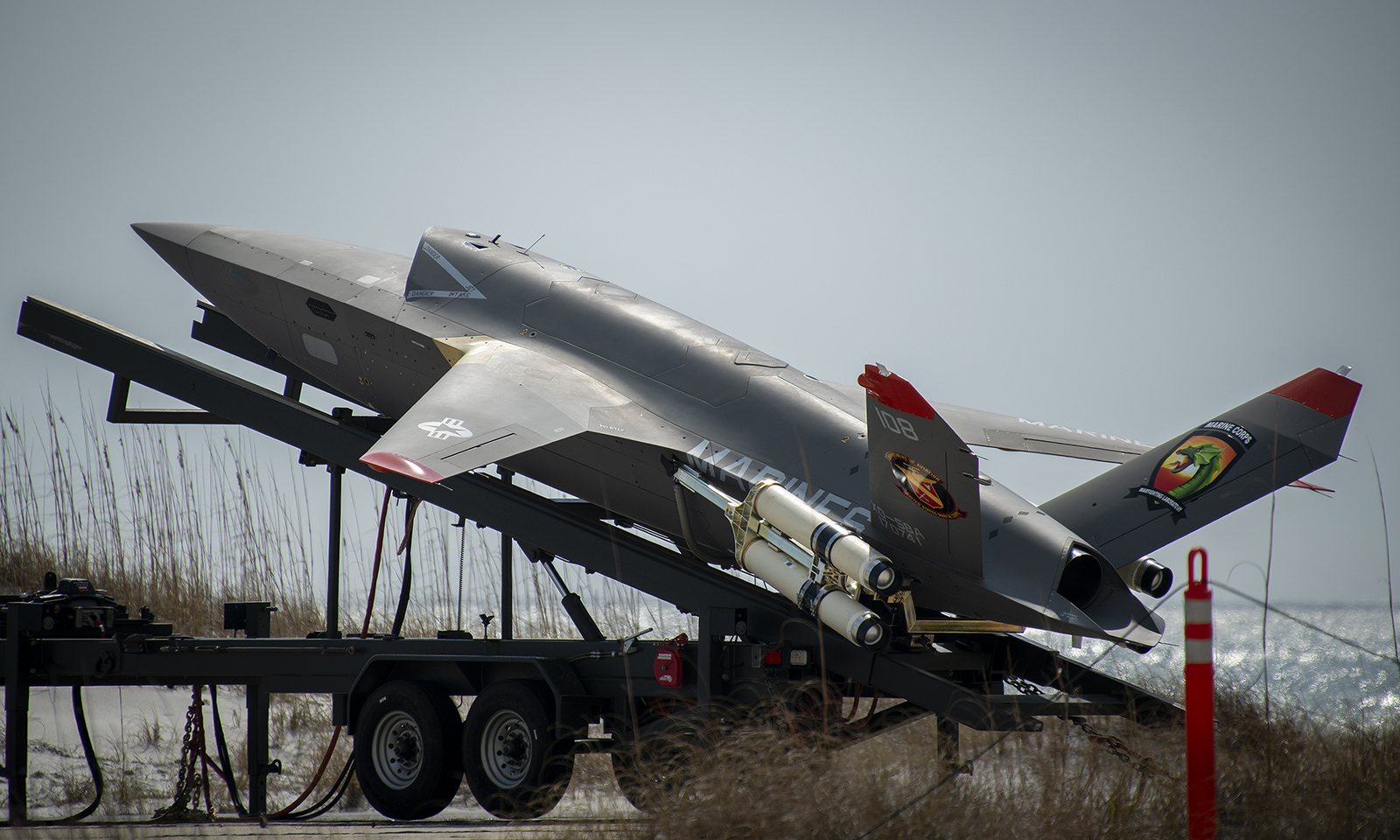 |
The XQ-58 prototype on a launch pad at Eglin Air Force Base, US, in 2/2024. Photo: USAF |
Kratos later developed a specialized launcher that enables the XQ-58A to operate from conventional runways. In 8/2024, Kratos announced the development of an XQ-58A model featuring landing gear for conventional takeoff and landing, in addition to its initial solid rocket booster launch capability.
In 1/2026, Kratos revealed plans to test the XQ-58 model with landing gear, designated MQ-58B, this year. The MQ-58B is being developed for the US Marine Corps, with the first aircraft expected for delivery in 2029.
The XQ-58A is designed for various missions, including: reconnaissance, electronic warfare, combat support, or drawing enemy fire. It can operate independently or assist manned aircraft, launching from small, confined areas unsuitable for conventional fighter jets, thus meeting demanding battlefield requirements.
Each XQ-58A prototype costs approximately 5.5 million USD, including: test equipment, launchers, and operational support. Kratos estimates each Valkyrie B variant will cost 4 million USD for a batch of 100 aircraft, with a target price reduction to about 2 million USD per unit.
Nguyen Tien (According to AFP, AP, War Zone)