Last week, Iran issued a grave warning, threatening to plunge all Gulf countries into sequential blackouts if President Donald Trump ordered attacks on its energy facilities. This message, confirmed by multiple regional officials, was described as "extremely serious" and included a "long list of targets" Iran would strike: power plants and seawater desalination facilities, vital infrastructure most Gulf nations rely on for drinking water.
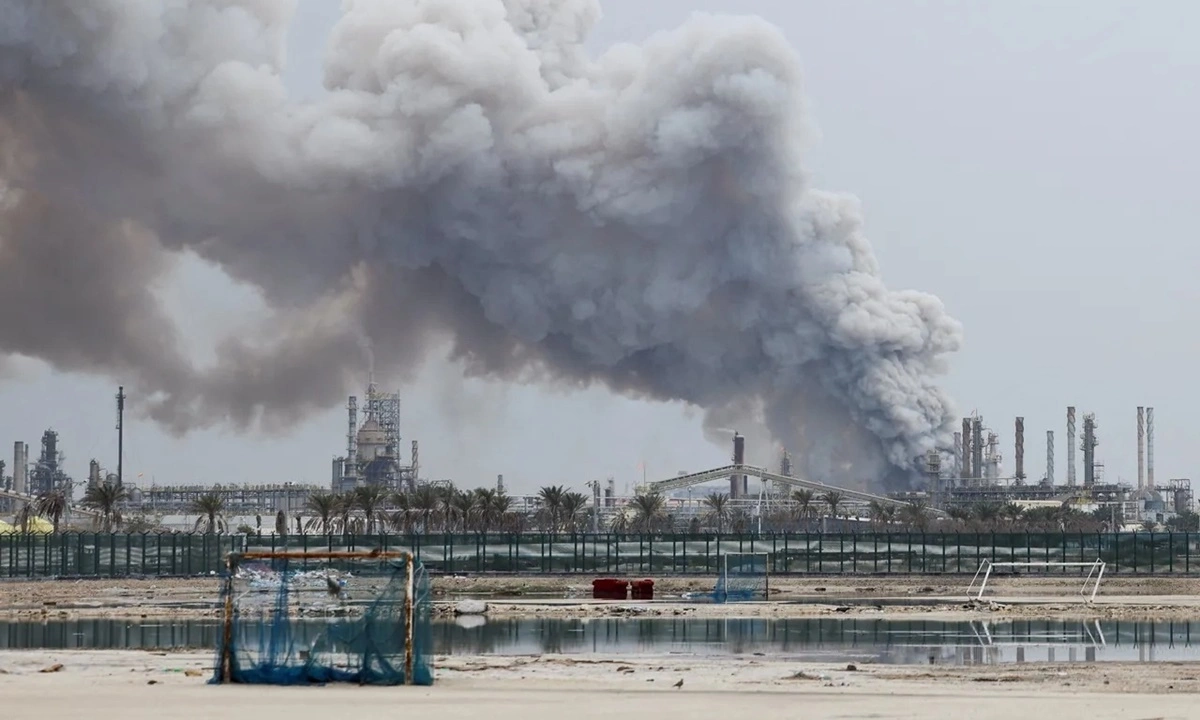 |
Smoke rises after an Iranian attack on Bahrain in March. Photo: Reuters.
The Iranian warning followed President Trump's threat of launching "the largest attack since World War II" against Iran. However, the US leader withdrew the plan last weekend, citing requests from Saudi Arabia, the United Arab Emirates (UAE), and Qatar, as well as hopes for a breakthrough in negotiations. US media reported that Mr. Trump had previously considered striking Iranian energy infrastructure, a threat he had made on multiple occasions.
In mid-July, Mr. Trump had declared he would destroy an Iranian bridge or power plant after each attack targeting maritime activities in the Strait of Hormuz. In response, Tehran warned it would retaliate with a "tit-for-tat" approach.
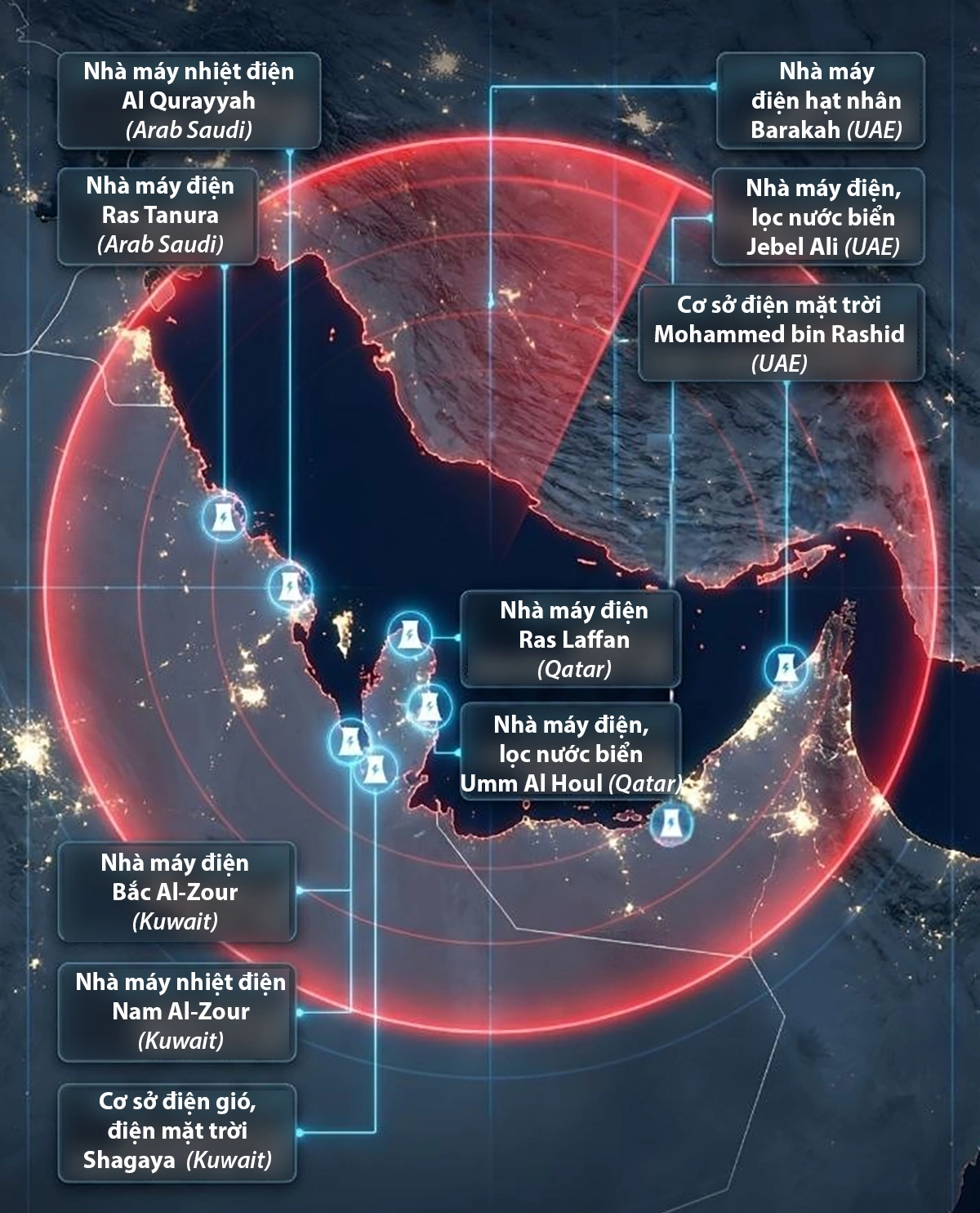 |
List of power plants and seawater desalination facilities in the Middle East. Graphic: Mehr News.
Gulf countries have borne the brunt of Iranian attacks during the Middle East conflict, with strikes targeting both US military bases and civilian infrastructure, including energy facilities, seaports, and airports. Sporadic attacks continued even after a ceasefire and a memorandum were reached in April and June, respectively. However, when the ceasefire collapsed in July, cross-border attacks escalated in both scale and frequency, with Kuwait and Bahrain being the two most frequently targeted nations.
Iranian officials have not yet commented on the information.
By Huyen Le (According to AFP)