Iran's Islamic Revolutionary Guard Corps (IRGC) announced on 1/6 that it attacked the cargo ship MSC Sariska with a cruise missile. This action was in retaliation for a previous US attack on the Lian Star in the Gulf of Oman. The operational area of the MSC Sariska was not disclosed.
An accompanying video showed two missiles being launched, with at least one appearing to be a Noor anti-ship cruise missile. This weapon was developed by Iran using reverse engineering from the Chinese C-802 series. It has a range of 30-220 km, depending on the version, and is equipped with a fragmentation high-explosive warhead. The missile uses an inertial guidance system combined with an active radar seeker.
Iraqi officials told Reuters that two explosions occurred on a cargo ship in the Persian Gulf. The incident took place approximately 75 km southeast of Iraq's Umm Qasr port city. Preliminary assessments indicated that the second explosion was caused by an unmanned aerial vehicle (UAV) attack. Crews later controlled the fire that broke out on the ship.
"While assessing the damage from the first explosion, we heard a UAV overhead, followed by a large explosion causing a fire," an Iraqi maritime patrol force member stated.
The United Kingdom Maritime Trade Operations (UKMTO), operated by the British navy, reported that a vessel was hit on its starboard side, resulting in a large explosion. UKMTO did not mention the name of the vessel.
According to data from the marine tracking website Marine Traffic, the cargo ship Sariska sails under a Panamanian flag. It last updated its position in the Persian Gulf.
US and Israeli officials have not commented on the information.
The US Central Command (CENTCOM), responsible for US military operations in the Middle East, stated that its aircraft launched Hellfire missiles on 29/5. The missiles targeted the engine room of the Gambian-flagged cargo ship Lian Star, which was moving in international waters. The objective was to prevent the vessel from heading to an Iranian port.
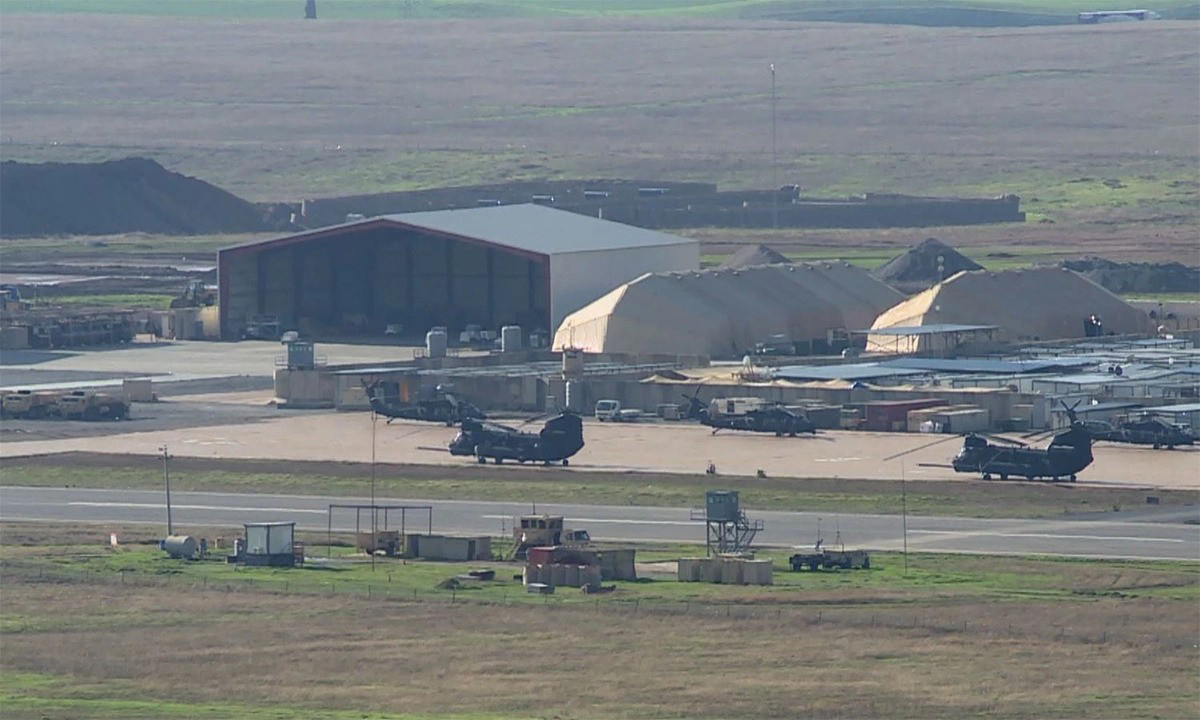
The US and Iran had previously exchanged attacks after a ceasefire agreement took effect on 8/4. However, these incidents did not escalate into a full-scale conflict. CENTCOM announced on 1/6 that it had attacked Iran in response to the enemy shooting down an MQ-1 Predator UAV. This led Tehran to retaliate against Washington's airbase in the region.
Tasnim news agency reported that Iran had suspended dialogue with mediators. This decision came due to Israel's expanded operations in Lebanon.
US President Donald Trump later stated that he had convinced Israel and Hezbollah to de-escalate tensions. According to the US embassy in Lebanon, the armed group accepted the US proposal for "mutual cessation of attacks". "Dialogue with Iran is continuing at a very fast pace," Trump added.
By Pham Giang (Reuters, Mehr, AFP, Anadolu)