


Iran's judiciary news agency, Mizan Online, announced today that convict Erfan Kiani was hanged after the Supreme Court upheld his verdict and completed legal procedures.
The indictment described Kiani as "a spy working for Israel's Mossad intelligence agency". He was accused of "participating in damaging public and private property, arson, possessing and using Molotov cocktails, blocking roads, attacking security forces, carrying machetes, and spreading fear and terror" during protests in Isfahan city, central Iran, in January.
According to Tasnim news agency, Kiani was one of the "key operational links" to carry out missions assigned by Mossad.
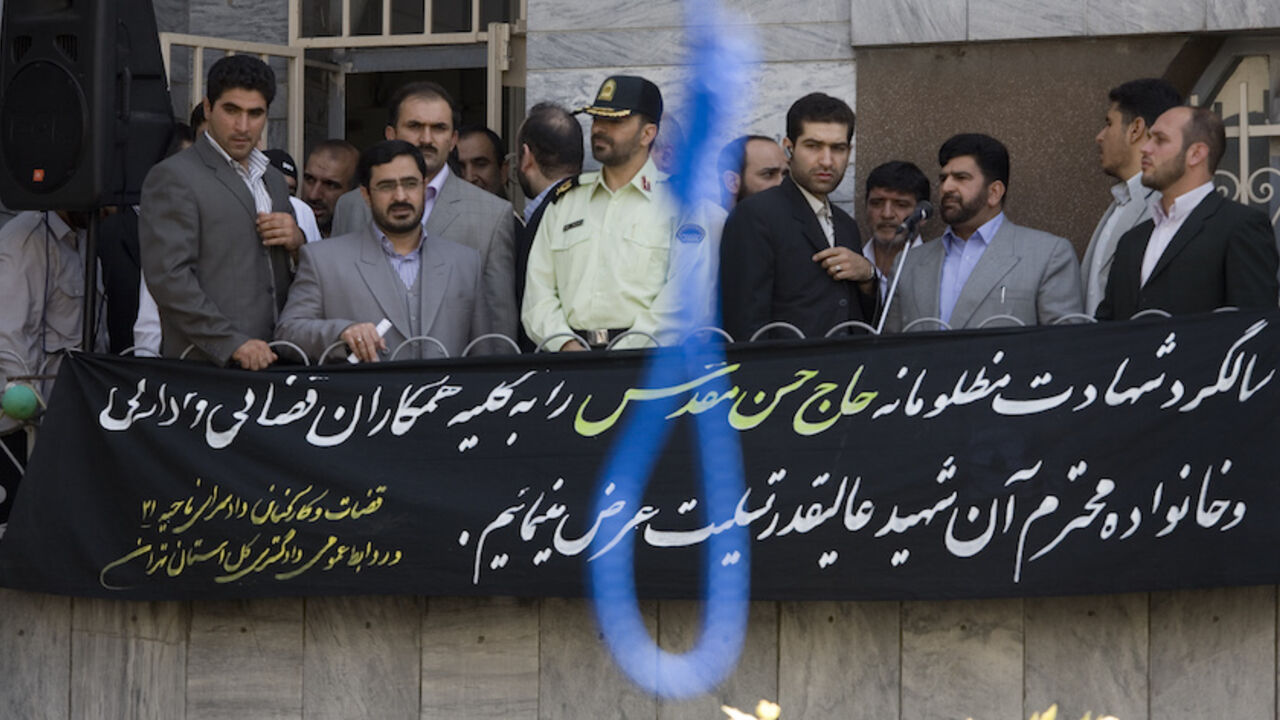 |
Iranian officials monitor an execution in Tehran in 2007. *Photo: Reuters*
The execution took place two days after Iran hanged a man convicted as a "member of a banned opposition group".
Since 19/3, Iran has executed 9 people on charges related to protests. U.S. President Donald Trump announced on 22/4 that Iran had halted plans to execute 8 women who participated in protests, after he made an offer. However, Iranian officials stated there were no such execution plans.
Iran experienced widespread protests in 100 cities and towns from late 12/2025 to January this year, which began when merchants in the capital Tehran protested difficult economic conditions and rising prices. The movement quickly spread to many other areas, with student participation.
Iranian President Masoud Pezeshkian at the time acknowledged the legitimate demands of the protesters and called on the government to improve the economic situation, but also warned of a firm stance against disruptive behavior.
Iranian officials also accused "external forces" of seeking to escalate violence, exploiting public gatherings to cause instability, using social media for incitement, and deploying organized criminals to cause casualties.
By Huyen Le (AFP, Reuters, Tasnim)


