


"The management authority extends from a line connecting Iran's Kuh-e Mubarak cape to the area south of Fujairah city in the United Arab Emirates (UAE), reaching another line between Iran's Qeshm island and the Umm al-Quwain region of the UAE," the Persian Gulf Strait Authority (PGSA) stated today.
The PGSA is a newly established Iranian organization tasked with overseeing the Strait of Hormuz.
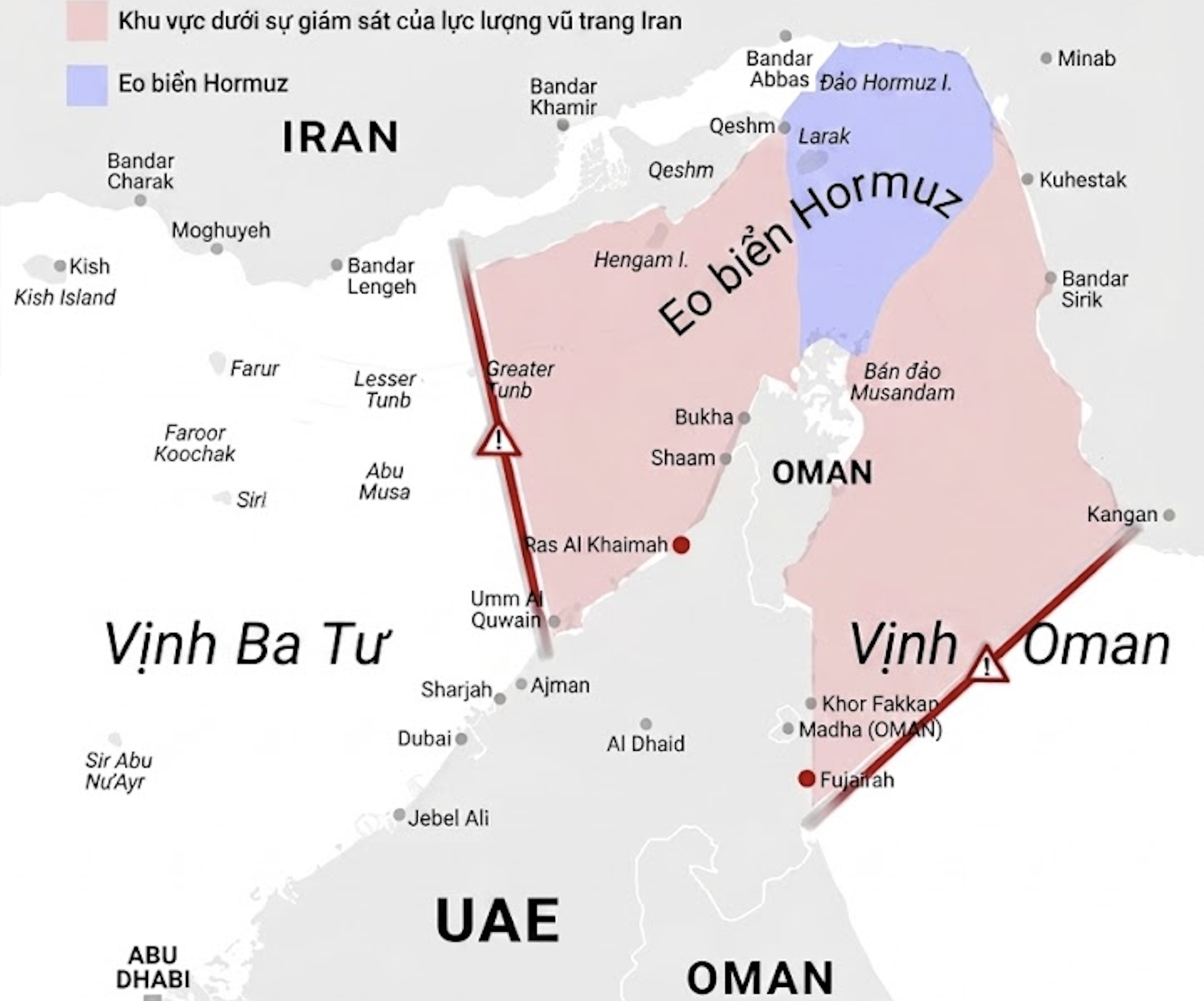 |
Map illustrating Iran's claimed control over the Strait of Hormuz and adjacent waters. Graphics: X/PGSA |
Map illustrating Iran's claimed control over the Strait of Hormuz and adjacent waters. Graphics: X/PGSA
The map shows these two lines positioned at the eastern and western entrances of the Strait of Hormuz. This implies Iran's assertion of management authority over the entire strait, including its extensions into the Persian Gulf and the route to the Gulf of Oman. The PGSA declared that all maritime activities through the Strait of Hormuz will necessitate "coordination and permission" from Iranian authorities.
Anwar Gargash, an advisor to the UAE President, criticized Iran for "attempting to establish a new status quo" in the region. He stated in a social media post that "any effort to control the Strait of Hormuz or infringe upon the maritime sovereignty of the UAE is merely an illusion."
The Strait of Hormuz is a crucial waterway, transporting approximately 20% of the world's oil and natural gas during peacetime. It falls under the shared management of Iran and Oman, is not considered international waters, and historically allowed free passage for vessels.
Following the outbreak of hostilities with the US and Israel on 28/2, Iran largely blocked transport activities on this vital waterway. Iran briefly reopened the Strait of Hormuz after a ceasefire on 8/4. The US responded by announcing a blockade of Iranian ports.
The resulting congestion of vessels in the area significantly impacted global markets and provided Iran with considerable leverage in negotiations.
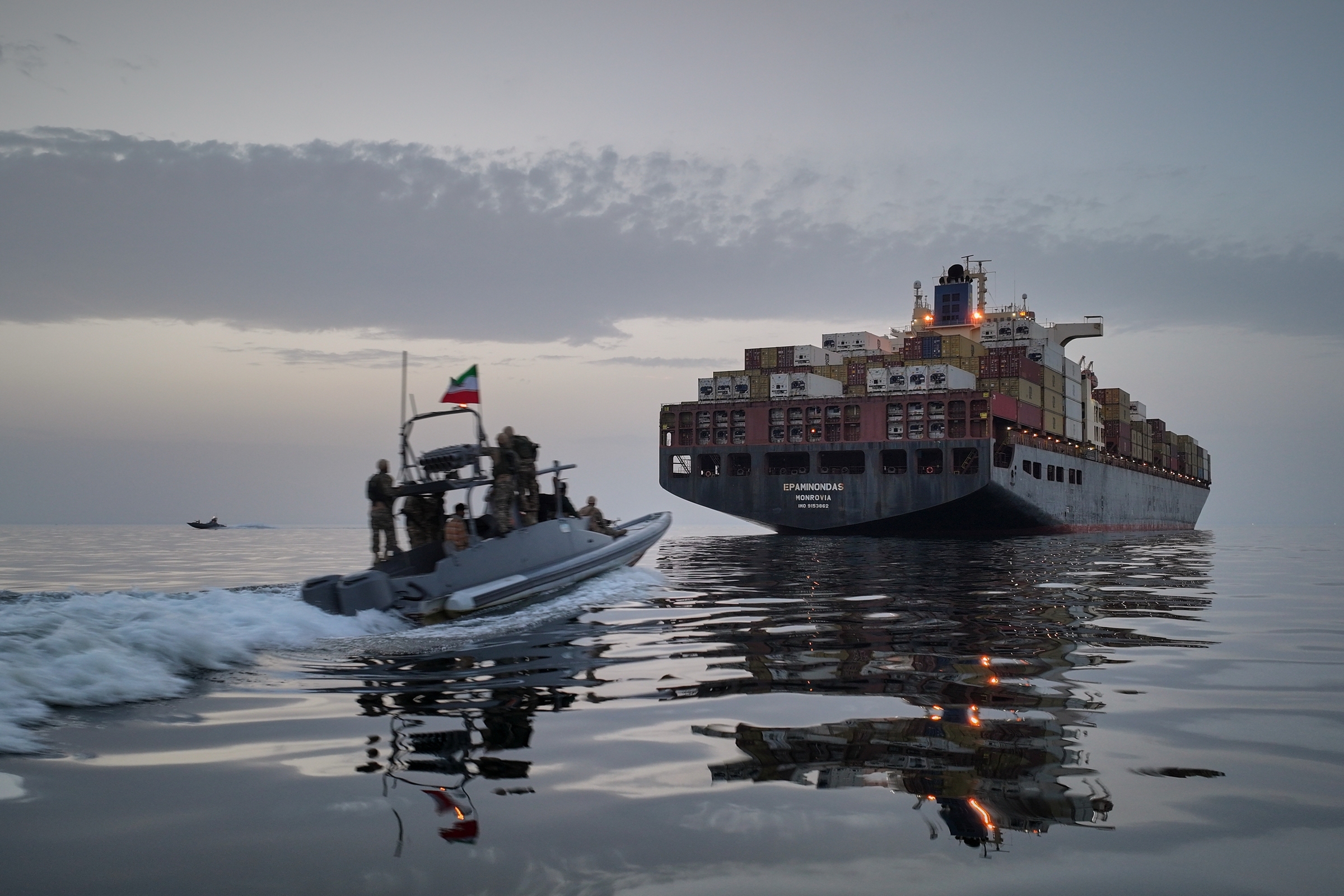 |
Speedboats of the Islamic Revolutionary Guard Corps (IRGC) approaching a cargo ship in the Strait of Hormuz on 21/4. Photo: AP |
Speedboats of the Islamic Revolutionary Guard Corps (IRGC) approaching a cargo ship in the Strait of Hormuz on 21/4. Photo: AP
Tehran has repeatedly stated that maritime traffic through Hormuz "will not return to its pre-conflict state." Last month, Iranian officials announced they had received the first fees for passage through this critical maritime route.
Relations between Iran and the UAE have severely deteriorated since the outbreak of hostilities. The UAE accuses Iran of launching multiple missile and drone attacks, while Tehran criticizes its neighbor for supporting Washington's strikes.
By Thanh Danh (AFP, Al Jazeera)


