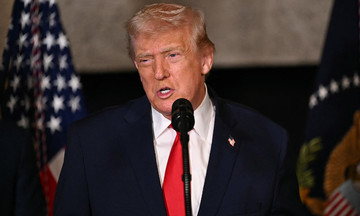
Israel plans to invest 110 billion USD over the next decade to establish an independent defense industry, aiming to lessen its reliance on allies such as the United States. Prime Minister Benjamin Netanyahu announced this initiative on 24/12 at an air base in the southern part of the country, stating, "I have approved a total of 350 billion shekels (approximately 110 billion USD) over the next decade to build an independent defense industry for Israel."
Netanyahu emphasized Tel Aviv's desire to reduce its dependence on external entities, including "friends." He added, "The most brilliant minds in the defense industry are diligently developing weapon systems that will ensure Israel's advantage on the future battlefield." The Israeli leader asserted that bolstering the defense industry would enhance national security, noting that Tel Aviv has already established itself as a regional power, and a global one in certain sectors. "This draws many nations closer to us. Peace is made with the strong, not the weak," he declared.
 |
David's Sling launcher at Hatzor Air Base near Tel Aviv in 2022. *Photo: Reuters*.
This announcement comes as Israel's military resources are depleting after two years of fighting on multiple fronts. Additionally, some nations have ceased weapon sales to protest the military campaign in the Gaza Strip. Historically, most of the Israeli military's equipment originates from the US, a result of the close alliance and long-standing defense cooperation agreement between the two nations. For 2025, Washington has allocated approximately 3,3 billion USD in military assistance and 500 million USD for missile defense collaboration to Tel Aviv.
Despite this support, Israeli leaders have long sought to reduce their dependence on foreign weapon supplies. In a controversial statement last september, Prime Minister Netanyahu remarked that Israel was becoming increasingly isolated, necessitating a "super-Sparta" approach. Sparta, an ancient Greek city-state, was renowned for its policy of self-isolation aimed at preserving a militaristic way of life. Following criticism for his remarks, Prime Minister Netanyahu clarified that he was referring to the domestic defense industry, stressing the need for Israel to be more self-sufficient to prevent supply chain disruptions.
Looking ahead, for 2026, Israel plans to allocate approximately 16% of its budget, or 35 billion USD, to defense. This marks a significant increase from the over 20 billion USD defense budget prior to the Gaza Strip conflict's outbreak in late 2023.
Pham Giang (According to AFP, Times of Israel)