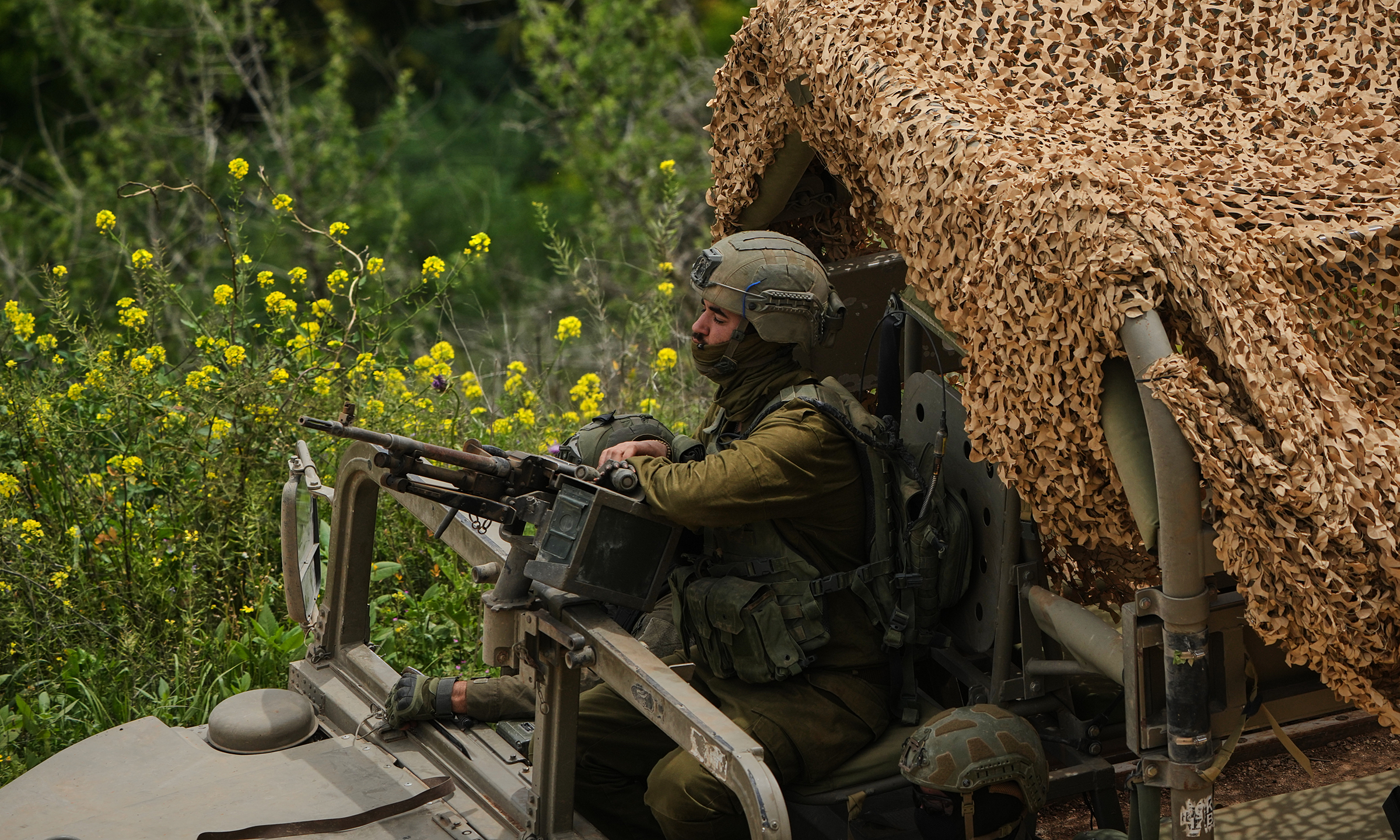
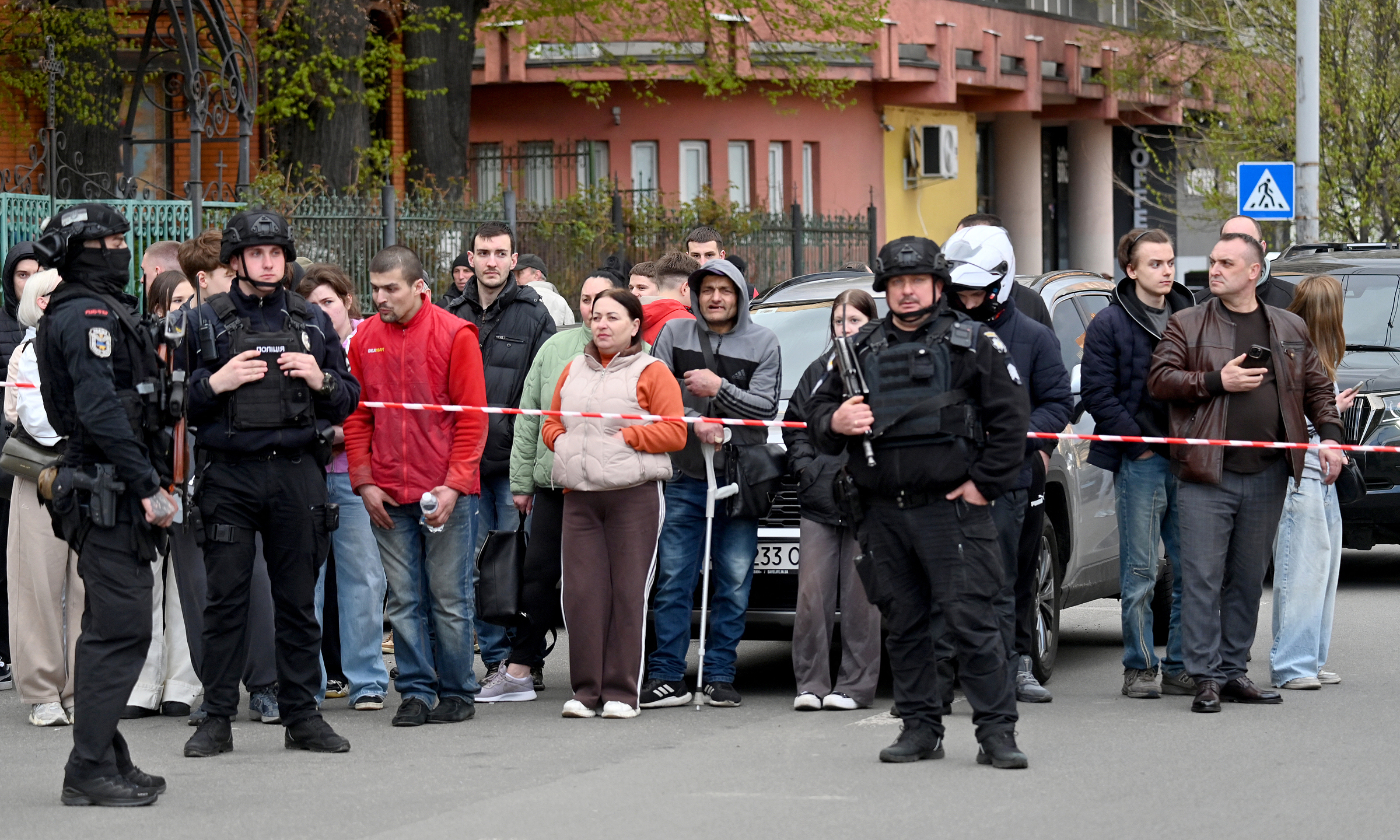
"Prime Minister Benjamin Netanyahu and I have instructed the Israel Defense Forces (IDF) to act with full force on land and in the air in Lebanon, even during the ceasefire, to protect soldiers from all threats", Israeli Defense Minister Israel Katz stated on 19/4.
Minister Katz added that the IDF has received orders to destroy all structures or roads that are mined. "We will also dismantle homes in villages adjacent to the border, which are Hezbollah outposts and threaten Israeli communities", he said.
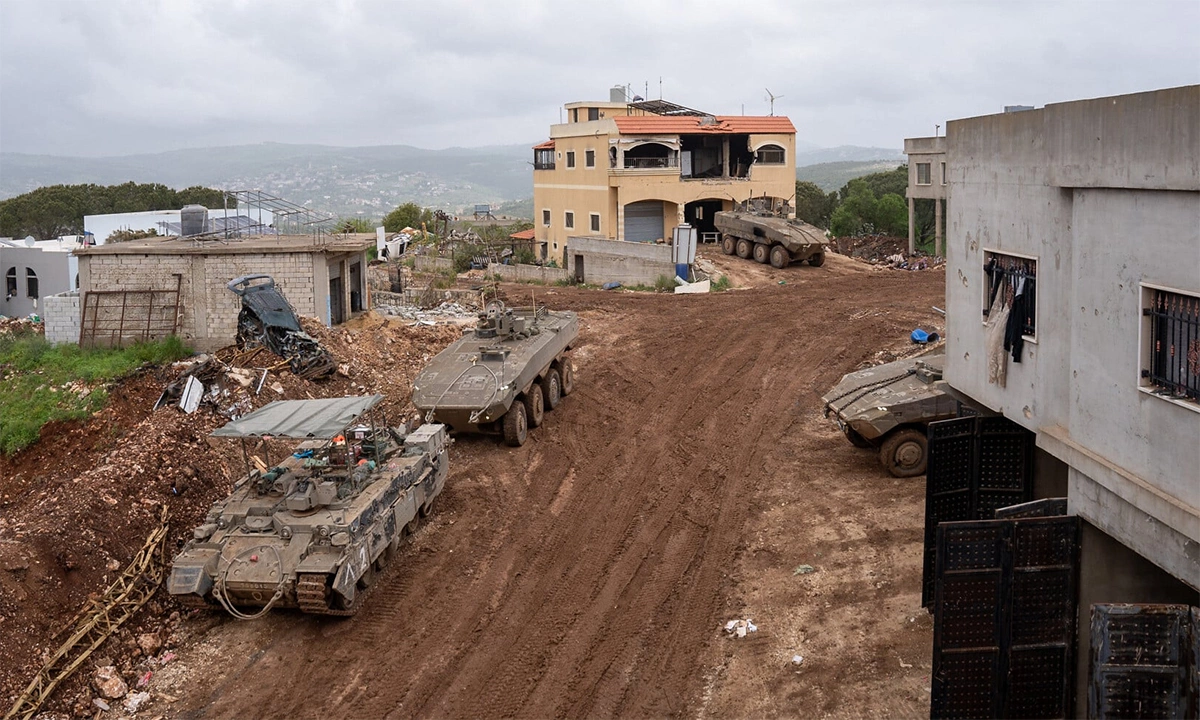 |
An Israeli armored vehicle in Ayta ash-Shab village, southern Lebanon on 19/4. Photo: *Times of Israel*. |
"The overall objective of the operation in Lebanon is to disarm Hezbollah and eliminate the threat to northern Israeli communities through military and diplomatic means. If the Lebanese government continues to fail in its obligations, the IDF will do so through continued military operations", the Israeli official added.
Lebanon's National News Agency (NNA) reported on the same day that Israel is "destroying what remains of homes" in Bint Jbeil, a town that saw fierce clashes between the IDF and Hezbollah before the ceasefire took effect.
The Israeli military also destroyed many homes in the residential areas of Mais al-Jabal and Deir Siryan, and shelled Kunin town, according to NNA.
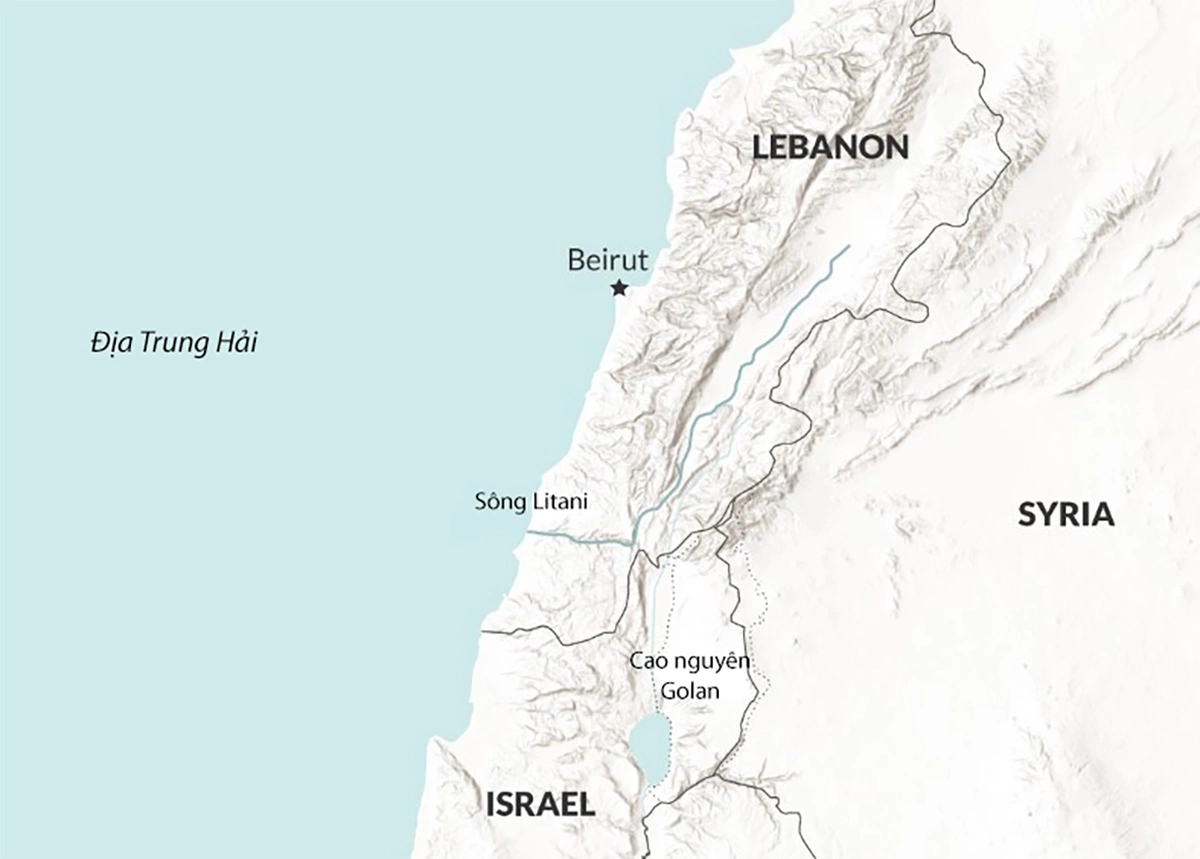 |
Location of Israel, Lebanon. Graphic: *RANE*. |
Conflict in Lebanon re-erupted in early March after the armed group Hezbollah launched rockets into Israeli territory in retaliation for the assassination of Iran's supreme leader Ali Khamenei on the first day of the Middle East conflict. Israel responded with large-scale attacks across Lebanon and deployed troops into the southern part of the neighboring country.
The conflict has killed nearly 2,300 people in Lebanon and displaced 1,2 million people. A ten-day ceasefire agreement between Israel and Lebanon took effect on 17/4, days after the first high-level meeting between representatives of the two countries in decades.
The Lebanese military announced on 19/4 that it reopened the road connecting the southern city of Nabatieh with the Khardali area, along with a section of the Burj Rahal-Tyre bridge. A series of Israeli attacks targeting bridges over the Litani River, about 30 km from the border, before the ceasefire had hindered access to these areas.
By Nguyen Tien (According to AFP, AP, Al Jazeera, Times of Israel)