North Korea's Central News Agency (KCNA) reported today that a test of modified Hwasong-11 Ra tactical ballistic missiles, some carrying cluster warheads, was conducted the previous day. The missiles struck an island target approximately 136 km from the training ground, covering an area of nearly 13 hectares.
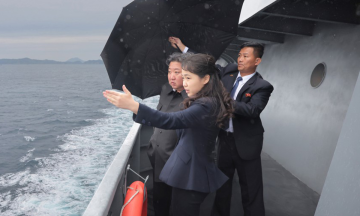
Images released show leader Kim Jong-un and his daughter Kim Ju-ae supervising the exercise from a coastal command post. KCNA stated that Kim was "very satisfied" with the results, emphasizing that enhancing "high-density attack capability" is crucial for warfare.
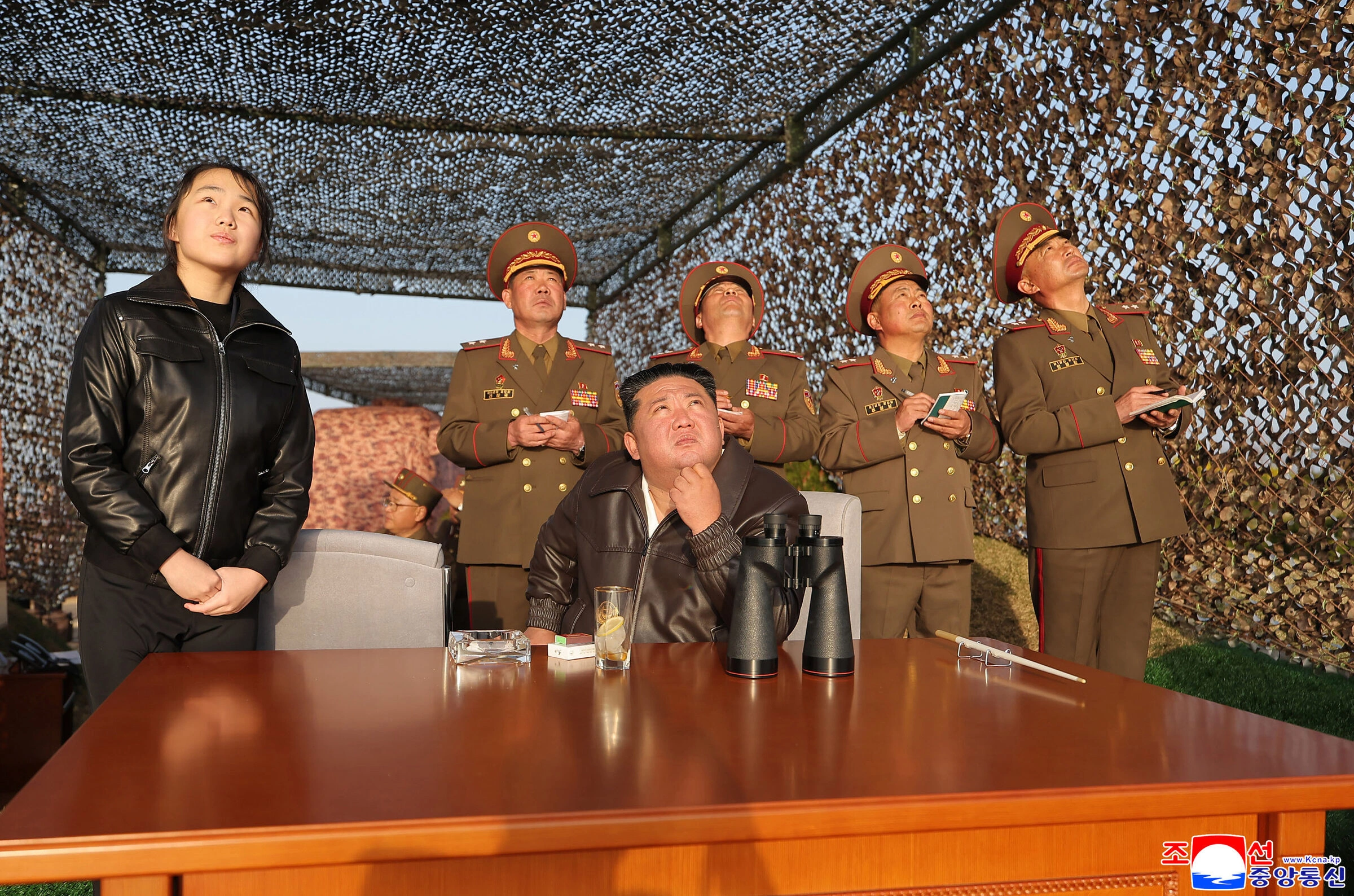 |
Leader Kim Jong-un (center) and his daughter supervise the missile test on 19/4. Photo: KCNA |
The South Korean Joint Chiefs of Staff announced on 19/4 that North Korea launched a series of ballistic missiles from Sinpo, a coastal area in the central part of the country, into the waters east of the peninsula. The projectiles flew approximately 140 km.
North Korea has conducted a total of seven ballistic missile launches since the beginning of the year, with four occurring this month. This marks the second time North Korea has launched ballistic missiles carrying cluster warheads in April.
The Hwasong-11 series, known in the West as KN-23, first appeared in 2018. It has achieved a range of 800 km in tests and can carry various warheads weighing 500-1,500 kg. The Hwasong-11 shares similarities in shape with Russia's Iskander-M and South Korea's Hyunmoo-2B ballistic missiles, though some differences exist.
Cluster warheads are large but cause less damage from explosives or conventional penetrating warheads. Instead, they contain a large number of submunitions that disperse near the target. When a military decides to use cluster munitions, it means that the precision of the weapon is less important than its ability to inflict damage on a large scale.
One hundred twenty-three countries signed the Oslo Convention in 2008, prohibiting the production, stockpiling, sale, and use of cluster bombs and munitions. North Korea is not a signatory to this convention. Military experts suggest that recent global conflicts have prompted Pyongyang to accelerate the development and display of its cluster munition capabilities.
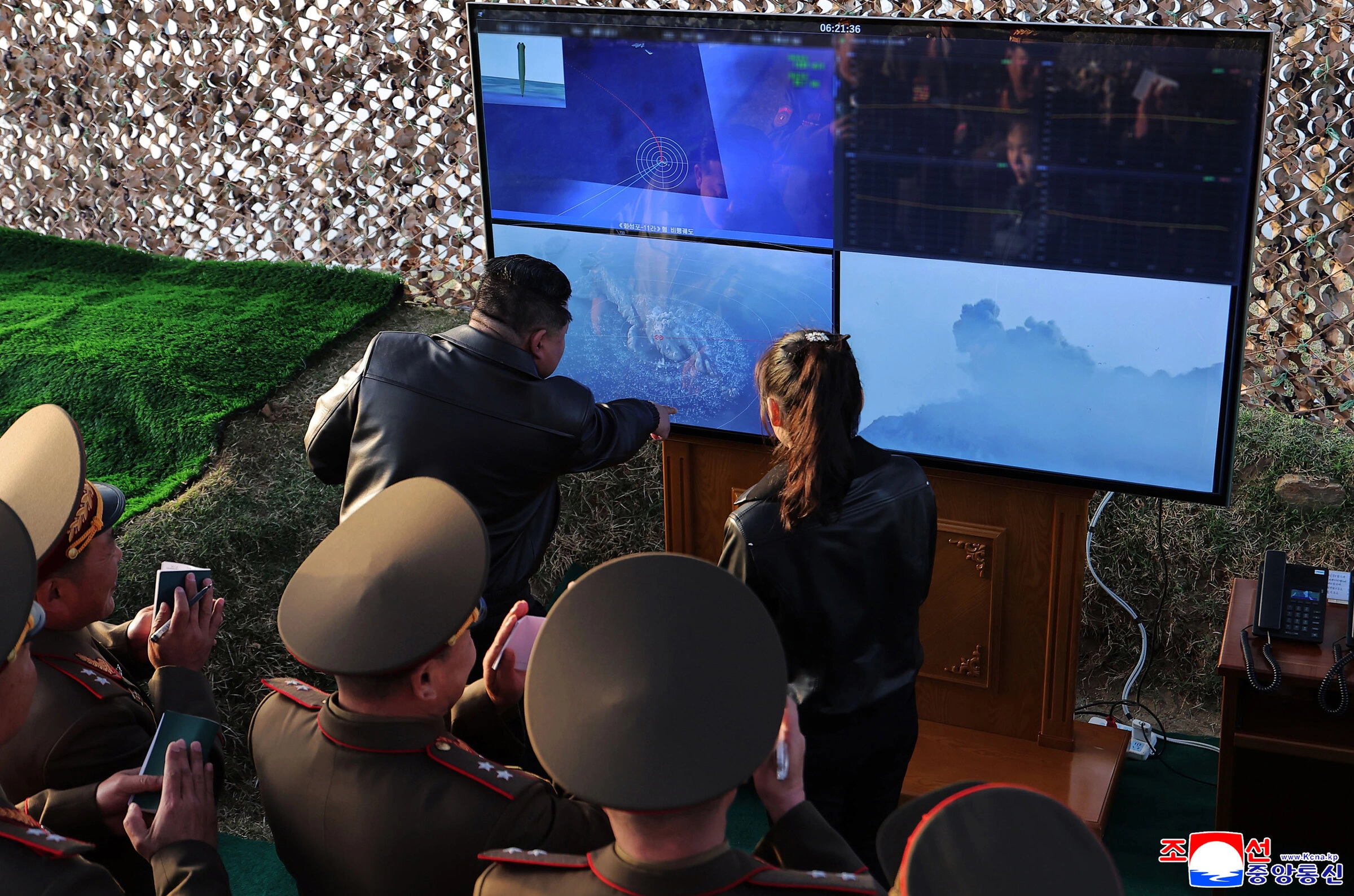 |
Kim Jong-un observes the missile strike during the exercise on 19/4. Photo: KCNA |
Ju-ae, believed to have been born in 2012, is the second daughter of the North Korean leader, according to South Korean intelligence. North Korea first publicly released images of Ju-ae in November 2022 when she accompanied her father during an intercontinental ballistic missile launch.
The young girl has long been considered a potential successor to Kim Jong-un. This assessment is reinforced by Ju-ae's recent public appearances. North Korean media has even referred to Ju-ae as a "great guide", a term typically reserved for top-ranking leaders.
South Korea's National Intelligence Service (NIS) stated in February that Ju-ae is being groomed for succession.
Thanh Danh (According to AP, AFP, Chosun)