As Japan's summer tourist season approaches, the food service industry faces severe staffing pressure following the Immigration Services Agency's decision on 13/4 to temporarily halt the acceptance of foreign workers under the specific skilled worker (SSW) visa category.
According to preliminary data from the Japanese government, by the end of february, approximately 46,000 foreign workers were employed in the restaurant sector under this visa, nearing the quota of 50,000 set until the end of fiscal year 2028. The Immigration Services Agency of Japan therefore had to temporarily stop accepting new applications, despite Japanese restaurants relying significantly on foreign labor.
Japan launched the SSW program in 2019 to attract foreign workers to sectors facing domestic recruitment challenges. Workers must pass professional skill assessments and Japanese language proficiency tests.
SSW type I, common in the restaurant industry, allows employment for a maximum of 5 years but does not permit family sponsorship. In contrast, type II requires higher skills, but offers unlimited residency and allows family members to join.
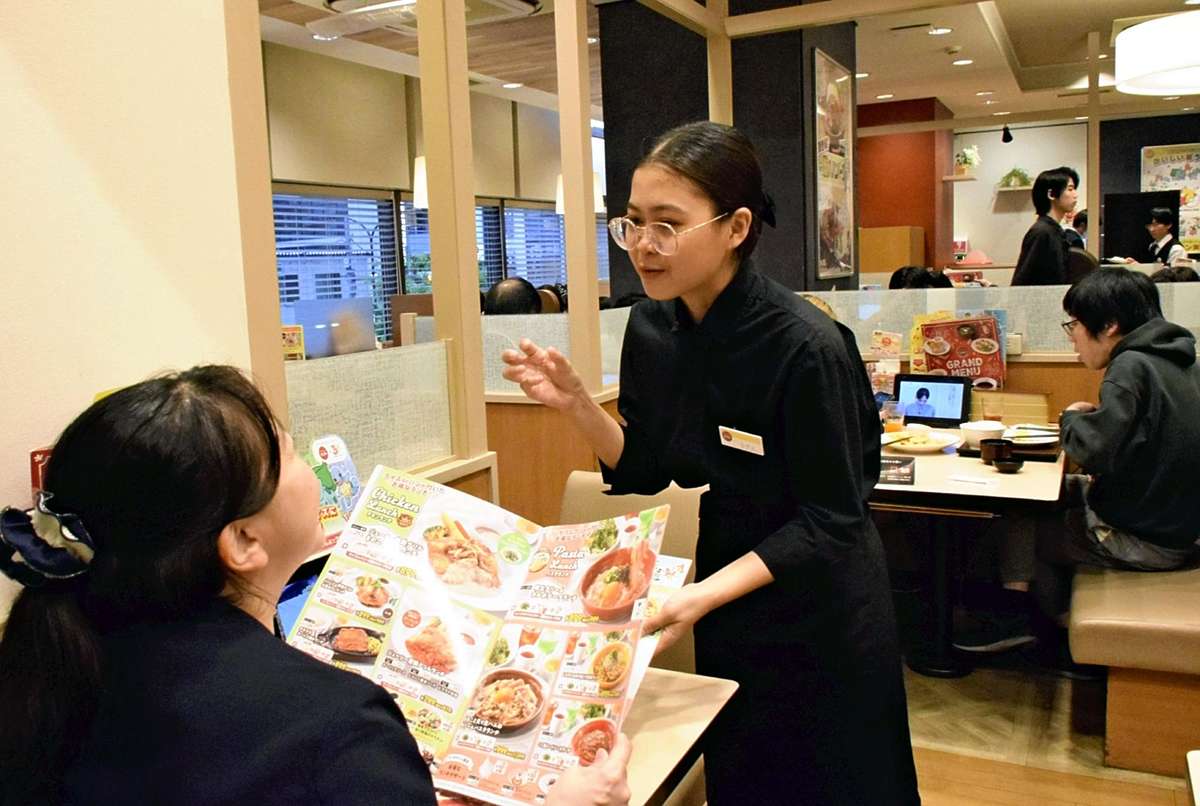 |
A female employee of Myanmar origin, holding an SSW type I visa, works at Gusto restaurant in Tokyo in april. Photo: *Yomiuri* |
The sudden policy change caught many businesses unprepared.
Speaking to NHK, a ramen chain in Japan with approximately 200 stores nationwide stated that about 75 employees, or one-fourth of its full-time staff, are SSW workers in the kitchen and serving tables. The company rushed to recruit 20 more foreign workers before the suspension took effect, as it planned to open additional stores in the current fiscal year.
The company had also intended to recruit international students after graduation under this visa category, even sending job offers. However, these plans are now disrupted, forcing the business to consider shifting towards highly skilled worker visas and training them for positions such as managers and apprentices.
Hang, a Vietnamese employee working at a branch in Chiba province, told NHK she had previously participated in a technical intern training program, working at a food processing factory in Aichi province about 10 years ago.
She returned to Japan in 2022 under the SSW visa for better income. Hang noted that many Vietnamese workers are interested in restaurant jobs because they are concentrated in major cities and offer more opportunities to use Japanese than factory environments.
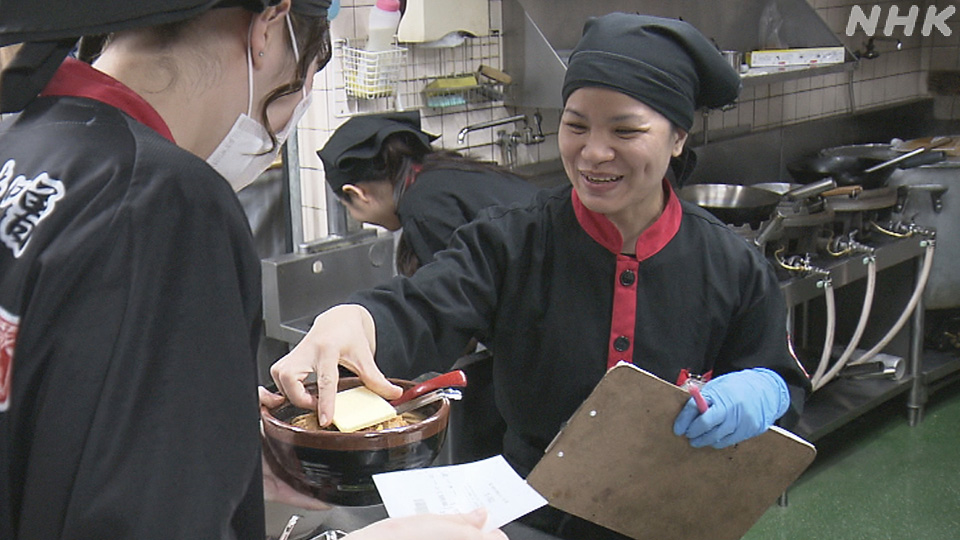 |
Foreign employees work in the kitchen of a ramen restaurant chain, a branch in Chiba province, Japan. Photo: *NHK* |
Mos Food Services, operator of the Mos Burger chain, stated it had supported Vietnamese workers preparing to apply for specific skilled worker visas to work in Japan's food service industry. The sudden policy change raises concerns about potential disruptions to the labor supply from one of Japan's key recruitment markets.
The Japan Food Service Association, representing about 400 businesses, warned that the visa suspension could affect new store opening plans, operating hours, and even intensify competition for workers among businesses.
Korekawa Yu, a demography expert, noted that labor demand in Japan's food service industry grew faster than expected post-pandemic as international visitor numbers recovered strongly, making the 50,000 limit unsuitable. "The government miscalculated the number of workers needed," he said.
According to him, instead of treating the projected number as a rigid ceiling, Japan should develop a more flexible mechanism for accepting foreign workers, viewing it as a reference point adjustable to market demand.
By Thanh Danh (Source: *NHK*, *Japan News*, *Mainichi*)