"Arms sales and security cooperation between Taiwan and the US are crucial for maintaining regional peace and stability," Taiwan's leader Lai Ching-te wrote on Facebook on 17/5.
This statement from Taiwan's leader followed US President Donald Trump's interview on 15/5, where he indicated that delaying the 14 billion USD arms sale to Taiwan was a "valuable bargaining chip" in negotiations with China. The US President also stated that Taiwan should not declare independence.
"We will see what happens. I might approve the deal, or I might not," the US leader stated aboard Air Force One after his visit to China. "We do not want anyone to say: 'Go ahead and be independent because the US is supporting us'".
Lai Ching-te asserted that China "has never abandoned its intention to annex Taiwan by force" and is increasing its military capabilities "to alter the regional status quo and across the Taiwan Strait". He noted that this could significantly impact Indo-Pacific security, global supply chains, and the world economy.
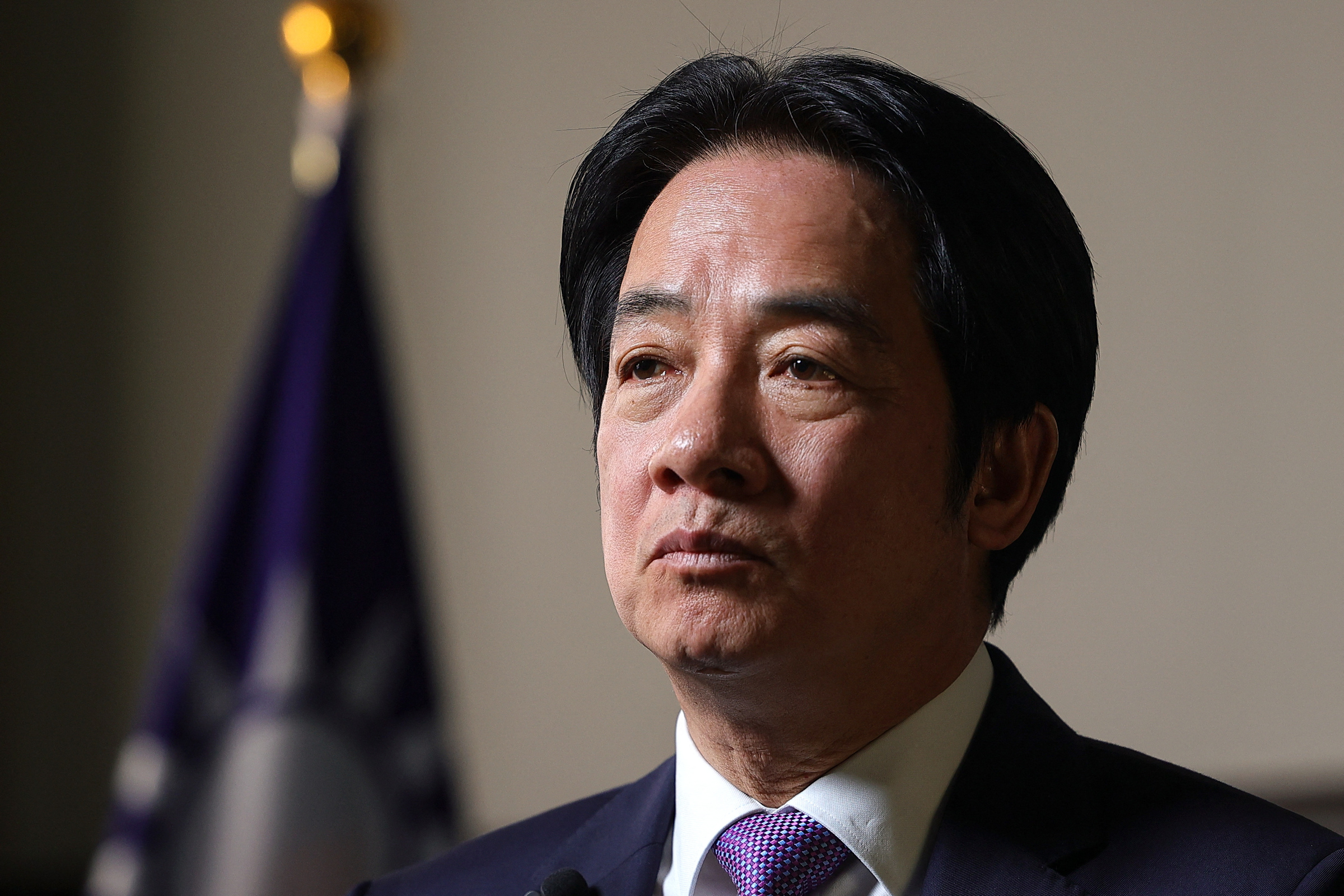 |
Lai Ching-te during an interview on 10/2 in Taipei, Taiwan. Photo: AFP.
China and Trump have not yet commented on this statement. China consistently views Taiwan as an inalienable part of its territory and is prepared to use all measures, including force, to achieve reunification. The US is committed to respecting the "One China" principle and does not officially support Taiwan's independence, but it generally avoids publicly opposing the island's independence.
Under the Taiwan Relations Act, signed by President Jimmy Carter after Washington established diplomatic relations with Beijing in 1979, the US is obligated to assist Taiwan's self-defense capabilities. However, the US maintains strategic ambiguity regarding whether its military would intervene if the island were attacked.
During his visit to Beijing from 13-15/5, Trump stated he had "very detailed" discussions with Chinese President Xi Jinping regarding US arms sales to Taiwan.
According to Phelim Kine, a Politico commentator, this could contradict President Ronald Reagan's 1982 "Six Assurances" to Taiwan, which included Washington not consulting Beijing on arms sales to Taiwan. Failing to sell weapons to the island would also violate commitments in the 1979 act.
US Trade Representative Jamieson Greer stated that Trump's remarks on 15/5 do not mean the US is withdrawing its commitment to Taiwan. "The President has been very clear on this. There is no change in US policy toward Taiwan," Greer told ABC News on 17/5.
Duc Trung (According to Reuters, AP, AFP)