"Far too many female lawmakers have to wait in long lines outside restrooms before plenary sessions begin", said lawmaker Yasuko Komiyama, a member of Japan's opposition Constitutional Democratic Party, on 31/12/2025, describing the situation at the country's parliament building.
Fifty-eight female lawmakers, including Prime Minister Sanae Takaichi, previously submitted a petition to Yasukazu Hamada, chairman of the House of Representatives' Rules and Administration Committee, requesting the installation of more restrooms in Japan's Diet building to accommodate the increasing number of female representatives.
Japan's Diet building was completed in 1936, nearly 10 years before women gained the right to vote in december 1945. The entire House of Representatives area has 12 men's restrooms with 67 stalls, while there are only 9 women's restrooms with 22 stalls.
According to the petition, only one two-stall restroom is located near the plenary session hall of the Diet, but it must serve over 70 female lawmakers in the House of Representatives.
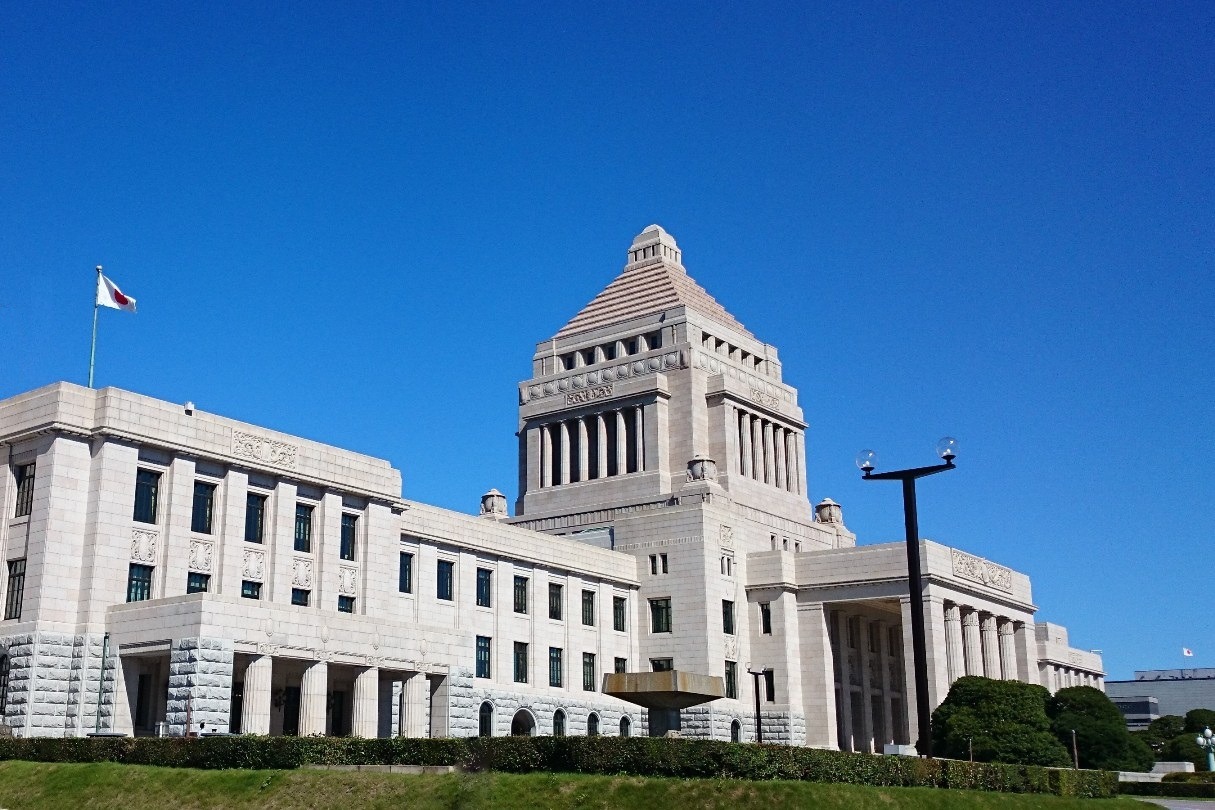 |
Japan's Diet building. Photo: Shugiin |
Komiyama remarked that the demand for more women's restrooms can be seen as a sign of progress, though it also reflects the reality that Japan has not yet achieved true gender equality. "In a way, this symbolizes the increased number of female lawmakers", she stated, expressing hope for greater equality in other areas of life.
Japan ranked 118th out of 148 countries in the Global Gender Gap Report published by the World Economic Forum in 2025. Women are also severely underrepresented in business and media. In elections, female candidates often face sexist ridicule.
In the 2024 election, a total of 73 women were elected to the 465-seat House of Representatives, nearly doubling the 45 from the previous term. Seventy-four female lawmakers are also serving in the 248-seat House of Councillors. The Japanese government's goal is for women to hold at least 30% of seats in the legislature. Last year, the country also saw its first female prime minister in history.
Prime Minister Takaichi, who admires former British Prime Minister Margaret Thatcher, previously stated that she wanted to achieve a Nordic-style level of gender balance in the cabinet. However, she only appointed two women to the 19-member cabinet.
At 64 years old, Takaichi hopes to raise awareness about women's health issues and has shared her personal experiences during menopause. Despite this, she is still considered a conservative, holding views against amending a 19th-century law requiring married couples to share a surname, and wishing for the imperial family to maintain a male-only succession system.
Hong Hanh (According to AFP)