Under the scorching late May sun in a Bangkok suburb, a cacophony of horns and shouts erupted as dozens of shoppers surged into a warehouse displaying a sign: "Japanese Used Goods Store".
"That bag! That bag there!", one person yelled, rushing through the warehouse filled with everything from colorful toys to ceramic bowls, beaded necklaces, and even used umbrellas.
"What is considered trash to them can still be useful in Thailand", said Lookpoo Sathitpanyapon, 36, who owns a Facebook shop specializing in toy keychains.
Going shopping for Japanese secondhand goods in Thailand. Video: AFP
From handbags and bicycles to surfboards and suitcases, the Japanese secondhand market is experiencing a significant boom. Quality-conscious buyers in Asian countries outside Japan are increasingly embracing the circular economy trend.
The concept of a "circular economy", which involves recycling and reusing existing products, has gained popularity in recent years. According to the Amsterdam-based research organization Circular Economy Foundation (CEF), it is considered a "mega-trend" in its 2024 report.
In Japan, the secondhand market is thriving, having doubled in value since 2010, according to market research firm Kadence International. Many Japanese reuse companies are expanding their operations across Asia.
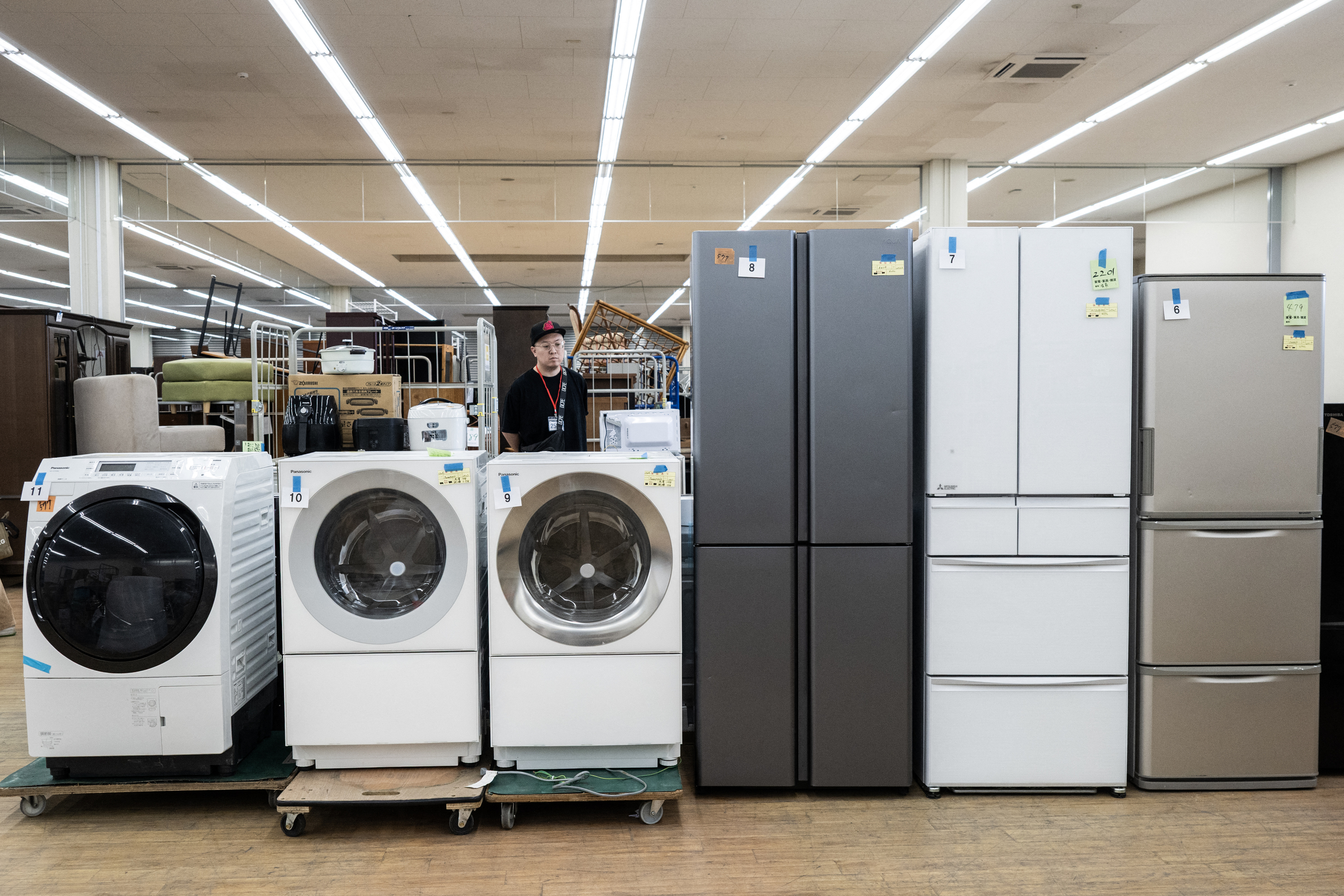 |
A shopper examines home appliances at the Hamaya wholesale secondhand goods auction market in Higashimatsuyama, Saitama province, Japan, 14/5. Photo: AFP
Treasure Factory, a Tokyo-based operator of secondhand stores, currently has 6 stores in Thailand and three stores in Taiwan.
In April, Bookoff, a major player in the secondhand industry, partnered with FamilyMart to place collection bins for used goods at convenience stores across Japan. These items are then exported for sale at one of Bookoff's 26 branches in Malaysia or Kazakhstan.
Smaller businesses are also flourishing.
At an auction near Tokyo, Thai merchant Kangyapat Yoosanong bid on a lot of stuffed animals. These items are a staple that helps her earn significant profits from her Japanese secondhand goods business back home.
"Everything used in Japan is highly sought after abroad", the 35-year-old said after spending 340,000 yen (about 2,100 USD) on 100 kg of stuffed animals.
These plush toys, along with the remaining handbags and toys she collected, will soon arrive at her warehouse in Bangkok.
Auction of used goods at the Hamaya wholesale secondhand goods market in Higashimatsuyama, Saitama province, Japan, 14/5. Video: AFP
According to Hamaya, the company that organizes weekly auctions in Saitama, north of Tokyo, most goods sell out by the end of the day, with foreigners making up about one-third of the auction participants.
"It is difficult to sell used goods in Japan if they are more than 7 years old", said Ippei Kobayashi, Hamaya's president. "But they are still popular in overseas markets".
At the warehouse in Nonthaburi, a Bangkok suburb, the sounds of people rummaging for items and plastic baskets clattering against shopping carts echoed throughout the building. Some items looked brand new, still in their original plastic wrapping.
"This is a winner's game", said Wanna Promthep, 70, who had lined up early before opening hours with her daughter and son-in-law.
"Whoever has a keen eye for good quality items will get the best products", she said while guarding a large pile of handbags.
 |
Ippei Kobayashi, president and representative director of the Hamaya wholesale secondhand goods market, gives an interview 14/5. Photo: AFP
Circular economy
Not only Japanese stuffed animals and used clothing are sought after for their high quality; last year, 1,7 million used cars were exported worldwide, reaching destinations from the Middle East to Africa and Europe.
Despite this trend, global circularity is declining, the CEF noted in its 2024 report. The report indicated that the world economy has consumed nearly as much raw material in the past 6 years as it did in the entire 20th century.
In Japan, approximately 70% of the 820,000 tons of new clothing purchased by consumers each year are ultimately incinerated, according to a study by the Ministry of Environment.
To reduce waste, analysts and industry leaders see great potential in circulating used items to other countries.
Masashi Matsuyama of the major trading group Itochu Corp, which owns the FamilyMart chain partnering with Bookoff, said that "growing awareness of ethical consumption" combined with rising inflation is pushing people towards "reasonably priced" recycled products.
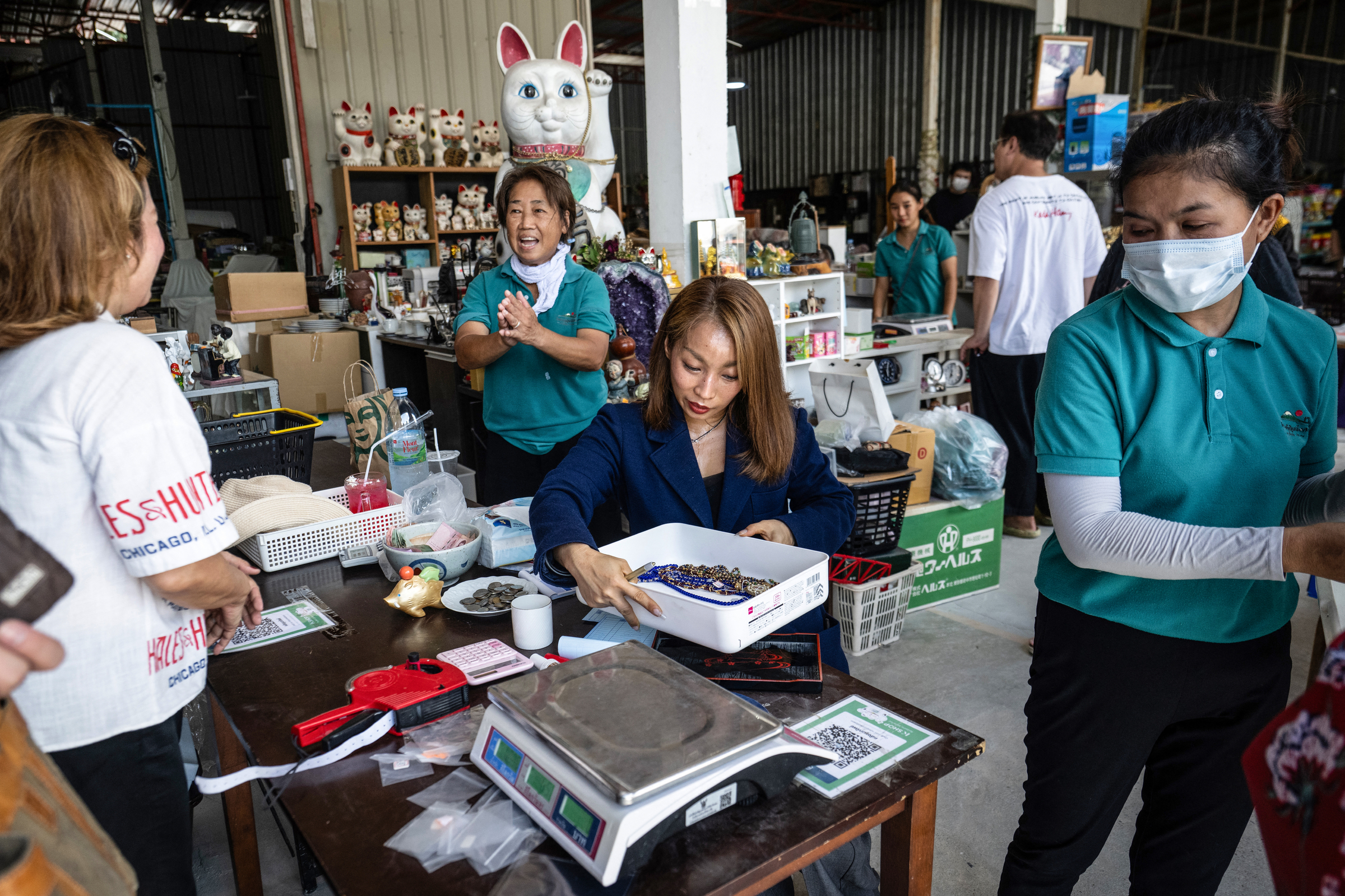 |
Store owner Wipaporn "Je Nana" Sakdisakwasdi weighs jewelry for a customer in her Japanese secondhand goods store in Nonthaburi, a Bangkok suburb, 30/5. Photo: AFP
The two companies hope their pilot project in Tokyo - allowing people to drop unwanted items into collection bins inside FamilyMart stores - will help Japanese citizens form recycling habits.
Researcher Yutaka Oguchi of the NLI Research Institute stated that this initiative is "extremely important".
"To get the majority of people involved, you have to lower the barrier", Oguchi said.
Hong Hanh (According to AFP)