Volodymyr Stepanets, a Ukrainian satellite communication expert, reported that satellites from the Rassvet project by Russian company Byuro 1440 have completed their orbital deployment. As of 31/7, a total of 12 satellites have reached an operational altitude of 550 km, three are raising their altitude, and one has fallen back to Earth, likely due to a manufacturing defect.
"We can see an effective satellite network has formed, ensuring uninterrupted connectivity across Ukrainian territory at least two times each day, with each session lasting one hour. The actual number is higher, as the satellite constellation can fly over certain areas with intervals of approximately one and a half hours," Stepanets said.
Data from the N2YO tracking site indicates that Rassvet satellites pass over areas with a direct line of sight to Ukraine four times daily. However, only two to three of these passes achieve sufficient altitude above the horizon to maintain stable connectivity with ground stations.
During each pass over Ukrainian territory, lasting one to one and a half hours, the Rassvet system can create a stable "connection window". This allows Russian forces to use terminals for communication, controlling unmanned surface vehicles, suicide drones, and reconnaissance unmanned aerial vehicles (UAVs).
Russian military news site Topwar stated on 2/8 that it is too early to confirm if Rassvet can completely replace Starlink on the battlefield. The limited number of devices and their fixed cyclical operation might allow Ukraine to counter by maximizing electronic warfare systems to jam signals when satellites pass, rather than spreading resources around the clock.
Additionally, only units that have received terminals can use this system, and it has not yet been widely deployed. Rassvet remains in its early stages, and not all satellites are functioning normally, while Byuro 1440 has not released full information about the incidents.
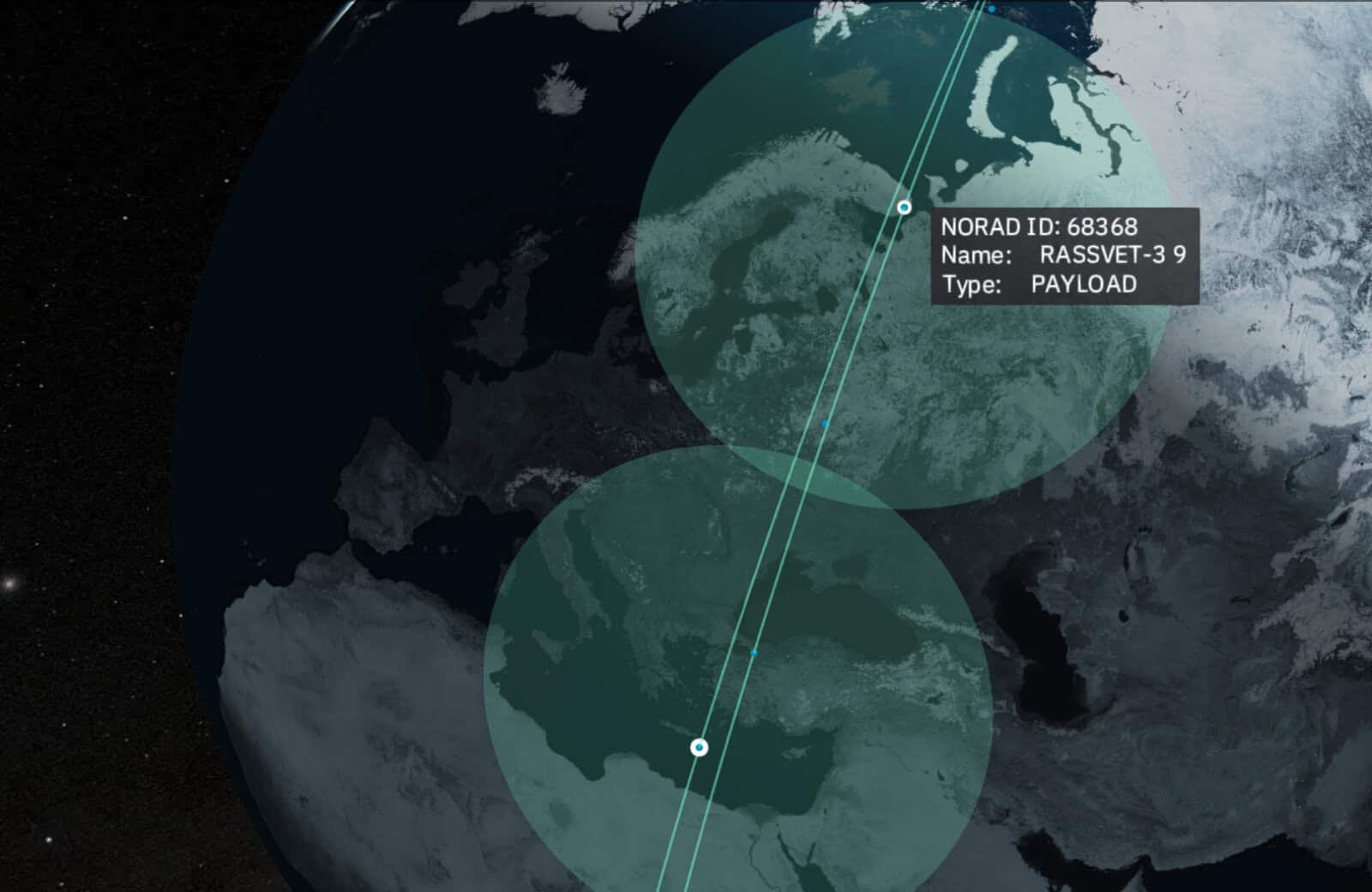 |
Simulation of Rassvet system satellite flight path and coverage area. Graphics: Satcat |
"With Rassvet's current operational method, the Russian military can use an intermittent operational model. UAVs will still self-locate, select routes, and identify targets. When the connection zone covers Ukraine, operators will receive images from the UAVs and send additional commands, such as avoiding air defense positions, confirming targets, or attacking," Topwar noted.
Russia launched the first batch of 16 Rassvet satellites into orbit in 3/2026 and the second batch in late 7/2026. If deployment proceeds at a similar pace, satellites from the second batch are expected to become operational in 10-11/2026, providing two additional "connection windows."
Byuro 1440 expects to commercialize the Rassvet system next year. According to Russian sources, the company plans to increase the number of satellites to 250 by 2027, 730 by 2030, and over 900 systems by 2035. This roadmap requires Russia to launch 16 satellites each month, while the current frequency is one batch every four months.
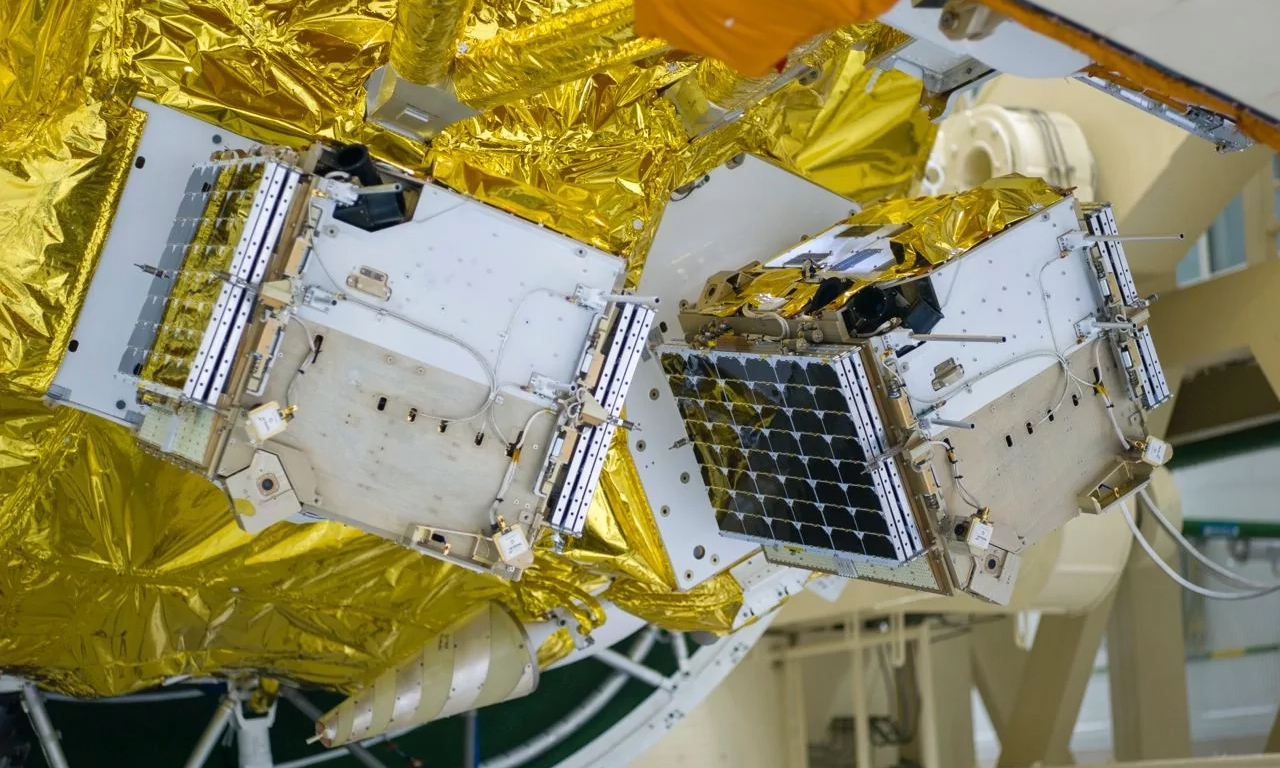 |
Satellite from the Rassvet system. Photo: Byuro 1440 |
According to Ukrainian experts, Russia could launch the 4th batch of Rassvet satellites in 3/2027 and ensure 24/7 coverage across all of Ukraine by mid-next year. They warn that this could have severe consequences for the Ukrainian military if effective countermeasures are not implemented.
Rassvet has been nicknamed "Russia's Starlink" because this system was developed to replace the satellite Internet service developed by SpaceX. The terminals in the Rassvet system use antennas similar to Starlink, capable of locating satellites and maintaining a link without manual adjustment.
These terminal sets weigh under 15 kg, with side lengths of approximately 60 cm. They can maintain connectivity with bandwidths up to 1 Gbit/s and operate in temperatures from -40°C to 40°C. Starlink's highest power antenna weighs almost 12 kg with side lengths of 51 and 57,5 cm.
Nguyen Tien (According to AFP, AP, Militarny, Top War)