Hungarian Prime Minister Peter Magyar announced on 2/8 that one of the two remaining units at the Paks nuclear power plant would cease operations from 1:30. This decision comes as Danube river levels continue to fall. "The plant's capacity will drop to just 240 MW and will completely shut down the following day, a first in 44 years," he stated.
Located south of the capital Budapest, the Paks plant relies on Danube river water to cool its reactors. Extended drought conditions, coupled with successive heatwaves since May, have caused river levels to plummet to unprecedented lows. This has resulted in a cooling water supply that no longer meets the plant's operational requirements.
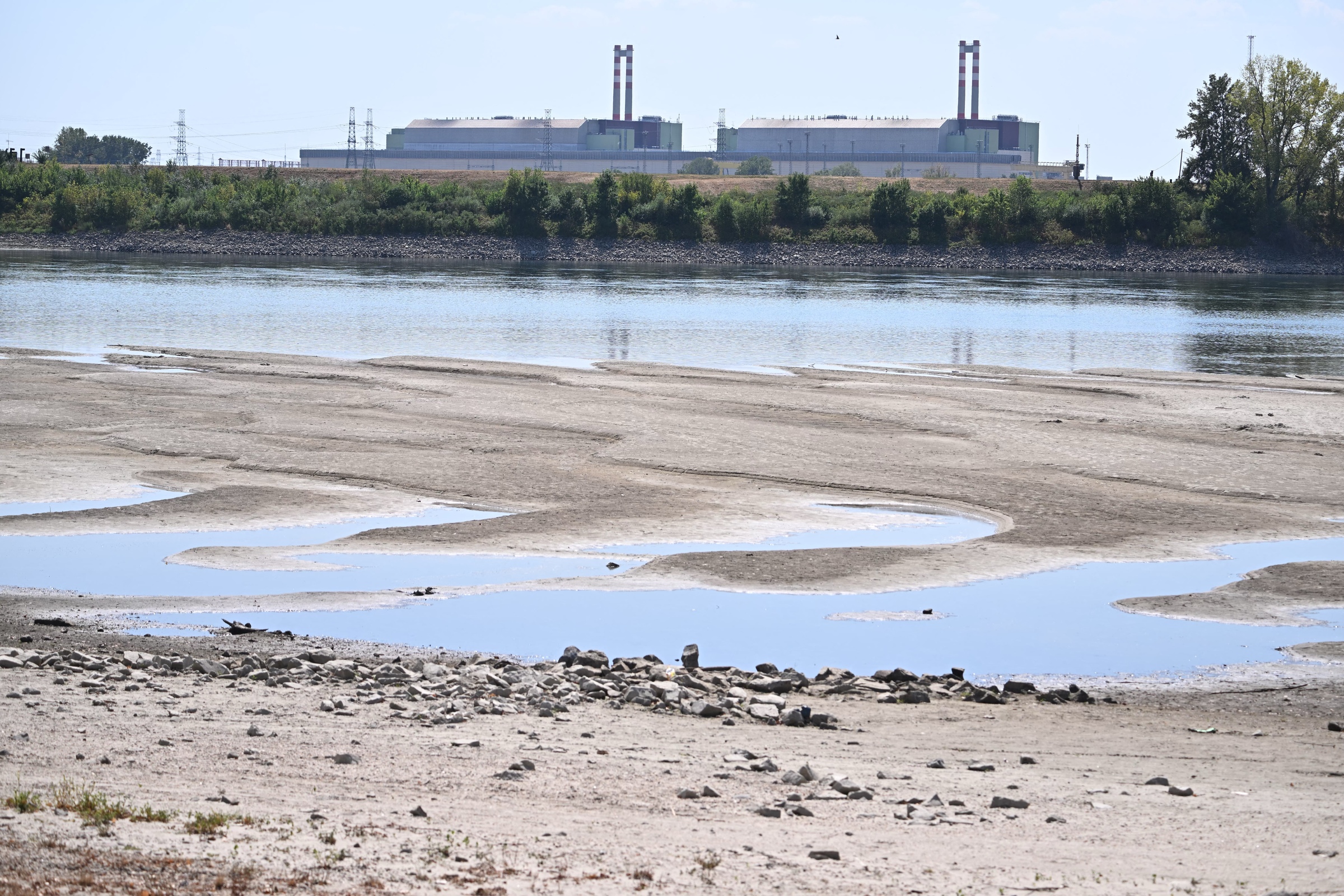 |
A section of the Danube river near the Paks nuclear power plant with its bed exposed on 31/7. Photo: AFP |
A section of the Danube river near the Paks nuclear power plant with its bed exposed on 31/7. Photo: AFP
Prime Minister Magyar described Hungary as entering "five worrying days," as the nuclear plant's electricity generation halts just as the country prepares for a new heatwave. "The power grid, public services, and individuals will all face immense pressure," he warned, raising the possibility of the Paks plant remaining offline for several weeks.
HungaroMet, the meteorological agency, forecasts peak temperatures in the coming days to exceed 40 degrees C, potentially reaching 42 degrees C on 6/8. This matches the record temperature recorded earlier this summer.
The water management agency predicts Danube river levels will continue to fall in the coming days. Prime Minister Magyar emphasized that the Hungarian government has not yet implemented mandatory measures to curb corporate electricity consumption, but may consider this option from 3/8 if necessary.
The prolonged heat and drought have also disrupted waterway transport and tourism. Over 100 cities and towns across Hungary, including areas in suburban Budapest, have implemented water usage restrictions.
Mark Radnai, Vice President of Prime Minister Magyar's Tisza party, suggested the energy crisis could cost Hungary 100-200 billion forint (315-630 million USD) due to sharply rising imported electricity prices.
Thanh Danh (According to Reuters, AFP)