The tragedy unfolded at 2h on 23/8 at the landfill in Gbessia district, Conakry, Guinea's capital, following an overnight downpour. Witnesses reported the massive landfill buried numerous dilapidated homes and makeshift shelters in the vicinity.
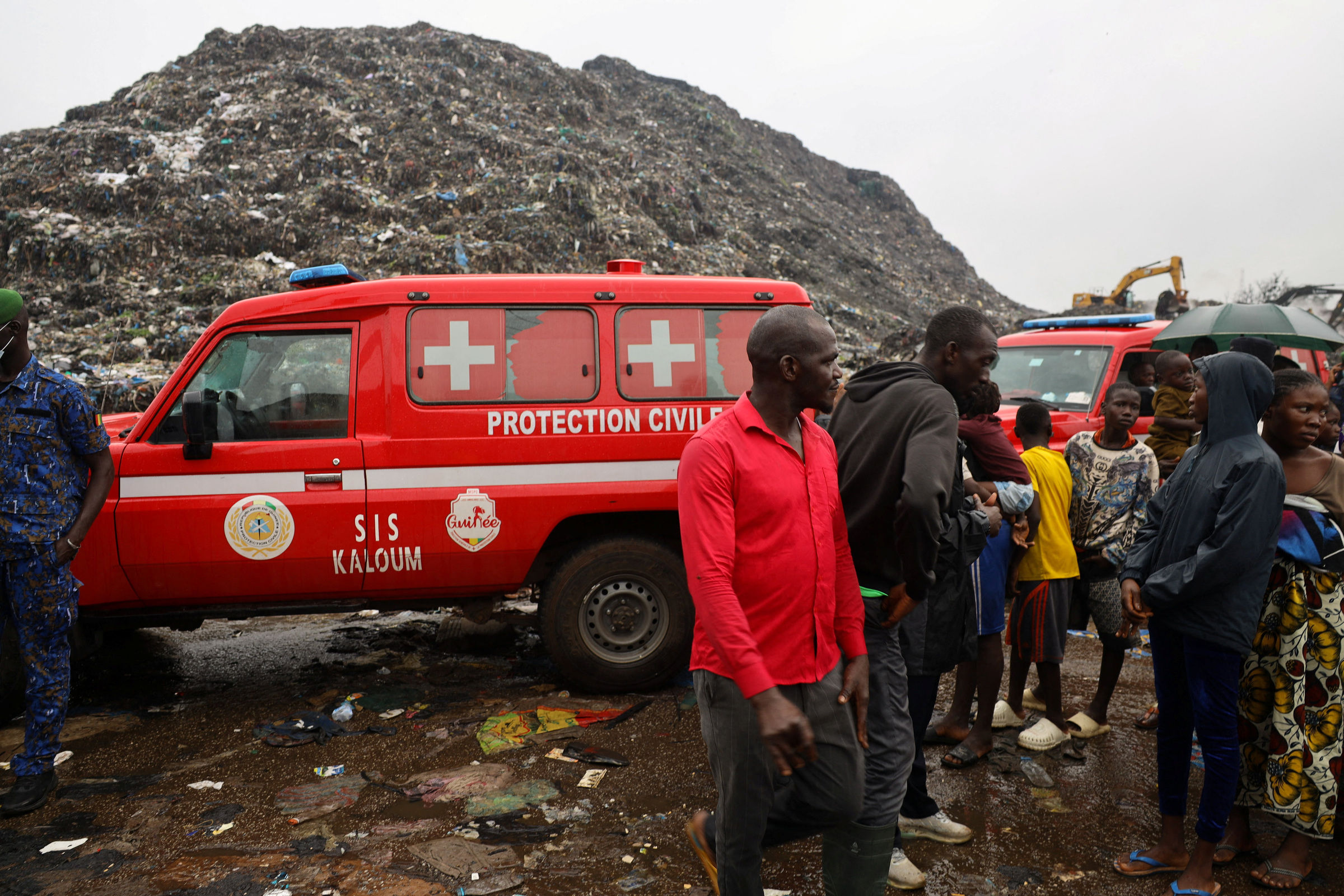 |
Ambulances parked at the scene of the landfill collapse in Gbessia district, Conakry, Guinea, on 23/8. *Reuters* |
The collapse resulted in at least 30 deaths and 22 injuries. Prime Minister Amadou Oury Bah's government quickly deployed rescue teams and excavators to the site to search for victims.
"I have lost all my children. Now, I can only put my faith in God", said Cire Diallo, a mother who lost her five children in the disaster.
Lancine Sylla, the neighborhood chief, expressed concern that the number of fatalities buried under the landfill could be substantial. "We have only recovered 18 bodies so far", he stated.
The incident occurred less than a week after Guinean authorities announced plans to close the landfill and relocate its waste, citing numerous inherent risks. These dangers are particularly acute during the rainy season, a period prone to deadly landslides and flash floods in densely populated, underdeveloped urban areas across West Africa.
This particular landfill was also the site of another deadly landslide in 2017, which claimed 10 lives.
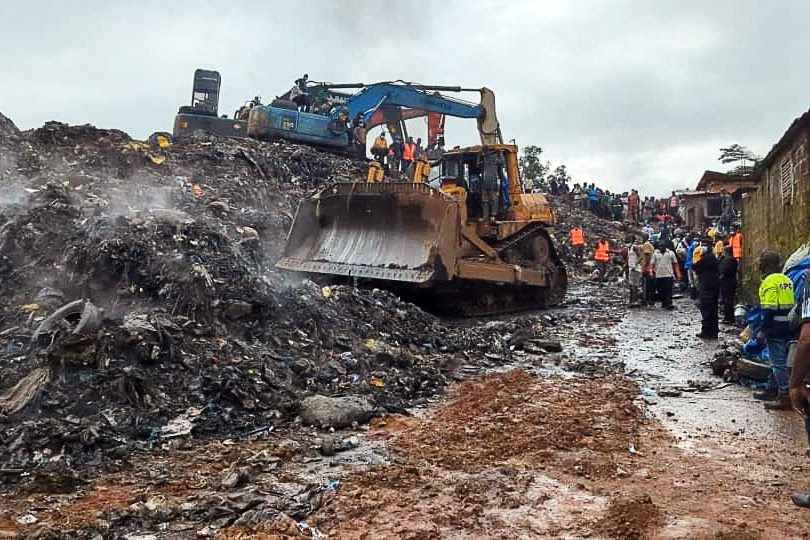 |
Excavators digging at the scene. *Reuters* |
Guinea possesses the world's largest bauxite reserves and the richest unexploited iron ore mine at Simandou, where a significant mining project commenced last year.
Despite its natural wealth, this West African nation grapples with poor infrastructure and widespread poverty. A World Bank report published in April revealed that 3,7 million of its 15,1 million citizens live on less than 4,2 USD per day.
By Hong Hanh (According to Reuters, BBC)