On 15/4, Iraqi captain Rahman al-Jubouri was on the deck of an oil tanker navigating the waters between the Gulf of Oman and the Strait of Hormuz. He operates in one of the world's most tense maritime corridors, where the ongoing conflict between the US, Israel, and Iran disrupts global trade, leaving seafarers stranded and facing the risk of attack.
For al-Jubouri, who has worked at sea since 1984 and experienced decades of upheaval, including the Iran-Iraq War and the 1991 Gulf War, the current conflict is not new. Once again, he finds himself working in dangerous waters, where sudden military attacks constantly threaten vessels passing through critical chokepoints like Bab el-Mandeb and the Persian Gulf.
"The work is truly risky now, never knowing when a bomb might hit the ship," he said. "We are adrift on a fireball."
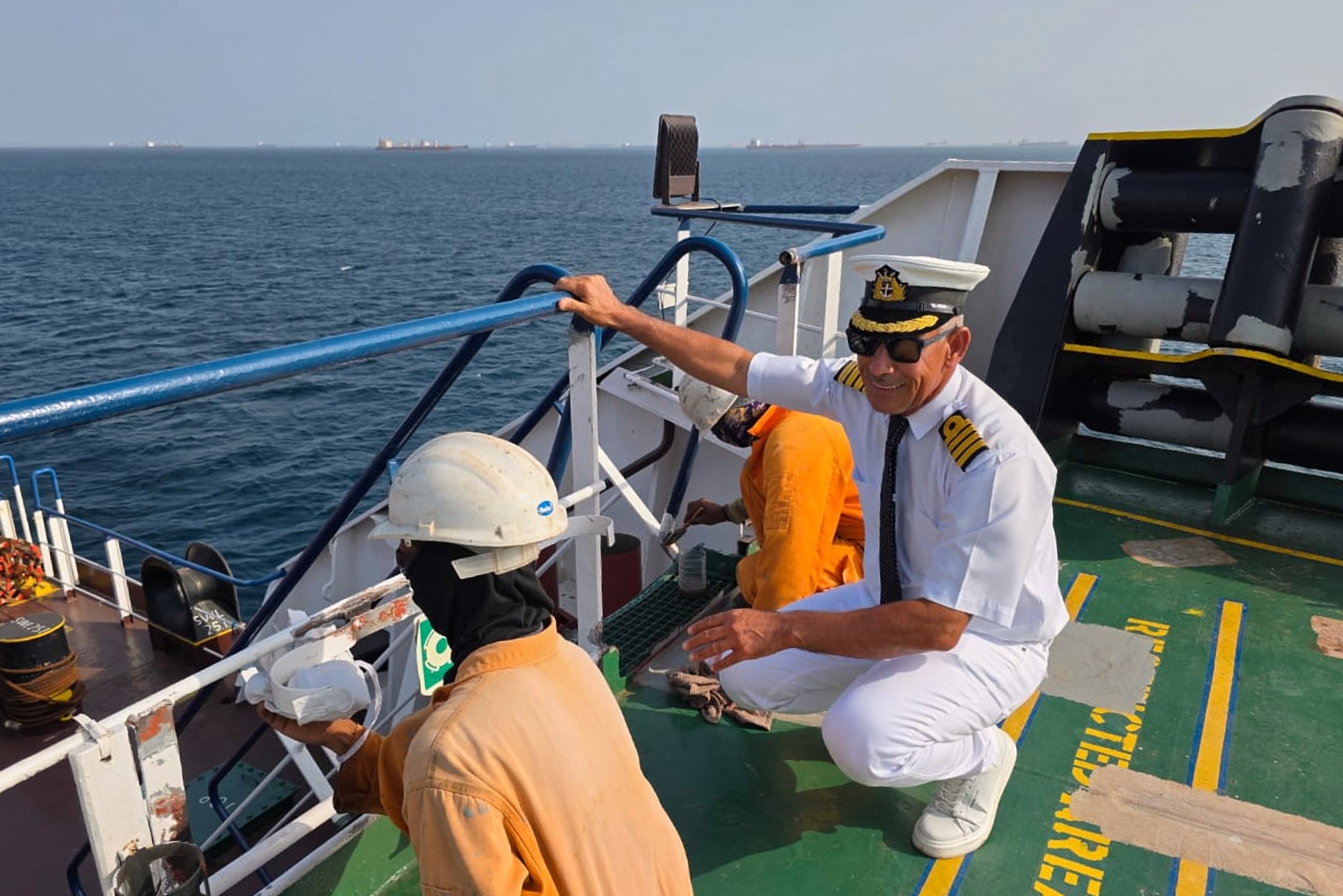 |
Captain Rahman al-Jubouri (right) supervises sailors on the deck of the Sea Moon oil tanker in the Gulf of Oman, 15/4. Photo: AP |
Al-Jubouri has been on the Sea Moon oil tanker, flying the Palau flag, for 4 months. He and his crew are traveling from the Gulf of Aden towards the Gulf of Oman to unload oil at Ras Isa port in Yemen. The route does not pass through the Strait of Hormuz, but still poses high risks due to its proximity to the strait's entrance. The journey was delayed by security concerns and logistical disruptions as the conflict between the US, Israel, and Iran erupted. The hostilities have clogged global energy flows, forcing many vessels to change routes or wait in the gulf.
On 19/4, US military forces seized an Iranian-flagged cargo ship as it passed through a naval blockade near the strait. This was the first vessel interdiction since the US announced a blockade of Iranian ports last week.
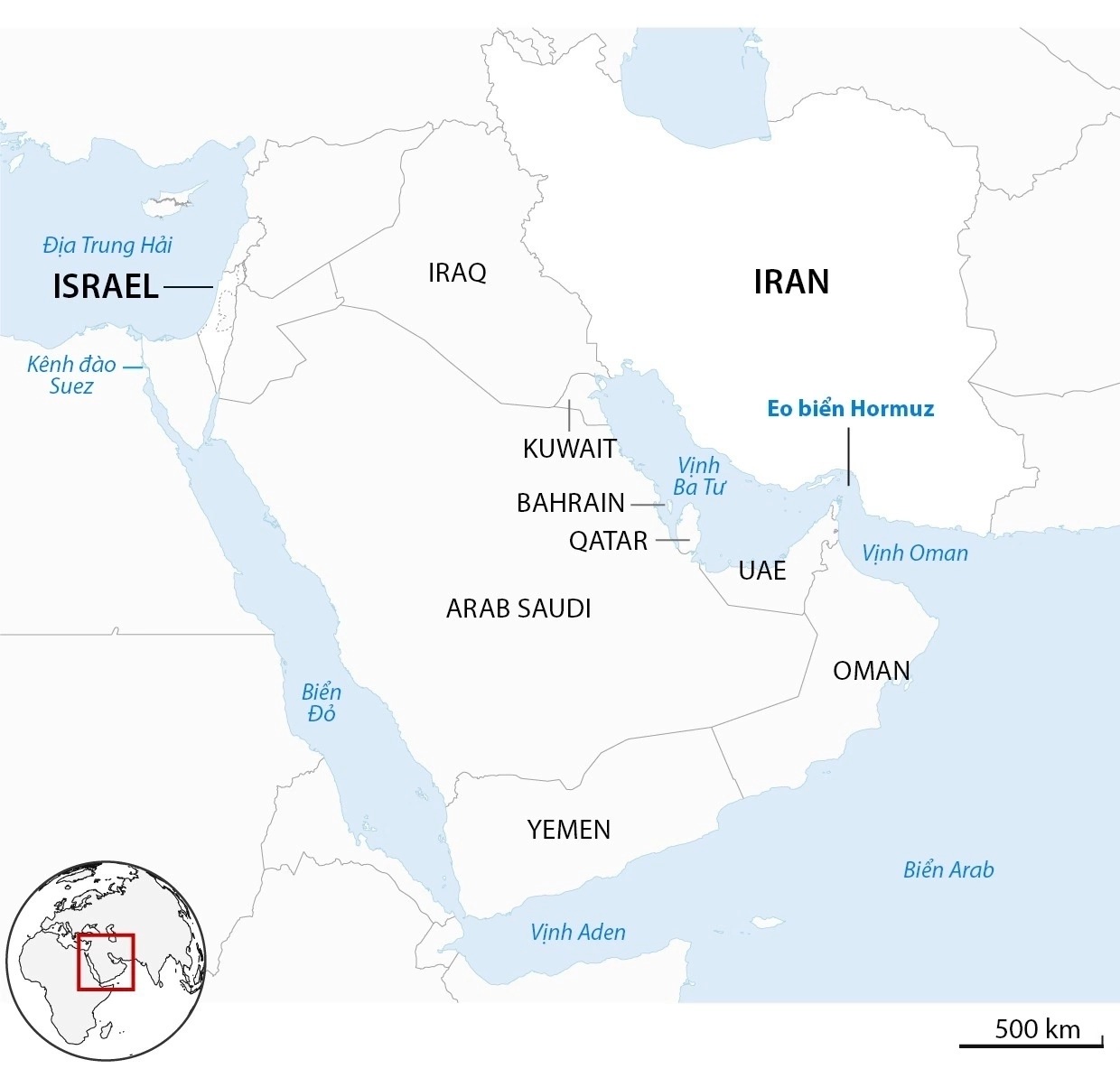 |
Location of the Gulf of Aden and the Gulf of Oman. Graphic: Guardian |
The inherent risks of the job require the Sea Moon crew to conduct regular safety drills to prepare for attacks. "God forbid that happens," al-Jubouri said. Last year, while docked in Yemen, his ship was attacked. "I immediately cut the anchor lines, prepared the engines, and left the port at all costs to protect the crew and the ship," he recounted. Bomb fragments struck the tanker as it departed, causing minor damage, but all crew members escaped safely. Despite the persistent threat, the ship later returned to port operations and continued its planned route.
However, not all of al-Jubouri's crew members could endure the dangers of this work. He stated that his team decreased from 27 sailors to 17. Fear prompted their departure.
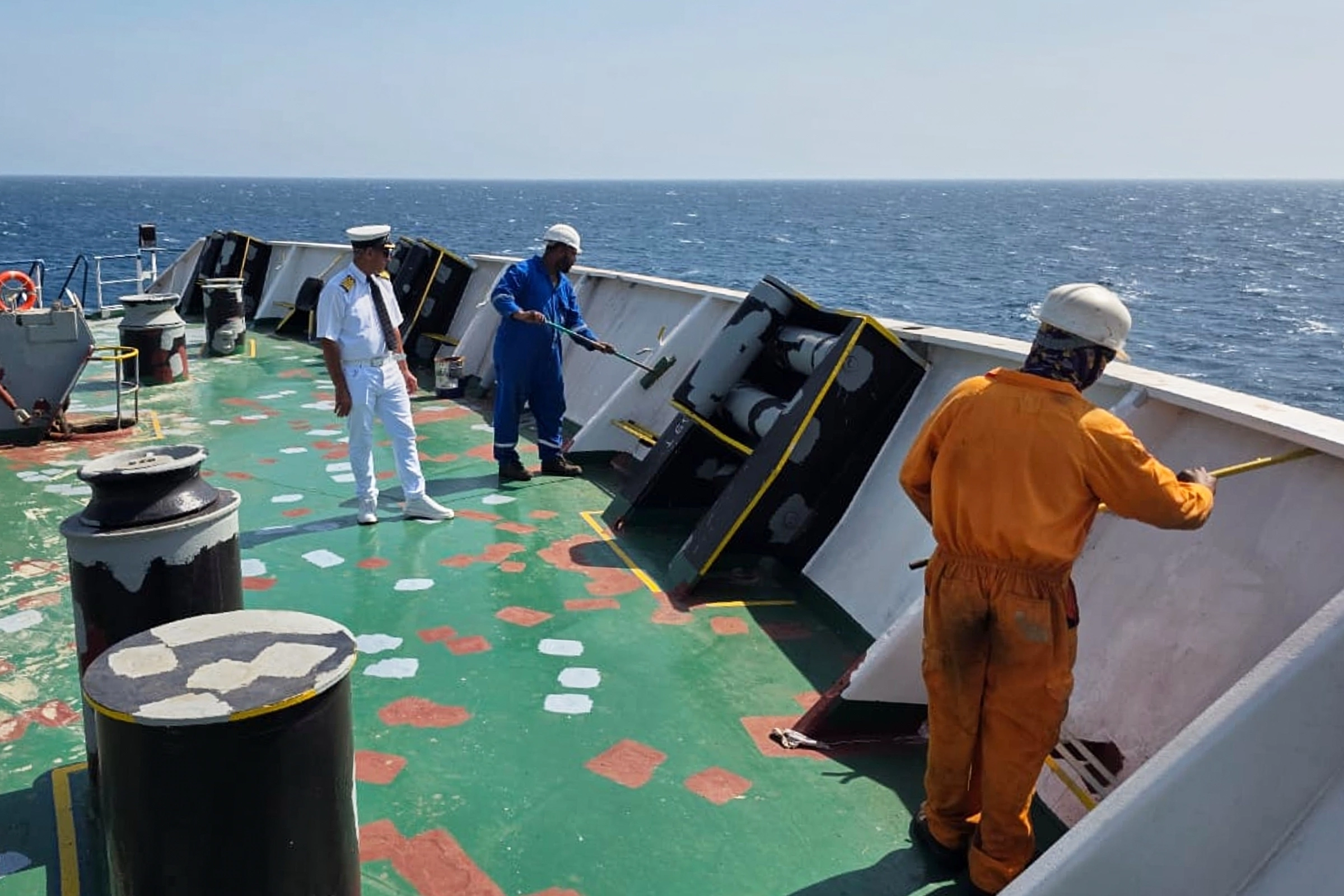 |
The Sea Moon oil tanker in the Gulf of Oman, 15/4. Photo: AP |
Decades of seafaring experience have made al-Jubouri well-adapted to the pressure. He mentioned that basic necessities remain stable, with food and bottled water regularly replenished at port, so no significant shortages occur. However, al-Jubouri has not seen his family for 4 months. Like many others, he often yearns for home.
"We are sad to be away from our families and homeland," he said, adding that the internet helps them feel less lonely, but cannot erase the feeling of distance and separation, especially when they face a life-or-death situation daily.
Hong Hanh (According to AP)