Flags were flown at half-mast at Nepal government offices today during the national mourning ceremony for victims of the devastating flash flood on the border with Tibet, Trung Quoc on 26/8.
The national mourning was held on the 13th day since the disaster. In Nepal, a majority Hindu nation, the mourning period typically lasts 13 days, during which family members stay home to receive visiting relatives and express their respects. Prayer rituals for the souls of the deceased are performed on the final day.
Nepal's disaster response agency reported that the flash flood claimed the lives of over 1,300 people and left approximately 5,000 missing.
Some who have missing relatives have held symbolic funeral rites. Cremation is a crucial final rite in Hindu tradition, and performing this ceremony, even without the bodies of their loved ones, has brought some spiritual solace to families.
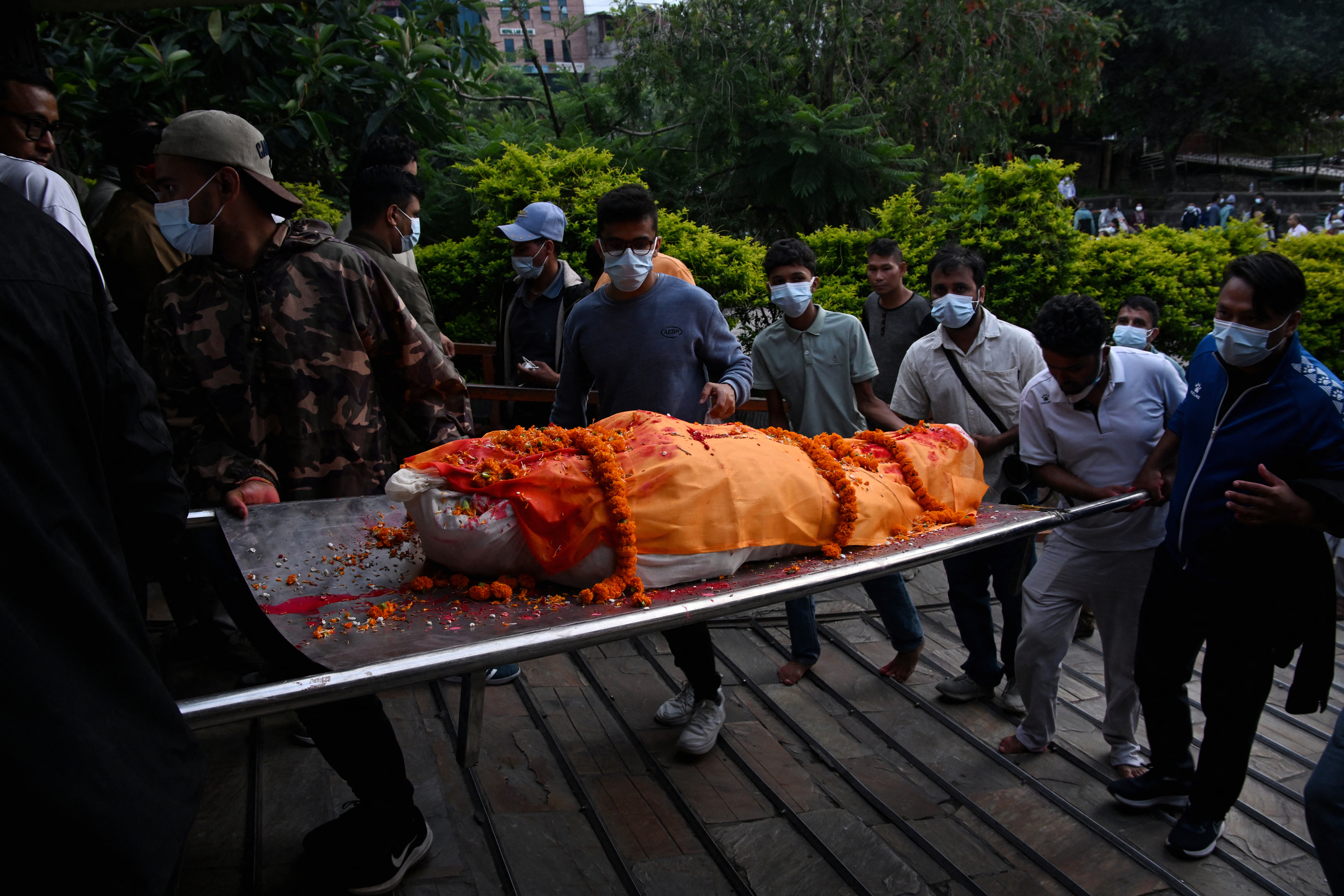 |
Nepal residents carry a flash flood victim's body for cremation at Pashupatinath Temple, Kathmandu, on 2/9. Photo: AFP
Meanwhile, search efforts for the missing continue, though some have voiced objections, arguing that current efforts are insufficient.
In Kathmandu, relatives of victims gathered near the Prime Minister's office and key ministries to demand the government accelerate search and rescue operations for hundreds of missing workers at hydropower plants.
Sumana Shrestha, along with other relatives, was also present, holding a poster with a photo of her 55-year-old husband. He has been out of contact since the flash flood occurred.
Shrestha's husband, a geological consultant, had promised to return home after his shift at the Trishuli hydropower project office on that fateful day. The two-and-a-half-story office building was completely buried by earth and rocks.
"We are here because we have heard no news of any rescue efforts at this project, even though 13 days have passed. The only thing we can do now is pray and hope for a miracle", Shrestha said.
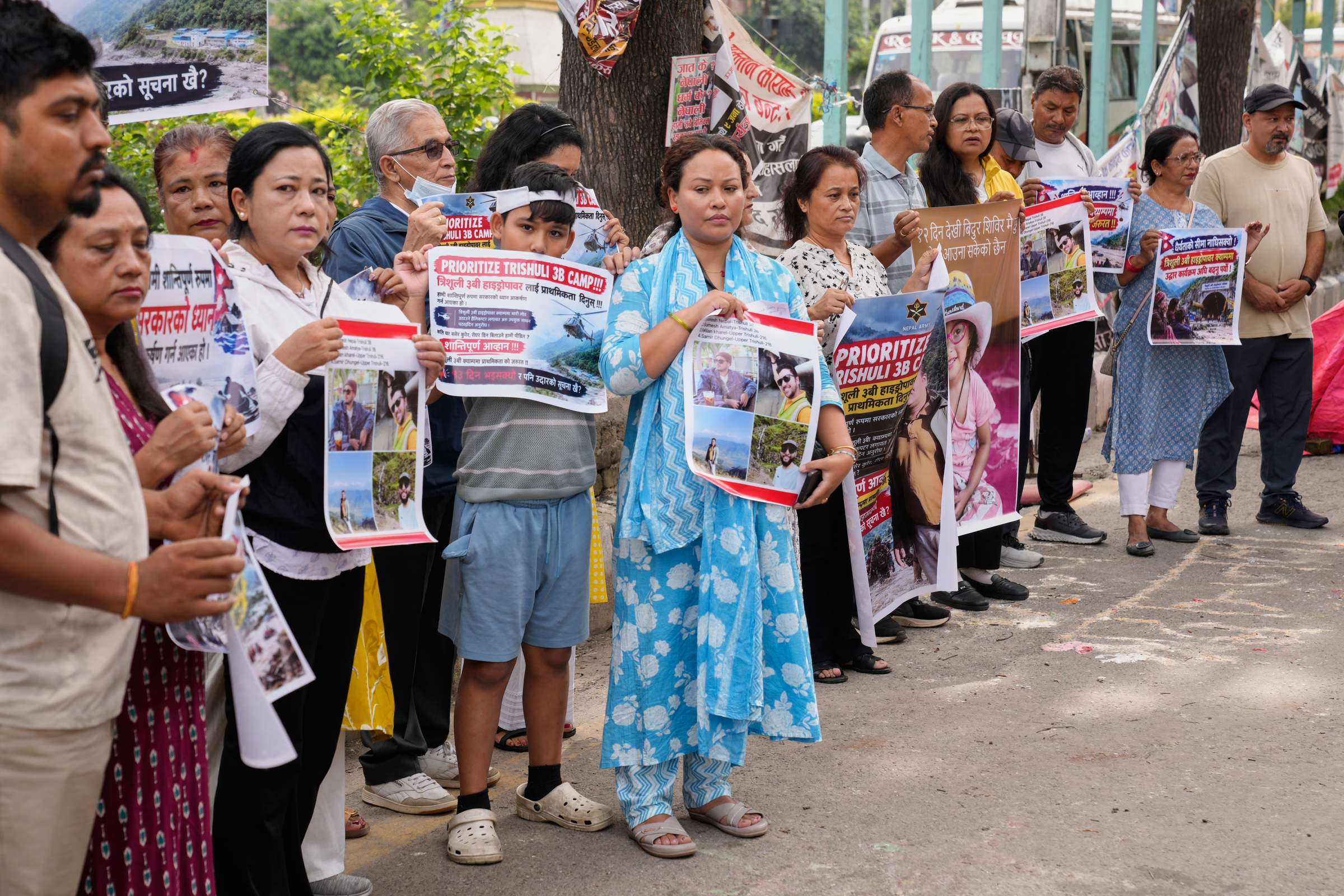 |
Relatives of flash flood victims gather in Kathmandu, Nepal, on 7/9. Photo: AP
Another protester, Mahesh Prasad Shrestha, held a photo of his younger brother, Niraj Shrestha, a 52-year-old engineer also working at the site. Shrestha stated that authorities did not dispatch a small excavator to the scene until Friday or Saturday after the disaster.
"They should have mobilized large helicopters from countries like Trung Quoc or India to transport equipment in", Shrestha said.
Nepal flash flood's path of destruction. Video: BBC
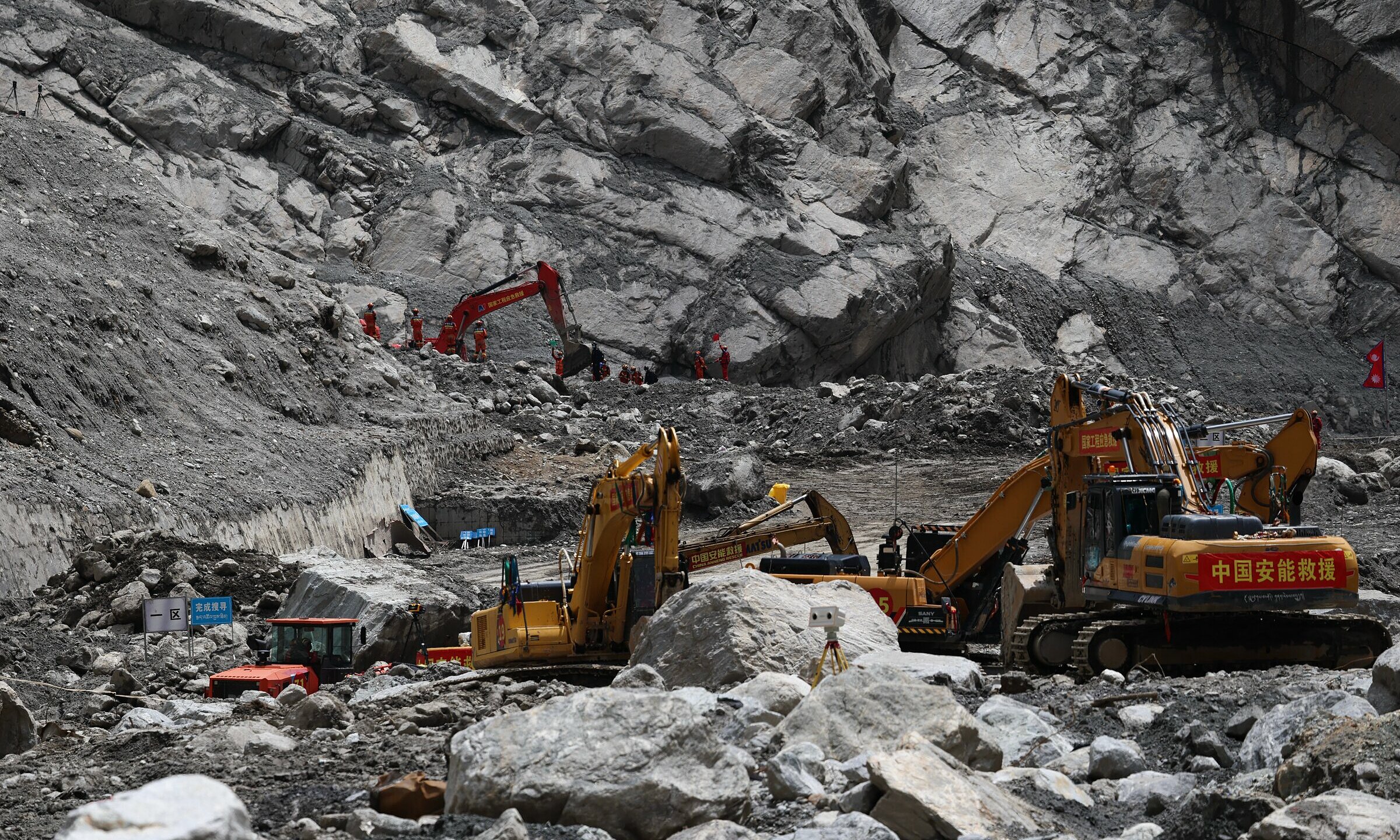
According to Nepal officials, rescue operations are focusing on 12 hydropower projects, where approximately 900 workers are missing and an estimated 500 people are trapped in tunnels. Specialized rescue teams from India, Trung Quoc, South Korea, and My are searching through the debris and within tunnels at these projects.
Ngoc Anh (According to AP, AFP)