The war between Iran and Iraq erupted in 1980 due to territorial disputes and lasted for many years, turning the shipping lanes in the Persian Gulf into a battlefield. Both sides expanded the conflict at sea to damage each other's oil exports.
The Tanker War began when Iraq attacked Kharg Island, Iran's oil gateway, in 1984, intending to provoke Tehran into blockading the Strait of Hormuz in retaliation, thereby drawing US intervention. However, Iran chose to target neutral oil tankers, particularly those from Kuwait, which was mediating oil transport for Iraq.
In 1987, Kuwait appealed to both the Soviet Union and the United States for assistance against Iranian attacks. After four oil tankers hit mines in May-June 1987, including one leased by the Soviet Union to Kuwait, the United States proposed that Kuwaiti oil tankers fly the US flag and travel in convoys, escorted by the US Navy, to pass through the Strait of Hormuz.
This effort was named Operation Earnest Will. However, the first escort mission encountered an incident that embarrassed the US Navy and raised questions about its preparedness for asymmetric warfare.
 |
_The USS Kidd sailing behind the oil tanker Bridgeton during the escort mission on 22/8/1987. _US Navy
To protect Kuwaiti oil tankers, the United States deployed many frigates, cruisers, and destroyers in the Persian Gulf and the Strait of Hormuz. Additionally, the US aircraft carrier strike group USS Constellation was present in the Indian Ocean, supporting patrol operations in the region.
On 21/7/1987, the US Navy began its first escort, with ba warships protecting the supertanker Bridgeton (formerly al-Rekkah under the Kuwaiti flag), displacing over 414,000 tons, and the gas tanker Gas Prince, over 48,000 tons. The convoy of oil tankers and escort warships departed from the Gulf of Oman, passing through the Strait of Hormuz safely, despite being approached by 4 Iranian F-4 fighter jets at one point.
Two days later, Iran declared that this fleet was carrying "prohibited goods," and the commander of the Islamic Revolutionary Guard Corps (IRGC) planned to deploy speedboats from Farsi Island to seize them. However, after consulting Iran's Supreme Leader Ruhollah Khomeini, the IRGC canceled its plan for a direct confrontation with the US escort fleet.
According to National Interest, the IRGC navy secretly laid ba clusters of mines, totaling 60 mines, along the convoy's expected route on the night of the same day, with each cluster spaced approximately 500 m apart.
Mines: the 'silent killers' that could cripple the Strait of Hormuz
At 7:00 AM on 24/7/1987, the Bridgeton collided with a mine in an area about 20 km west of Farsi Island and 190 km southeast of Kuwait, causing a loud explosion.
"We've been mined! We've been mined!" Richard Vogel, a US Navy lieutenant assigned to guard duty on the Bridgeton, reported via radio when contacting the destroyer USS Kidd, the command ship of the US Navy escort. Vogel said that officers and sailors on the bridge almost fell due to the shock from the mine explosion.
The mine created a hole measuring 2,6 x 3 m on the Bridgeton's port side, flooding 5 of its 31 cargo compartments.
US soldiers immediately brought rifles to the bow of the USS Kidd to shoot and detonate suspected mines. Daniel J. Murphy Jr., commander of the USS Kidd, noted that the mine the Bridgeton struck had significant destructive power.
"If the USS Kidd had been hit, the damage would have been extremely severe," he said.
The ba US escort ships decided to move in a single-file formation behind the supertanker Bridgeton because its large size and empty oil compartments made it more resistant to mines than US warships.
On the cruiser USS Fox, Captain William Mathis told reporters that the Bridgeton "will act as a deep-draft minesweeper."
The Bridgeton continued to move at a reduced speed of about 18 km/h, continuously pumping water overboard. The ship anchored a few kilometers from Kuwait's Al Ahmadi port at 7:00 PM the same day, while the Gas Prince docked at the port. The ba US Navy ships handed over protection duties to Kuwaiti patrol boats. The Bridgeton was later taken to Dubai, United Arab Emirates (UAE), for repairs.
 |
_Movement of ships during Operation Earnest Will initiated by the United States. _Wikipedia
Iran at the time called the Bridgeton incident "an irreparable blow to the political and military prestige of the United States."
"The American calculation system has been neutralized by invisible hands. This shows how vulnerable the Americans are, despite their massive and unprecedented military deployment in the Persian Gulf to escort Kuwaiti oil tankers," Iranian media quoted then-Iranian Prime Minister Hussein Moussavi.
US lawmakers criticized the operation, as they had repeatedly warned about the risk of mines in the Persian Gulf waters. They also emphasized that there was no certainty about who laid these mines, making retaliation difficult to justify.
The Bridgeton incident became a propaganda victory for Iran and a symbol of the risks when the United States intervened militarily to protect oil transport in the Gulf region.
Embarrassed by the incident, the US Navy devised countermeasures, such as increasing SEAL special forces and marines on patrol to prevent Iran from laying mines. These forces could operate over a wide range, suitable for dealing with asymmetric threats and less costly than deploying additional warships.
However, due to political factors, neither Kuwait nor Saudi Arabia allowed US troops to deploy forces to counter Iran on their territory. The solution then was for Kuwait to lease two large construction barges, Hercules and Wimbrown, to the US military to station patrolling soldiers.
The US Navy continued to escort oil tankers through the Strait of Hormuz, at one point deploying over 30 warships to the area to support the operation. In the following months, there were two notable events: the US-flagged oil tanker Sea Isle City was hit by an Iranian missile, and the warship USS Samuel B. Roberts struck a mine, prompting a strong US response against Tehran.
Iranian attacks on neutral oil tankers significantly decreased. In 7/1988, Iran agreed to a ceasefire with Iraq, ending the 8-year war. In 9/1988, the USS Vandegrift conducted the final escort mission of Operation Earnest Will. US forces left the region and returned home.
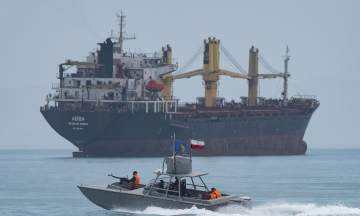
Nearly 40 years later, the Strait of Hormuz has once again become a "chokepoint" in the global energy flow, as Iran targets oil tankers and cargo ships passing through it in response to large-scale attack campaigns by the United States and Israel.
Iran's military activities, along with the potential threat from "deadly" mines, have deterred a series of oil tankers from passing through this vital waterway, while the US Navy also stated that it lacks sufficient resources to escort oil tankers through the strait.
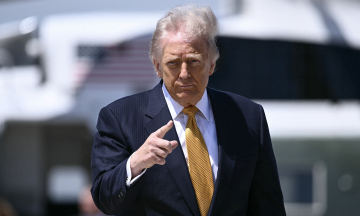
When US President Donald Trump called on countries to deploy warships to open the Strait of Hormuz, the IRGC responded defiantly.
"Iran strongly welcomes the US deployment of forces to escort oil tankers through the Strait of Hormuz and is waiting to see how they will be present in the region," IRGC spokesperson Alimohammad Naini said on 6/3. "Before they make any decisions, remember the Bridgeton supertanker incident in 1987."
Nhu Tam (According to Los Angeles Times, National Interest, AFP)