US President Donald Trump will visit China this week, holding talks with President Xi Jinping on 14/5. The event has garnered significant attention, marking Trump's first visit to China in his second term and the first time a US president has traveled to Beijing since 2017.
The two leaders are expected to discuss a range of issues including tariffs, Taiwan, competition in artificial intelligence (AI), and strategic minerals. The Iran conflict, a new issue arising since late February, will also be on the agenda, as it impacts both of the world's largest economies.
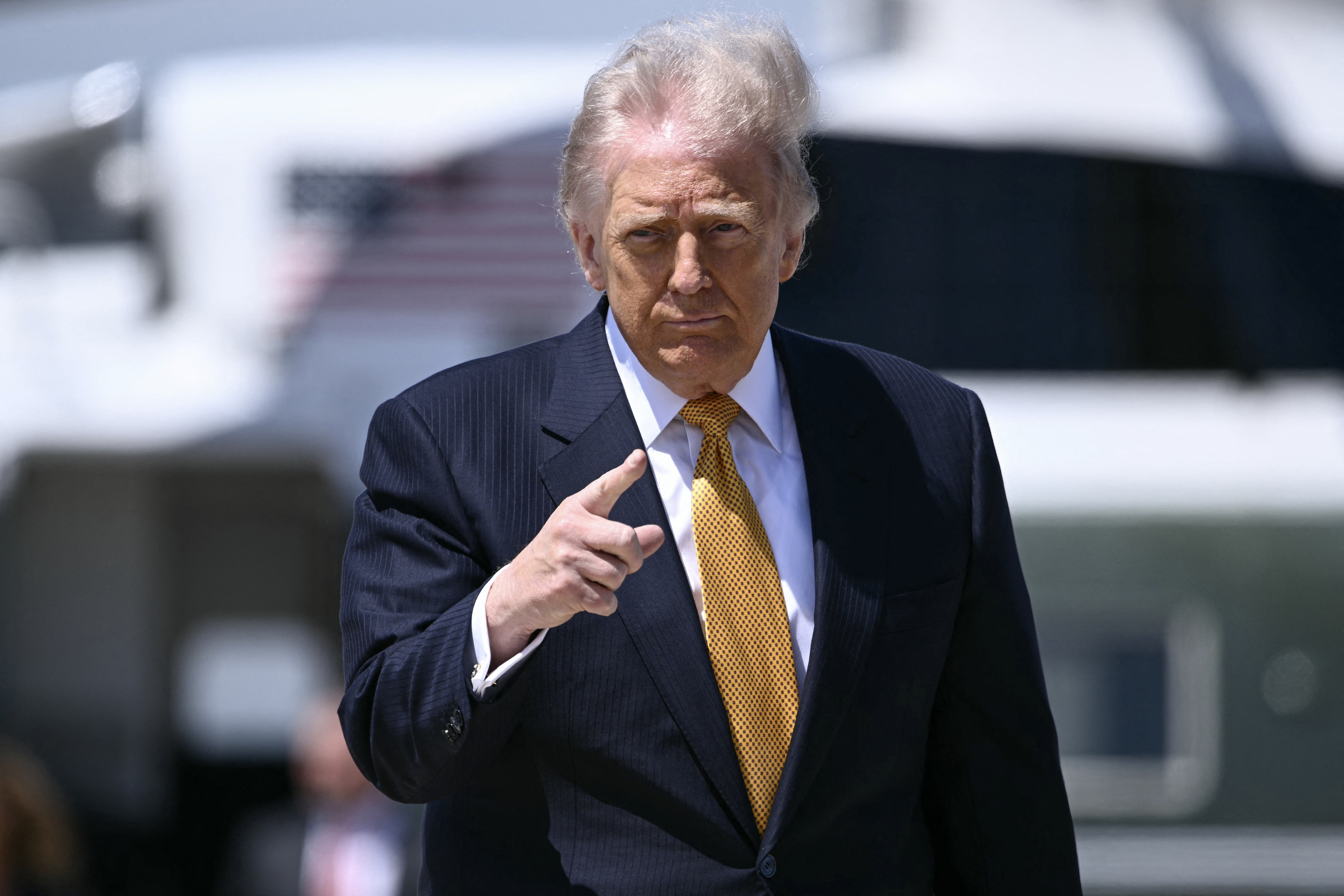 |
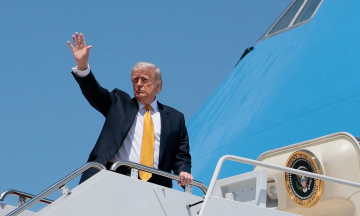
US President Donald Trump departing the White House, preparing for his visit to China on 12/5. *Photo: AFP*
Both President Trump and President Xi anticipate beneficial outcomes from the meeting. The topics discussed could influence the trajectory of US-China relations and the international order for the next decade, according to BBC writers Anthony Zurcher and Laura Bicker.
**Iran Conflict**
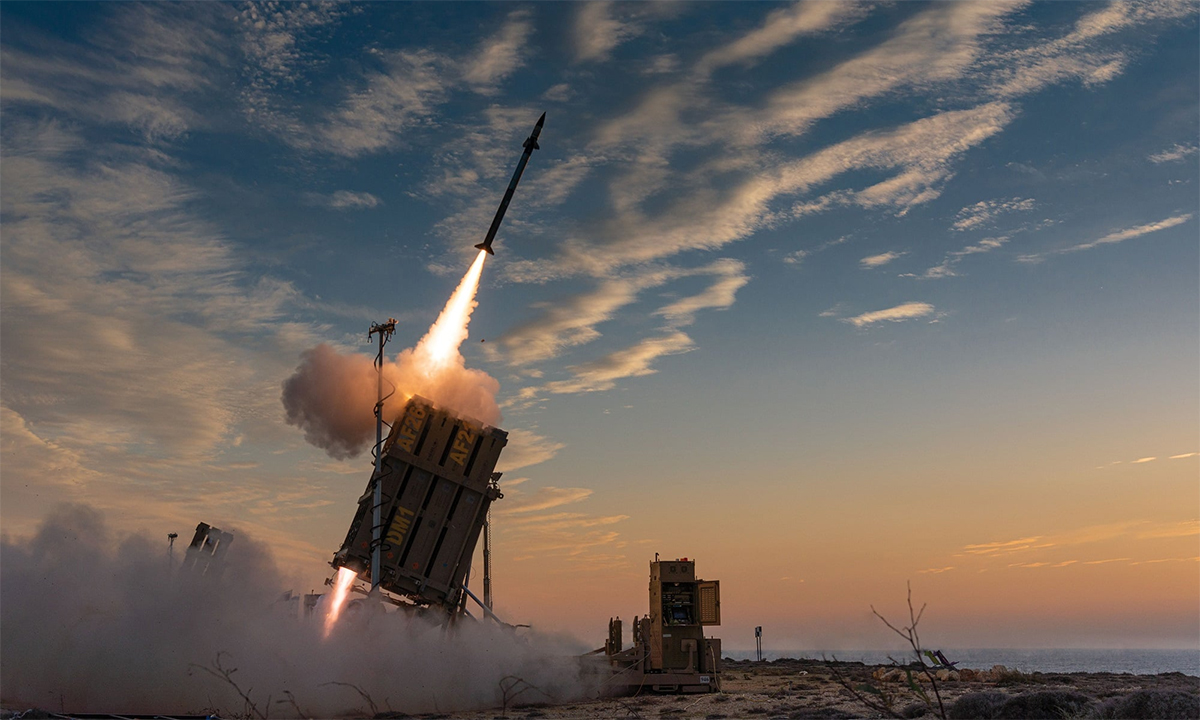
The war initiated by the US and Israel against Iran has entered its third month, driving up energy prices and creating repercussions across the Middle East and the global economy. While a ceasefire has been in place since early April, a peaceful resolution remains elusive.
China, a significant buyer of crude oil from Iran, utilizes this affordable supply to fuel its economic growth. Any disruption to this supply could negatively impact Beijing. Meanwhile, the prolonged conflict raises concerns about fuel prices in the US and the risk of deeper involvement in a new Middle East conflict. Consequently, both nations are motivated to find a stable solution to the crisis.
China has demonstrated its mediating role by coordinating with Pakistan to advance a ceasefire plan and reopen the Hormuz Strait. Iranian Foreign Minister Abbas Araghchi's visit to Beijing last week signaled China's growing influence in the Middle East.
"I think the US understands that China will have to play some role if they want to bring Iran back to the negotiating table," Ali Wyne, a US-China relations expert at ICG, a Belgium-based conflict research organization, stated.
US Secretary of State Marco Rubio recently expressed hope that China would pressure Iran regarding the Hormuz issue. President Trump may also persuade China not to block a United Nations Security Council resolution condemning Iran's attacks on ships transiting Hormuz, especially after Beijing previously vetoed a similar document.
**Taiwan Issue**
Taiwan has long been a source of tension in US-China relations. China views Taiwan as a province awaiting unification, by force if necessary. The US pledges to uphold the "One China" principle but continues to maintain unofficial relations with Taiwan and provides modern weaponry to the island.
The Trump administration has sent inconsistent signals recently. Washington announced an 11 billion USD arms sale to Taipei late last year, provoking a strong reaction from Beijing. However, Trump has repeatedly avoided explicitly committing to defend Taiwan in the event of conflict, accusing Taipei of taking the US semiconductor industry.
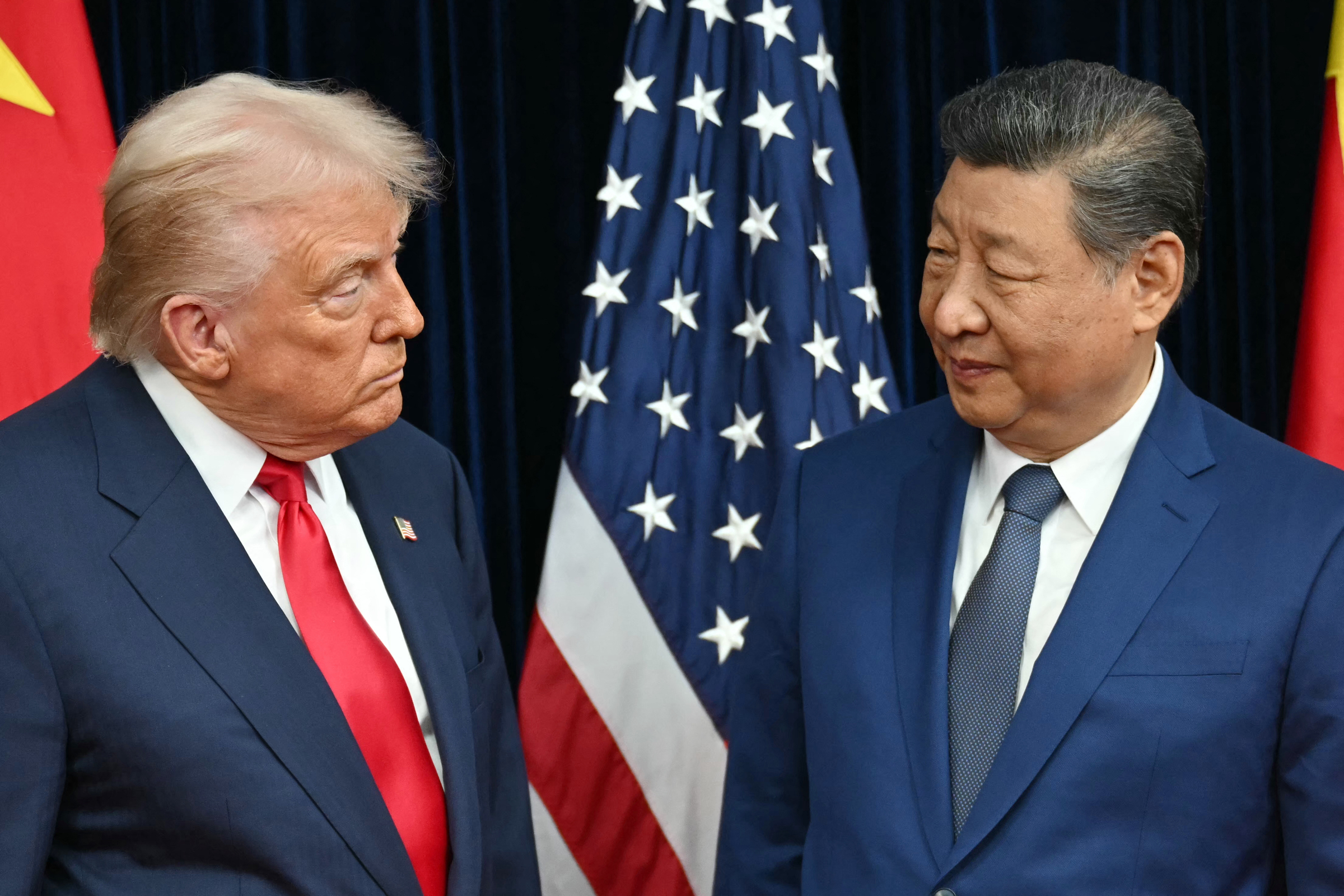 |
US President Donald Trump (left) and Chinese President Xi Jinping in Busan, South Korea, in October 2025. *Photo: AFP*
On the ground, China continues to pressure Taiwan with nearly daily aircraft and warship patrols. Secretary Rubio emphasized last week that the US does not want "destabilizing events" in the Indo-Pacific region.
"One possibility is that China and the US could pursue a strategy of 'mutual restraint,' for example, the US reducing arms sales to Taiwan, in exchange for China reducing military exercises targeting the island," Professor Zhao Minghao, an international relations expert at Fudan University, told AP.
**Economic and Technological Tensions**
For most of 2025, the US and China approached a new tariff war that could have shaken the global economy. President Trump repeatedly raised and lowered tariffs on China, at times exceeding 100%. China retaliated in kind, restricting rare earth exports and halting purchases of US agricultural products, directly impacting farmers in states that voted for Trump.
Trade tensions cooled after Trump and Xi met in South Korea in October 2025, but many disagreements persist. Trump expects China to purchase more US agricultural products, while Beijing wants Washington to reduce trade investigations and limit the use of tariffs as leverage.
"China's strategy is to promote stability by retaliating," Professor Zhao said. "The two leaders this time may reach a comprehensive trade agreement, but that does not mean the trade war ends, and there will be conditions attached."
Another topic of interest is technological competition, particularly in AI and semiconductor chips. China is investing heavily in AI, humanoid robots, and high-tech industries, viewing them as key drivers for future growth.
However, many core technologies China needs still rely on US chips, giving Washington additional leverage over its rival. The US has consistently tightened chip exports to China, citing national security, while accusing Chinese companies of copying or stealing AI technology.
Meanwhile, China holds a significant advantage in rare earths, controlling about 90% of the refining, separation, and production capacity for this essential material used in smartphones, electric vehicle batteries, and defense. This provides China with considerable bargaining power in any negotiations.
"An AI cold war is gradually forming," Yingyi Ma, a China researcher at the Brookings Institution, stated. "The White House accuses China of stealing US AI on an 'industrial scale,' while Beijing reportedly sought to prevent Meta from acquiring Manus, an AI startup founded by Chinese but now based in Singapore. The deeper competition is not about who copies whose model, but a race for talent capable of building the next generation of AI."
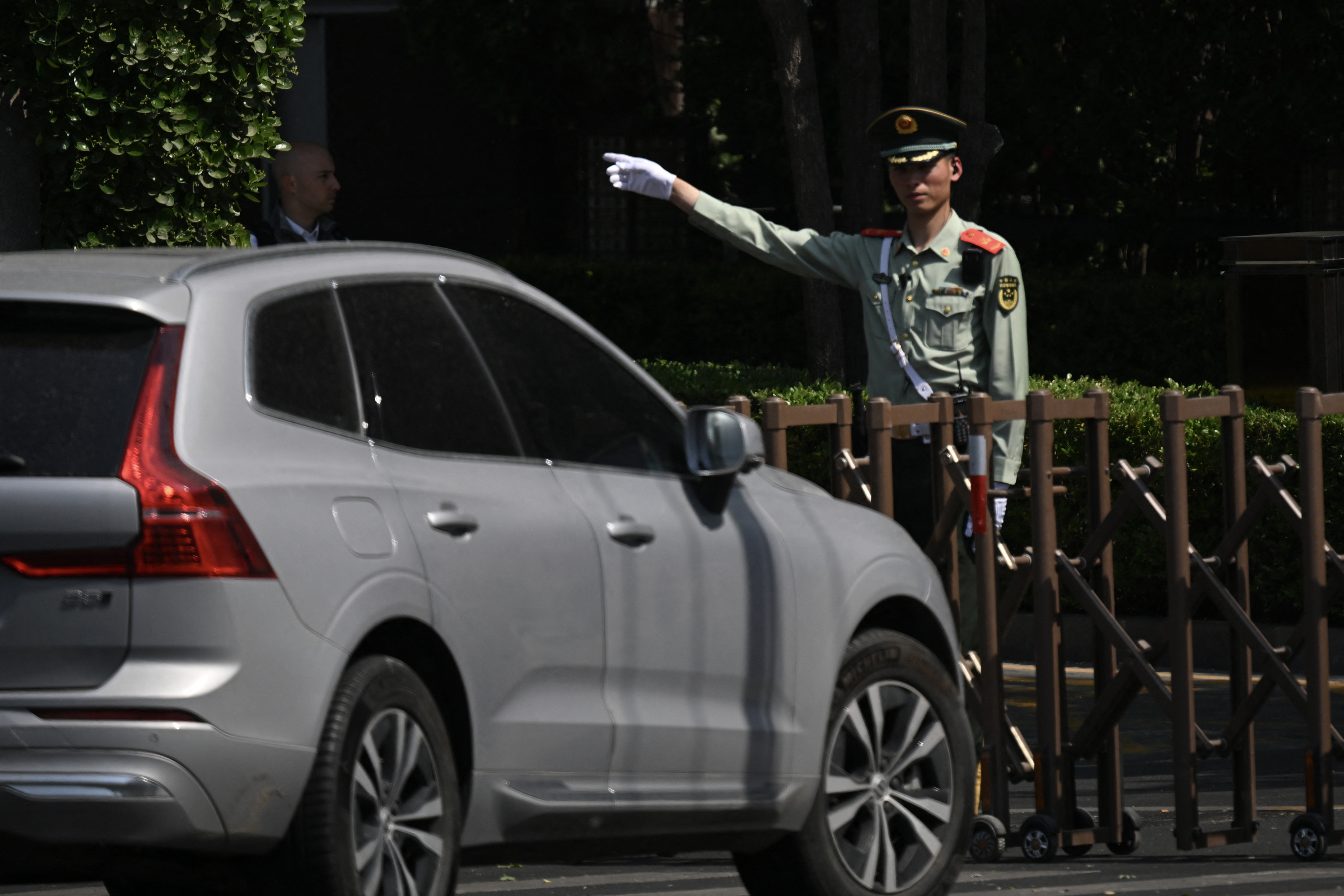 |
Chinese police stand guard near the US embassy in Beijing on 12/5. *Photo: AFP*
Many experts do not expect major breakthroughs on these issues during the US-China leadership meeting.
"Both sides agree that stability in relations is important," Levin stated. "If we move beyond stability, the 'what next' in bilateral relations becomes much more complex. So, the most likely outcome of this meeting is that there will not be many significant changes."
According to Ryan Hass, a China expert at the Brookings Institution, if the visit proceeds smoothly and President Trump feels he has been respectfully received, US-China relations will continue in a quiet but cautious state.
"Conversely, if he leaves feeling disrespected or underestimated, President Trump may change his stance," Hass said.
Nhu Tam (BBC, AP, CNBC)