Early this month, Annsli Hilton, a research assistant at the National Oceanic and Atmospheric Administration (NOAA) in Panama, Florida, heard persistent tapping. She discovered a pelican standing at the glass door, The Washington Post reported last week.
Hilton initially thought someone had brought the bird, but she was surprised to realize the pelican had found its way there on its own. It stood outside the door, using its long beak to tap on the glass, patiently waiting as if for help.
Upon examination, the research staff discovered the animal had fishing line wrapped around its right wing and a fish hook embedded in it, preventing flight. It also had dozens of cactus spines embedded in its left leg.
"I always thought and hoped animals would find their way to me or the lab for help, but I never imagined it would actually happen," Hilton said.
She believes the pelican may have walked about 400 meters from the waters of St. Andrew Bay, where pelicans typically live, to reach the NOAA research facility. While scientists at the facility specialize in fish research, they quickly assisted the pelican with its injuries after discovering its plight. The pelican remained calm throughout the treatment.
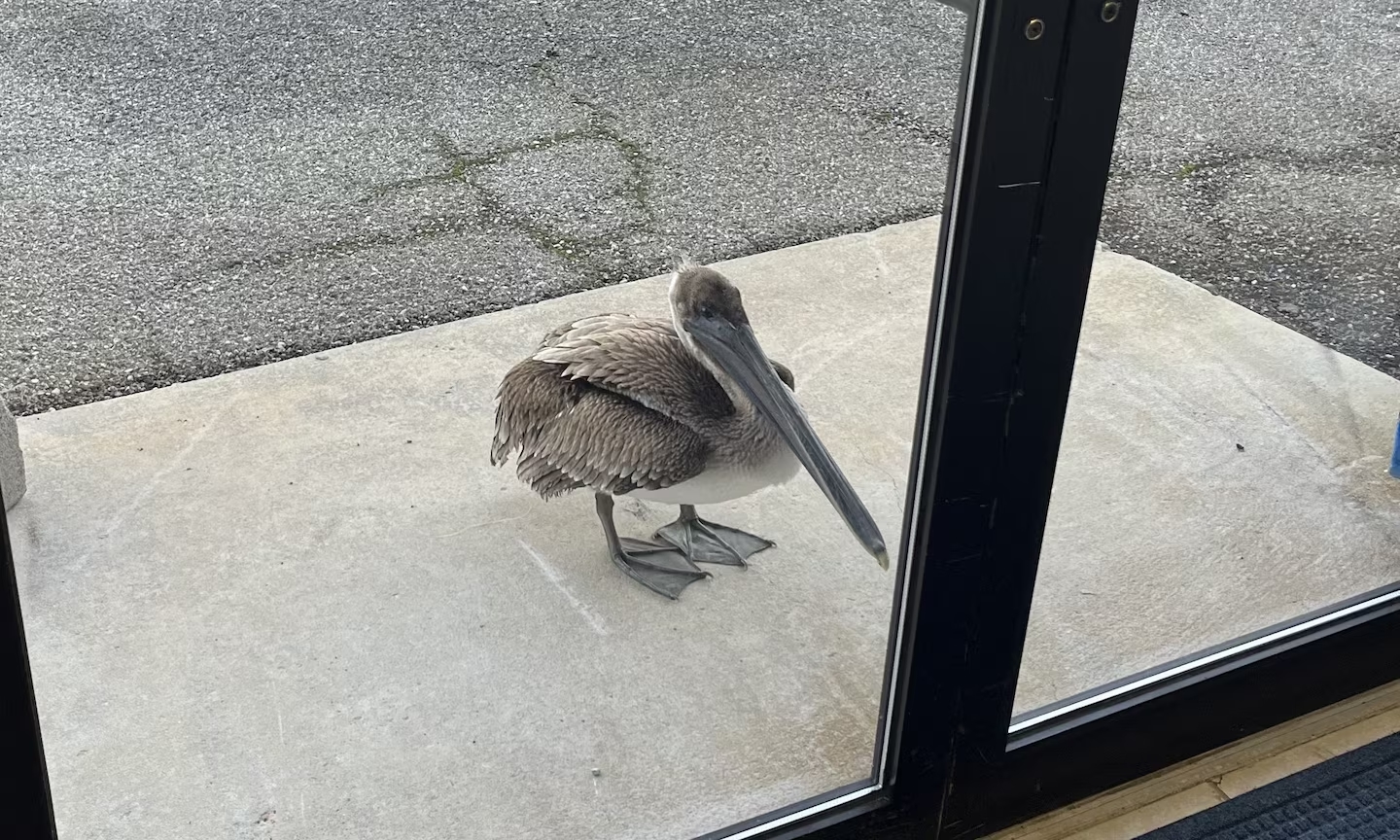 |
The injured pelican stands at the door of the NOAA research lab in Panama, Florida. Photo: NOAA Fisheries |
The injured pelican stands at the door of the NOAA research lab in Panama, Florida. Photo: NOAA Fisheries
Deborah Jaques, founder of Pelican Science, a nonprofit dedicated to pelican research and conservation, stated that without the biologists' help, the pelican likely would have starved or fallen prey to predators. "A pelican unable to fly would likely not survive long," Jaques said.
Some scientists also offered theories about why the pelican knew to seek help from the right people. Gerald Hough, a professor specializing in bird behavior at Rowan University in New Jersey, suggested the bird might have previously observed researchers bringing fish into and out of the lab. Therefore, in its desperate state, the bird may have sought out the facility hoping to find food.
Hough explained that pelicans often associate humans and docks with food sources, so when hungry, they sometimes linger near people. "They are very good at utilizing their surroundings. Therefore, when in trouble, they might seek out places with humans, hoping someone will help them," Hough said.
Hough added that the pelican might also have mistaken its own reflection in the glass for another pelican and wished to interact with that "friend". Additionally, it is possible it stood near the door to seek shade, Hough noted.
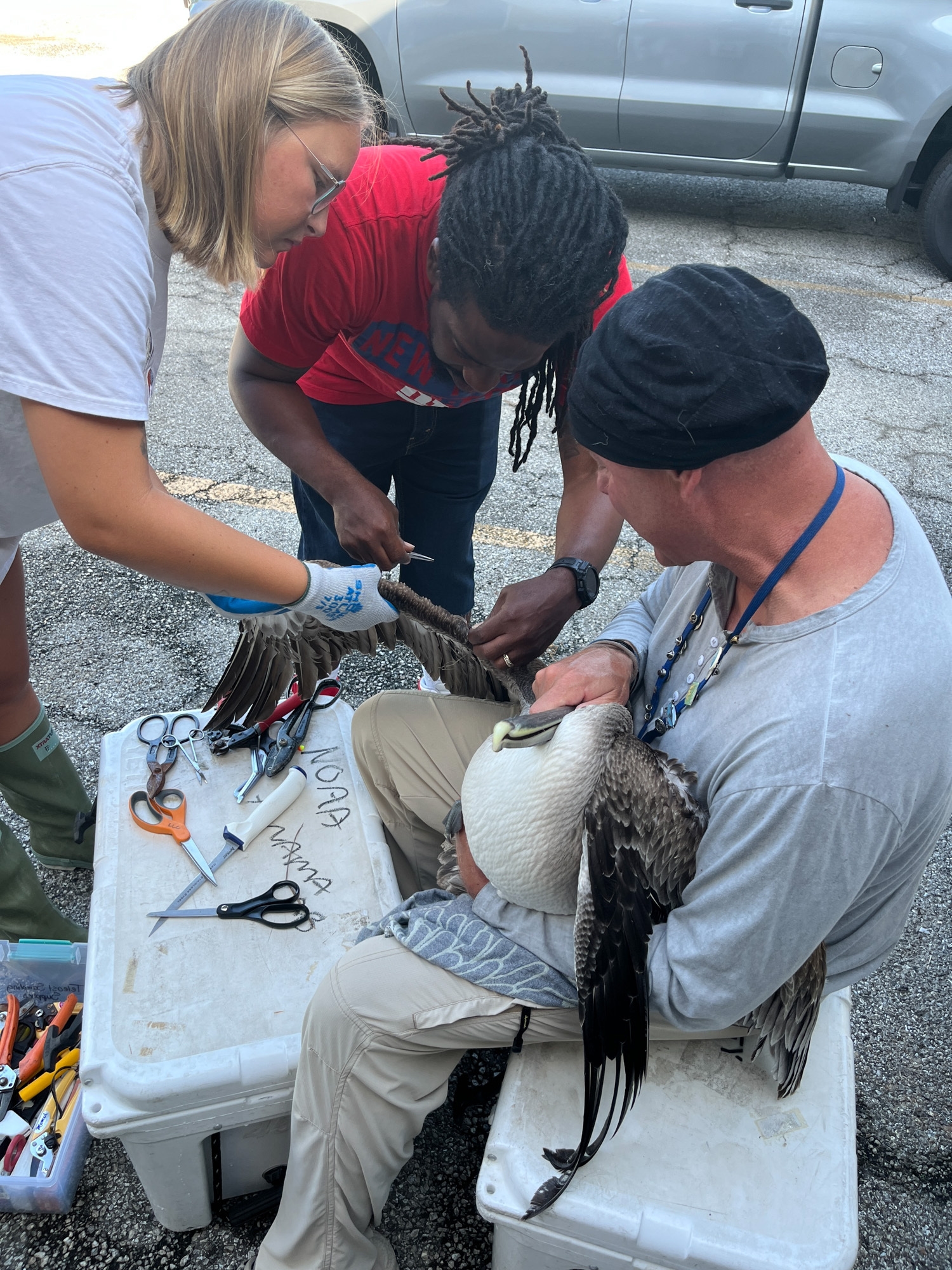 |
Researchers treat the pelican. Photo: NOAA Fisheries |
Researchers treat the pelican. Photo: NOAA Fisheries
However, Hough believes that even though pelicans are not known for intelligence like crows or parrots, this bird may have known where to seek help. There have been previous cases of injured wild animals actively approaching humans for assistance.
Juliet Lamb, a scientist specializing in seabirds, noted that younger pelicans are often less fearful of humans than adults. According to Lamb, based on its brown plumage, the pelican at the NOAA lab appeared to have been born just last spring or summer.
Regardless of the reason, Hilton shared that she was glad to be there to help the pelican when it needed assistance most. "This was truly a once-in-a-lifetime experience, having a bird knock on the door for help," Hilton said.