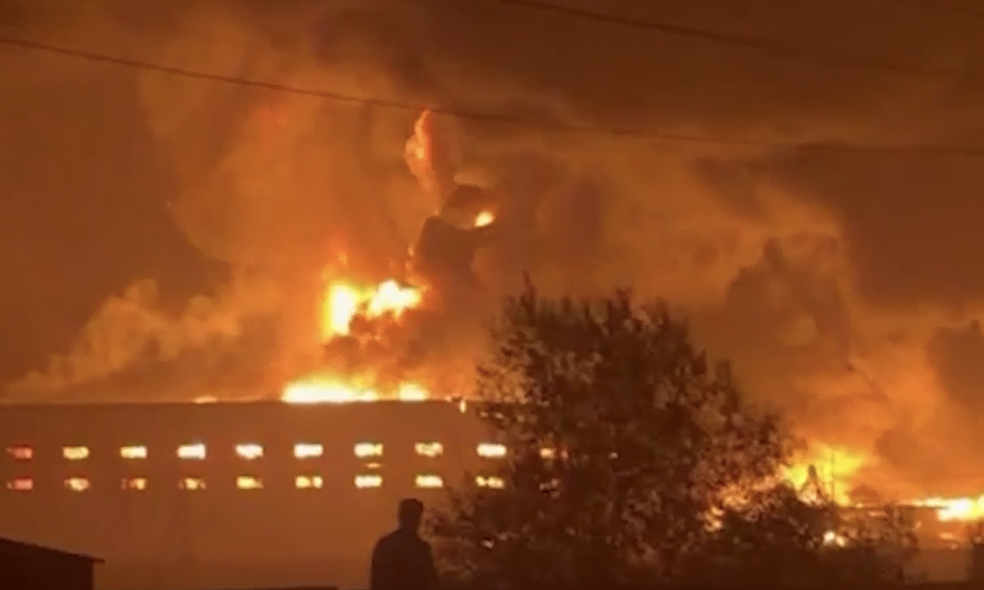
Politico reported on 20/9 that the Alabuga-Volokno plant plans to expand its production facility in the Republic of Tatarstan. This expansion aims to supply an additional 500 tons of military-aerospace grade carbon fiber annually by 2029. Carbon fiber, a durable and lightweight material, plays a crucial role in manufacturing unmanned aerial vehicle (UAV) airframes.
Experts estimate this expansion could enable Russia to produce an additional 28,000 Geran-series UAVs per year. This figure represents 78% of the current Geran UAV output of 36,000 units annually. "This plan indicates Russia's direction regarding military UAV usage," Politico stated.
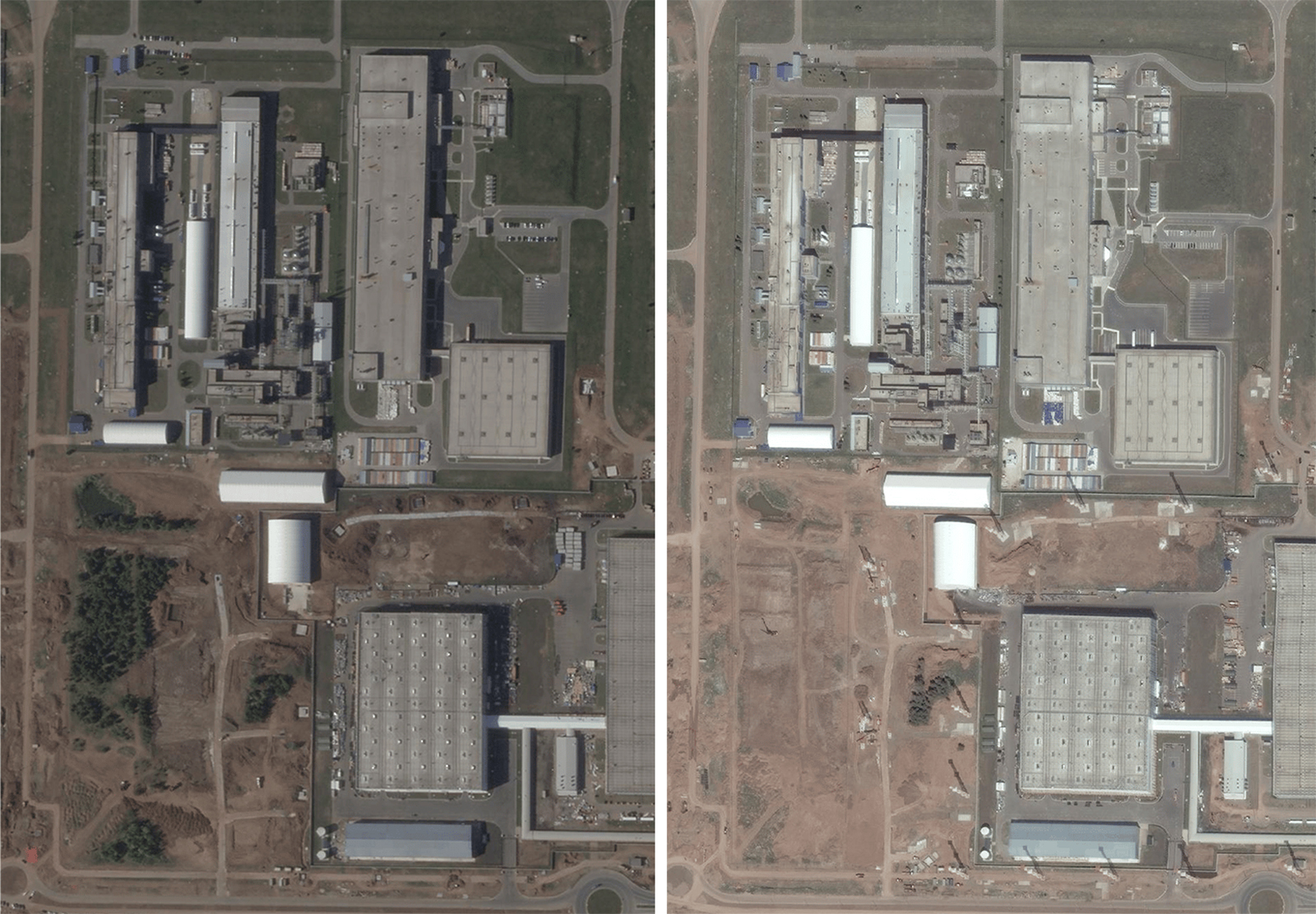 |
The Alabuga-Volokno plant in Russia's Republic of Tatarstan in satellite images taken in May (left) and July (right). Photo: USCC |
The Alabuga-Volokno plant, a subsidiary of UMATEX – Rosatom state corporation's advanced materials division – plays a crucial role in Russia's defense industry supply chain. A Ukrainian official noted that satellite images from May-July "show the land designated for the expansion project, adjacent to the existing carbon fiber workshop of the Alabuga-Volokno complex, is being leveled in preparation for construction."
David Albright, founder and president of the US-based Institute for Science and International Security, observed that workers are preparing the foundation. "The new facility is expected to be completed by 2027, requiring rapid project execution," he said.
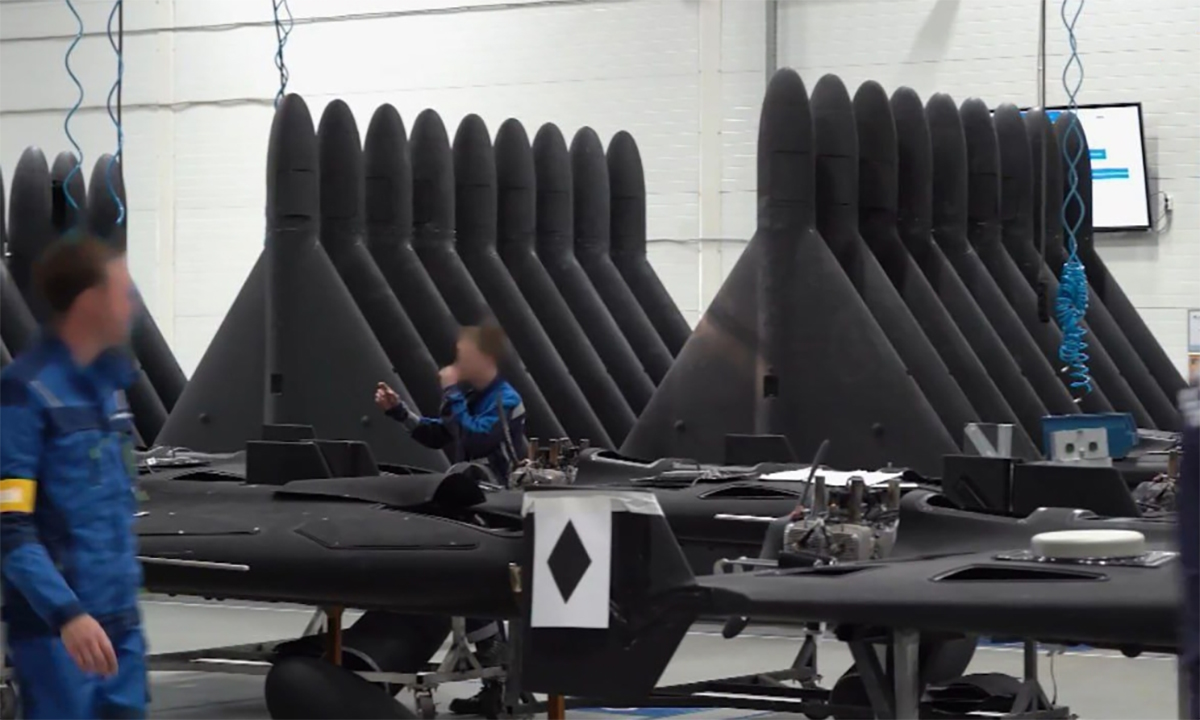 |
Russia's Geran UAV production line in an image released in 3/2024. Photo: Zvezda |
Western experts suggest that expanding UAV manufacturing material production will meet the Russian military's increasing demand for these assets. "UAVs enable Russia to launch large-scale attacks, threatening targets deep within Ukrainian territory and overwhelming enemy defenses. They are a highly effective tool for pressure, playing a key role in Russia's long-range offensive campaign," stated Stacie Pettyjohn, an expert at the Center for a New American Security.
The Washington-based Center for Strategic and International Studies (CSIS) notes Russia's efforts to increase domestic carbon fiber production to reduce import reliance. This move aligns with Russia's goal of manufacturing 130,000 UAVs annually by 2030, increasing to 350,000 units by 2035.
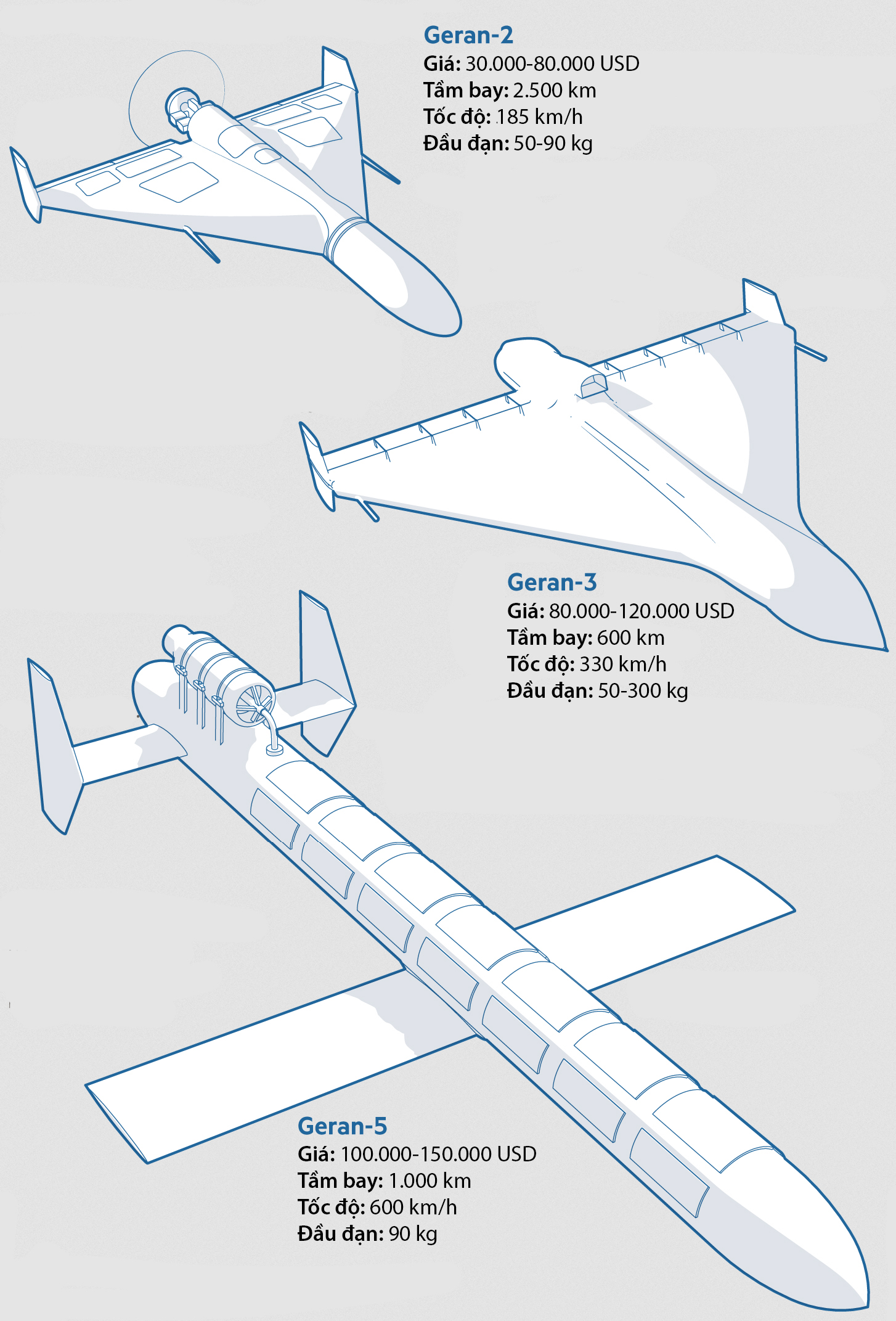 |
Russia's Geran-2, 3, 5 UAV variants. Graphics: FT, H. I. Sutton |
"Without carbon fiber, Russia cannot produce Geran-series UAVs, as no material possesses similar characteristics. Additionally, carbon fiber can reinforce wings and internal structures like fuel tanks and engine compartments," Albright explained.
The Geran is a Russian-produced suicide unmanned aerial vehicle based on Iran's Shahed-136 design, which entered combat in Ukraine in fall 2022. Geran UAV improvements extend beyond changes to its engine and external appearance.
Early versions of the aircraft featured a simple navigation system, flying only along pre-set waypoints, unable to change targets after takeoff, and susceptible to jamming. In contrast, newer Geran variants are equipped with optical and thermal cameras, an artificial intelligence (AI)-integrated reconnaissance and target tracking system, high anti-jamming satellite navigation antennas, and a WiFi Mesh-type wireless connectivity network.
Russia has recently increased its use of jet-powered UAVs, primarily the Geran-4/5, to attack targets in Ukraine. Western experts view this as a significant shift, as these jet UAVs demonstrate Russia's capability to develop, refine, and deploy new weapons on a large scale.
Nguyen Tien (According to Politico, AFP, Reuters)