The 18th BRICS summit, chaired by Indian Prime Minister Narendra Modi, the BRICS chair for 2026, took place in New Delhi today. The Ministry of Foreign Affairs stated that the event saw the participation of heads of state and government, high-level representatives from BRICS member states, partner countries, invited guests, and leaders of international organizations.
Speaking at the session themed "Resilience, Innovation, Cooperation and Sustainable Development: Shaping the Future of Global Inclusive Growth", Prime Minister Le Minh Hung affirmed Vietnam's support and desire for BRICS to coordinate closely with regional, inter-regional, and global multilateral mechanisms. This collaboration aims to contribute to peace, stability, cooperation, and provide opportunities for equal and sustainable development for all nations.
BRICS should also enhance its role in fostering dialogue and cooperation, building and strengthening trust, and contributing to solutions for global challenges. The bloc should further advocate for reforming multilateral systems to comprehensively address the interests of developing countries.
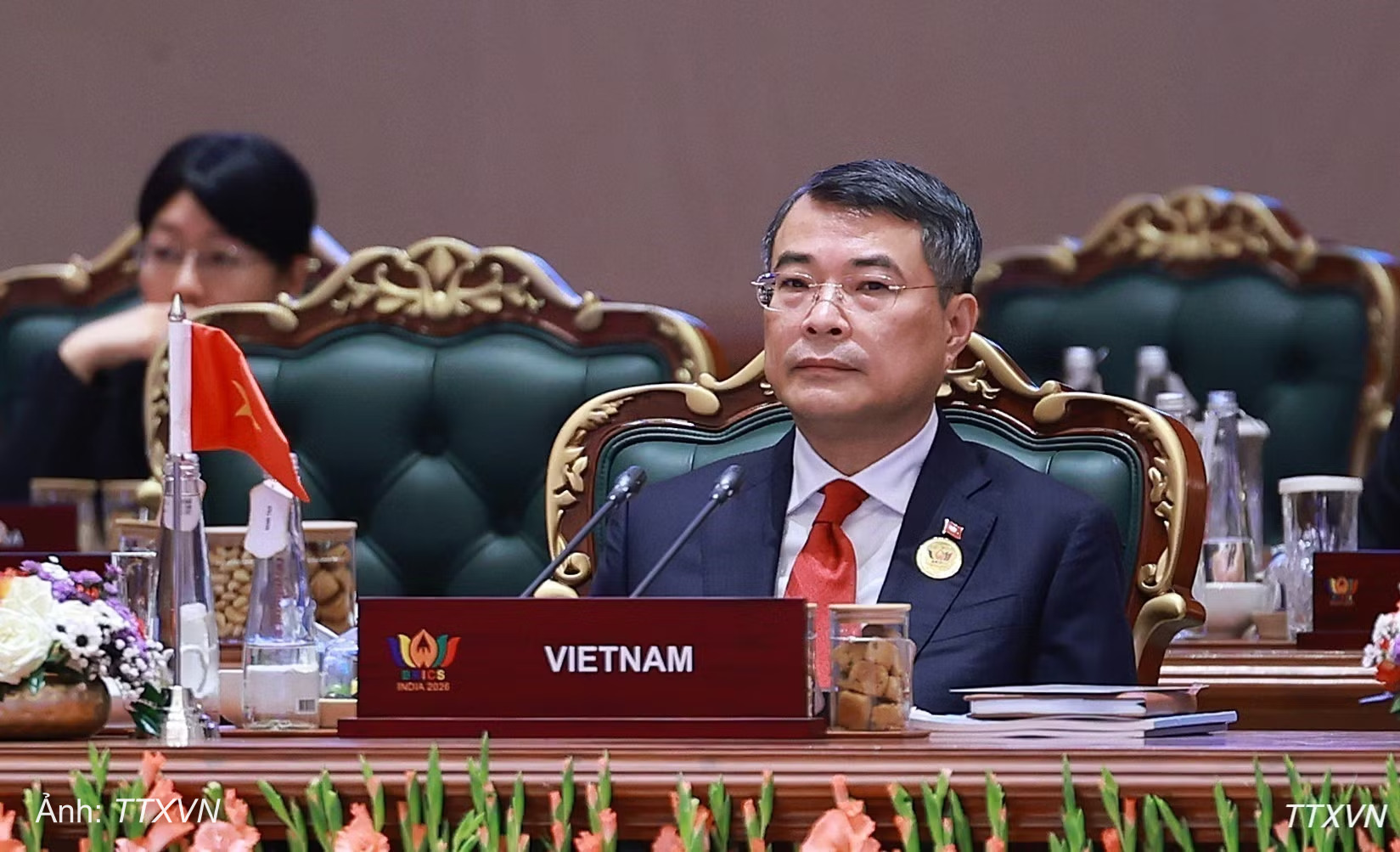 |
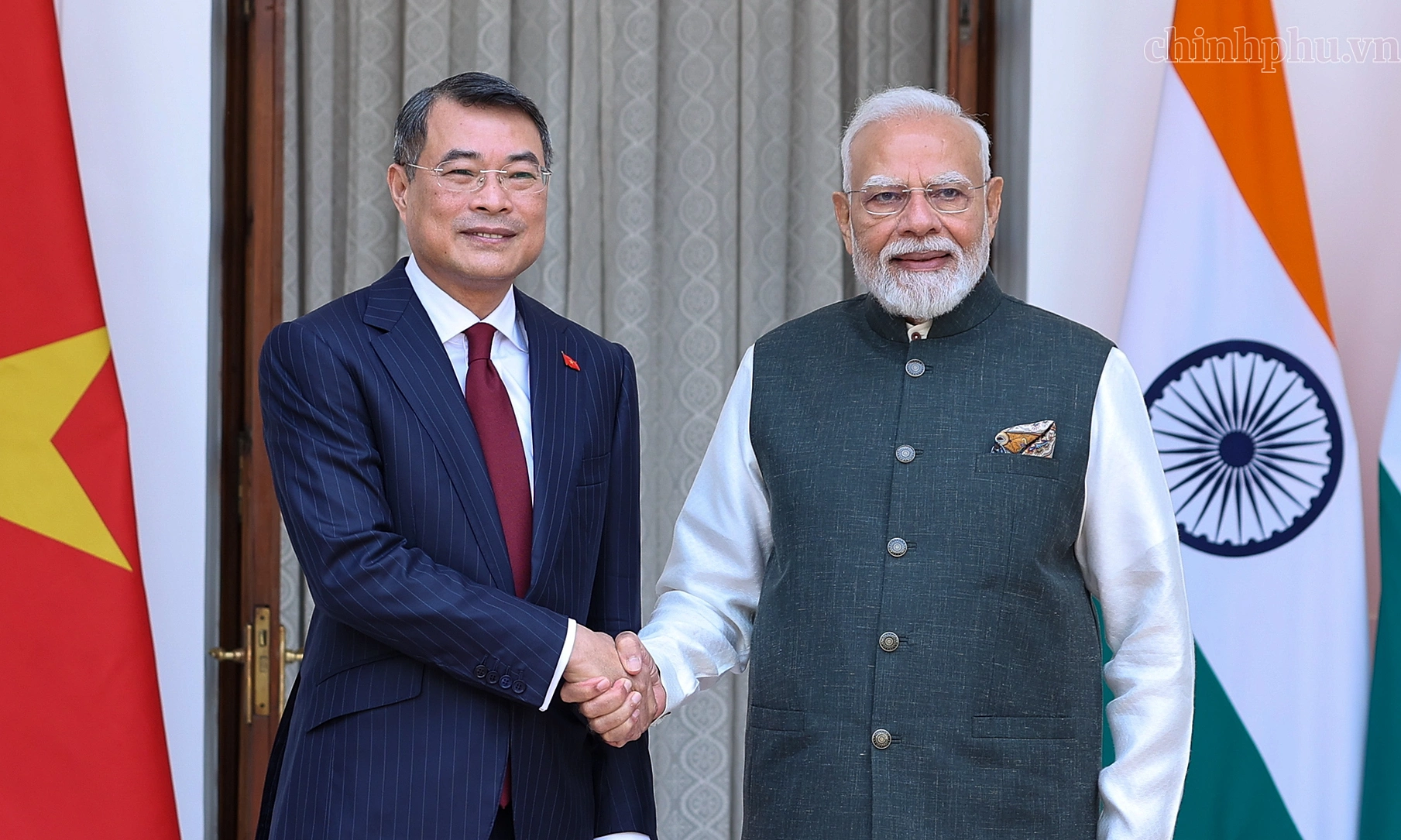
Prime Minister Le Minh Hung attended the 18th BRICS summit session in New Delhi, India on 13/9. *Photo: VNA* |
Appreciating the priorities of "Resilience, Innovation, Cooperation and Sustainable Development", Prime Minister Le Minh Hung proposed three major directions for BRICS to enhance its role in the coming period.
The first direction involves shifting from reactive responses to proactively enhancing the resilience and self-reliance of economies. This can be achieved by strengthening cooperation and supporting developing countries to bolster their capacity for flexible policy-making, governance, and strategic forecasting. The goal is to improve labor productivity, economic autonomy, and dynamism, thereby preventing crises and proactively addressing shocks, particularly in current economic, financial, and cross-border challenges.
The second direction focuses on moving from expanding the scale of cooperation to revitalizing traditional growth drivers while creating new, inclusive, and sustainable ones. This involves enhanced policy coordination on trade and investment, opening markets, leveraging existing financial institutions, and mobilizing additional long-term resources at reasonable costs. Such efforts aim to help developing countries gain more equitable access to capital for digital and green transformation.
The third direction involves transforming opportunities for scientific and technological cooperation and innovation into concrete programs and projects that serve the common interests of nations. This can be achieved through joint research, human resource training, and technology transfer, particularly in high-impact areas such as: artificial intelligence, digital technology, smart agriculture, and clean energy.
Prime Minister Le Minh Hung affirmed Vietnam's readiness to collaborate with BRICS, demonstrating responsibility, goodwill, and practical cooperation. This commitment aims to build a future of peace, prosperity, and sustainable, inclusive development for all nations and their people.
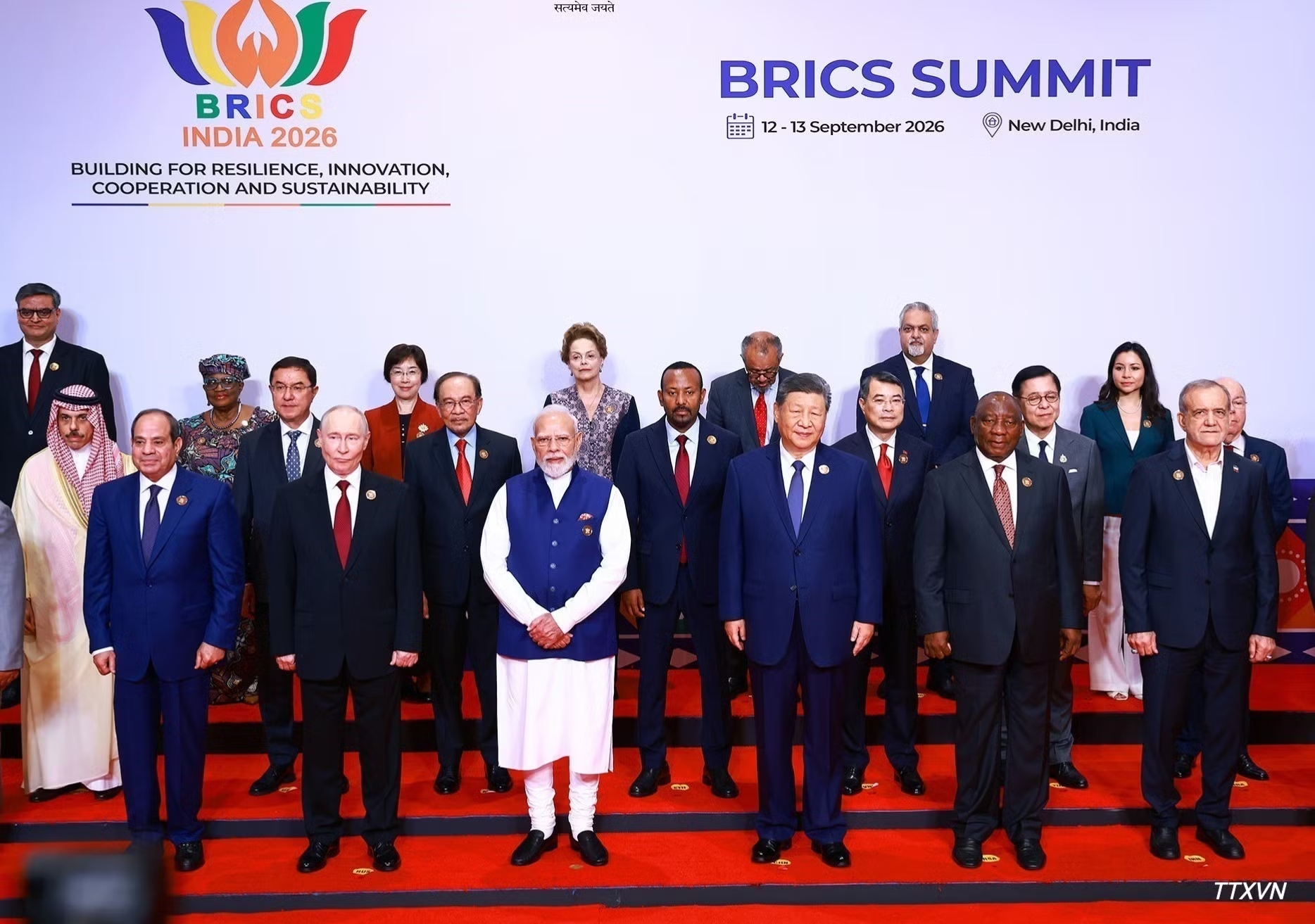 |
Prime Minister Le Minh Hung with heads of delegations at the 18th BRICS summit. *Photo: VNA* |
The 18th BRICS summit is the most significant event during India's 2026 BRICS Chairmanship, marking the bloc's two-decade journey of formation and development.
Prime Minister Modi emphasized that BRICS's 2026 priority is to build a foundation of resilience, innovation, cooperation, and sustainability, based on a "people-centric, humanity-first" approach. He stressed the need to transform cooperation priorities into concrete, practical outcomes that directly benefit people. Modi also proposed that member countries jointly recommend reforms for global governance across three pillars: representation, responsiveness, and rule-making.
The summit discussed a range of international and regional issues of shared concern. These included reforming global governance systems and multilateral institutions, measures to maintain regional peace and stability, and promoting sustainable, inclusive economic growth.
Leaders affirmed their commitment to strengthening cooperation across three main pillars: political-security, economic-financial, and cultural-people-to-people exchange. This aims to foster peace and establish a more representative and equitable international order. They agreed to advance multifaceted cooperation in areas such as: trade, investment, finance and monetary affairs, science, technology, innovation, energy security, agriculture, food security, just energy transition, environmental protection, health, and people-to-people exchanges.
Furthermore, leaders emphasized the need to ensure energy market stability and maintain an uninterrupted flow of energy from diverse sources. This includes strengthening resilience and protecting essential energy infrastructure.
Huyen Le