On 25/5, Russia's Ministry of Foreign Affairs warned that the country was preparing a series of systematic attacks on Ukraine's defense industrial complex in Kyiv, urging Western diplomats and their families to leave the capital.
One week later, on 2/6, Russian forces launched one of the most intense attacks on Kyiv since the start of the conflict. Ukraine's Air Force Command reported that Russia fired an unprecedented 8 Zircon hypersonic missiles, along with 33 Iskander-M ballistic missiles, 32 Kh-101 and Kalibr cruise missiles, and 656 various unmanned aerial vehicles (UAVs).
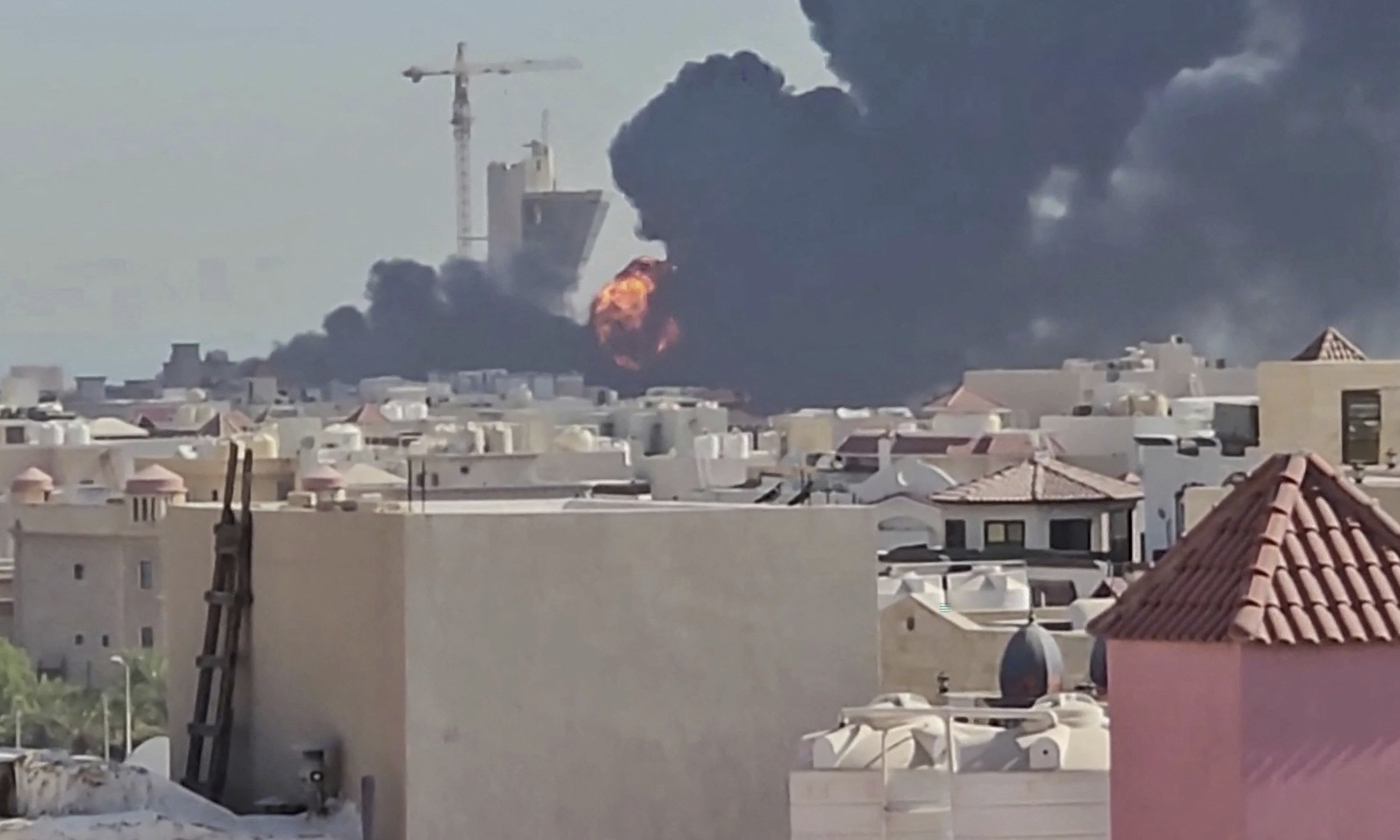
The nighttime assault left Kyiv engulfed in flames and smoke, killing at least 23 people and injuring 130 as multiple apartment buildings were hit. Russia also bombed the city of Dnipro in central Ukraine, killing at least 9 people there.
This marked the third large-scale Russian attack on Kyiv in less than one month. Explaining these unprecedented intense attacks, the Kremlin stated on 2/6 that the conflict had entered a "different model" due to Ukraine's attacks "targeting civilians."
Russia had previously accused Ukraine of attacking a vocational college in Starobelsk, Lugansk province, killing 21 people and injuring 42, while Kyiv claimed it was a training facility for Moscow's elite UAV pilots.
The Washington Post cited European officials who believe Russia is intensifying attacks on Ukraine because it faces "increasing difficulties" militarily and economically as the war enters its fifth year, while Ukraine is changing its tactics to long-range strikes on energy infrastructure deep within Russian territory.
"This could also signal an effort to pressure for a restart of peace negotiations to achieve an agreement on Russia's terms," Catherine Belton, a Washington Post analyst, noted.
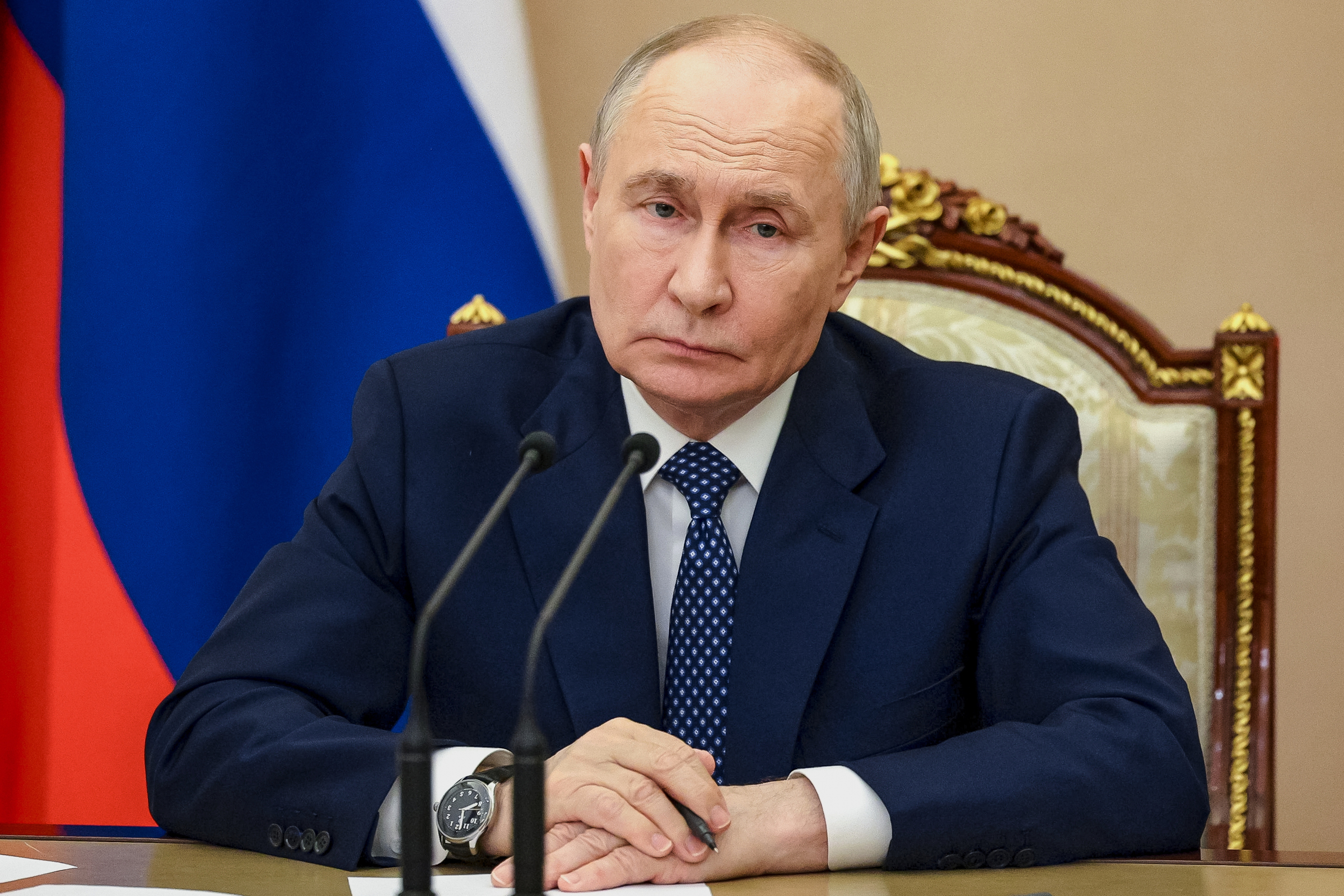 |
Russian President Vladimir Putin at the Kremlin in Moscow on 1/6. Photo: AP |
A recent analysis published in Russia in Global Affairs, one of Russia's leading foreign policy journals, suggested that Russia is now unlikely to achieve the goals President Vladimir Putin set at the start of the conflict, such as demilitarization and forcing Kyiv to accept significant territorial concessions.
Vasily Kashin, a respected Russian scholar, argued that continuous Western support for Kyiv means Russia can no longer outperform Ukraine in military equipment and technology spending. Meanwhile, Ukraine's mobilization efforts are proving more effective than Russia's.
"The war is effectively being fought between adversaries of comparable strength. Historically, such wars rarely lead to the complete destruction of one side," Kashin wrote.
After a long period of disadvantage in firepower and personnel, Ukraine has developed new response tactics: enhancing UAV technology and increasing the use of these weapons for close-range, medium-range, and long-range attacks to compensate for personnel shortages.
On the front lines, Ukraine's swarms of close-range UAVs have stalled Russian advances, repelled attacks, and helped Kyiv reclaim territory.
In April, Russia lost more controlled territory than it gained for the first time since 2024, according to Igor Bondar, a Ukrainian commentator for The Hill. Analysts from DeepState UA, Ukraine's open-source intelligence tracker, also indicated this week that Russian forces appeared to face a similar situation in May.
Ukraine's medium-range UAV attacks are also causing severe disruption to logistics networks and supply lines along the key land corridor connecting Russia through southern Ukraine to Crimea.
As a result, the Crimean Peninsula is implementing fuel rationing, Sergei Markov, a pro-Kremlin analyst, stated. Last weekend, widespread gasoline shortages were reported on the peninsula.
Medium-range UAVs have also enabled Ukraine to conduct multiple attacks on Russian assets behind the front lines near Mariupol, and to control fire on roads around Donetsk.
"Instead of encircling Russian-controlled cities with infantry and tanks, Ukraine aims to completely block enemy logistics lines with UAV tactics," Bondar explained.
Bondar believes that with Ukraine's new tactics, much of the Russian-controlled territory in Donbass "will sooner or later become dangerous for Russian forces themselves." This represents modern warfare logic initiated by Ukraine.
Ukraine has also increased its use of long-range UAVs, capable of striking targets deep inside Russian territory, thousands of kilometers from the border. Ukrainian forces destroyed an oil depot in the city of Tuapse, north of the Black Sea, four times in two weeks. They attacked Baltic ports in Primorsk and Ust-Luga. In the Urals region, Ukraine also targeted Russian air defense systems.
Dispersed over a vast territory, Russia's air defense network has not proven effective in preventing Ukraine's long-range UAV attacks.
Seeking to regain the initiative
Ukraine's battlefield successes have somewhat turned the tide, according to Jack Watling, a senior research fellow at the Royal United Services Institute (RUSI). He added that Russia has found almost no effective counter-tactics against Ukraine's new approach and UAV superiority.
"This has led to growing optimism that Ukraine can fight Russia until a ceasefire is achieved," Watling wrote in an analysis in Foreign Affairs this week.
"The war is entering a new phase, and it is crucial for Ukraine not to lose the initiative," DeepState analysts concluded.
Russian and European analysts suggest that in this context, the Kremlin is conducting large-scale attacks on Kyiv to regain the battlefield initiative, as it faces a potentially tougher summer than expected, according to The NY Times.
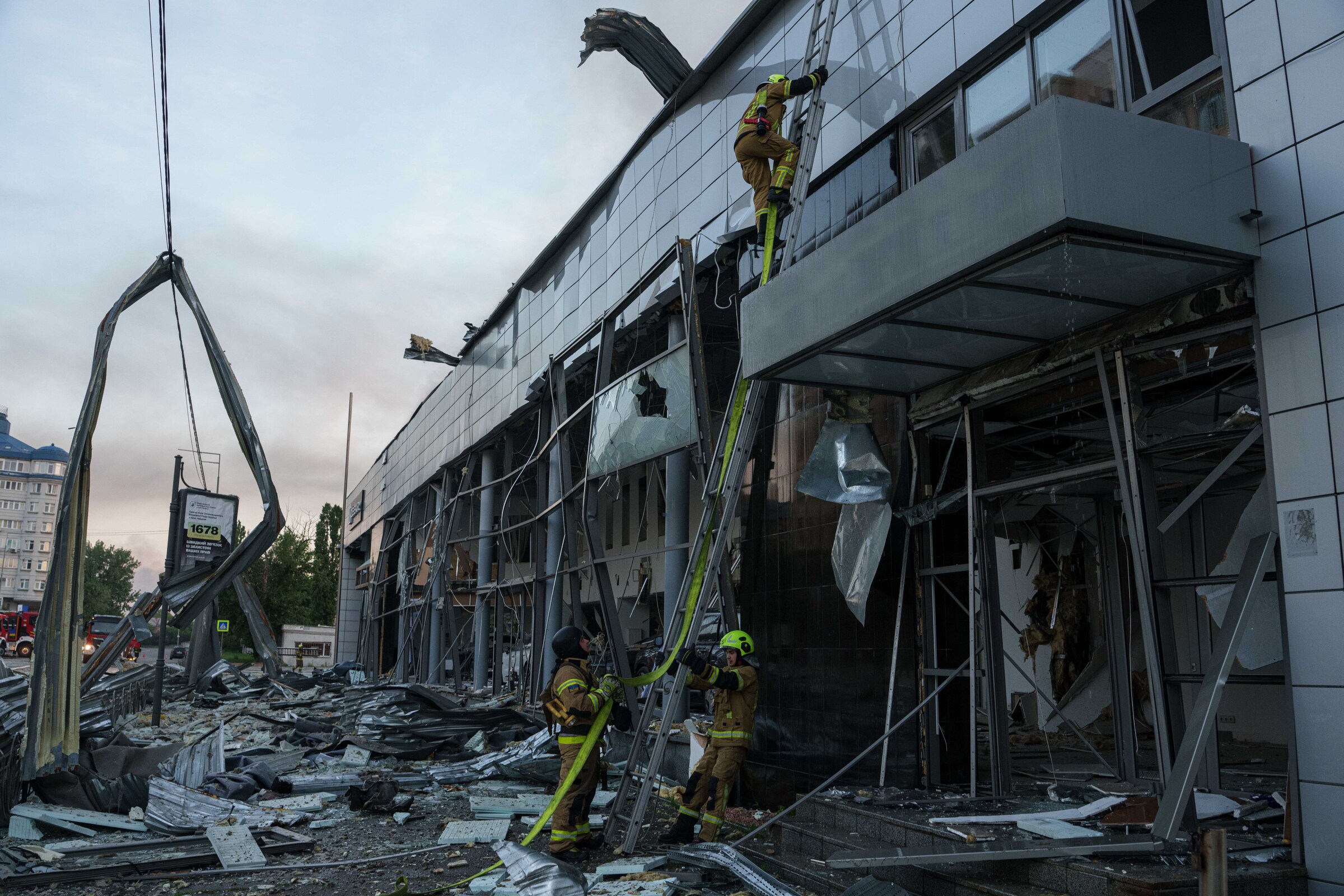 |
A severely damaged building after the Russian attack on Kyiv on 2/6. Photo: AP |
This marks a complete reversal from last summer, when President Putin was so confident of victory that he traveled to Alaska for a summit with President Donald Trump to discuss how to end the war, according to Lara Jakes, an NY Times analyst.
"Ukraine's position has become much stronger than one year ago," Franz-Stefan Gady, a military analyst in Vienna, observed.
Gady believes it is unlikely Russia will fully control the Donbass region by the end of 2026, a goal it had set before returning to ceasefire negotiations. However, he noted that intense bombardments like the one on 2/6 show that Russian air power cannot be underestimated, and "Ukraine will certainly endure many more such attacks."
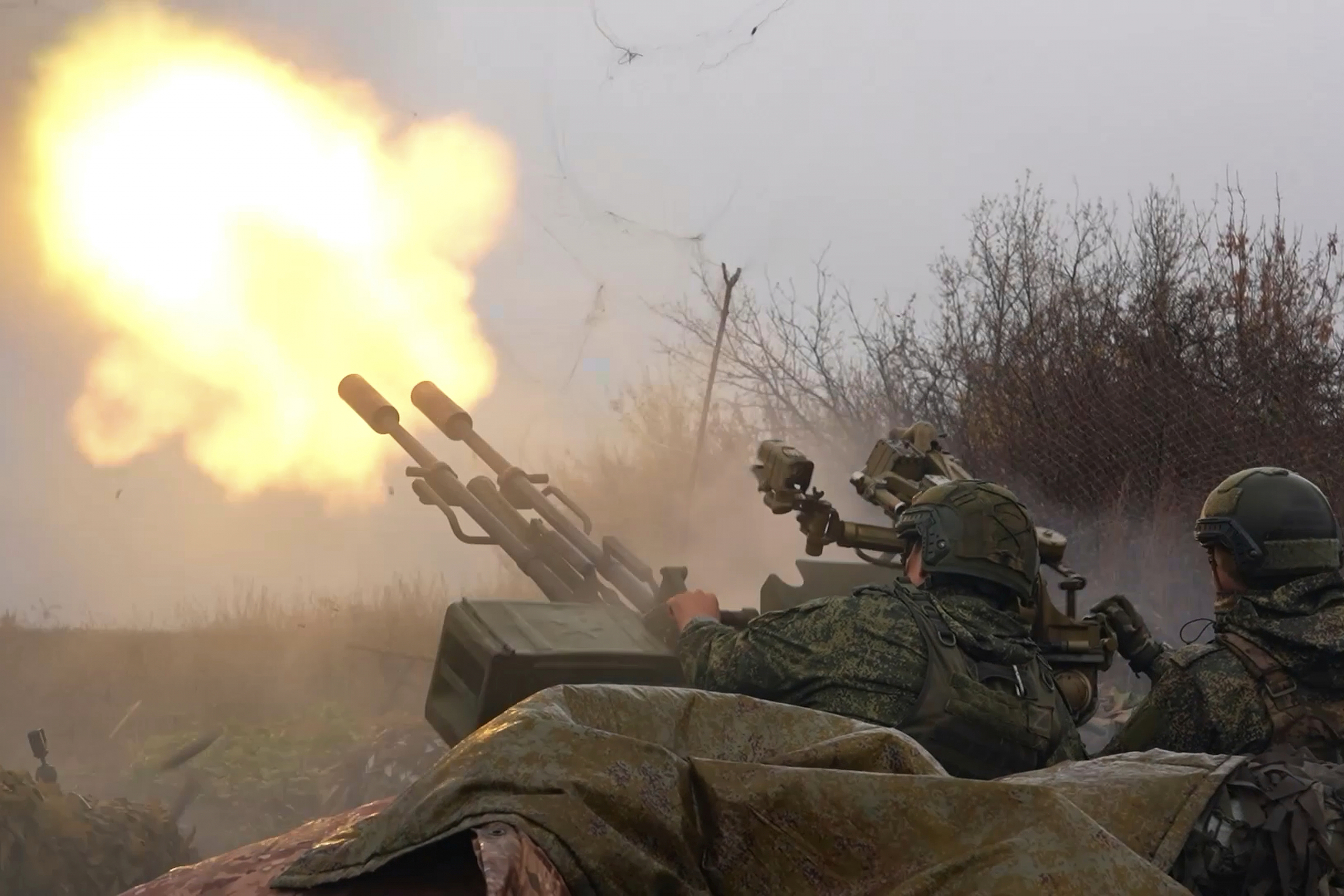 |
Russian army soldiers open fire to shoot down an unmanned aerial vehicle at an undisclosed location in Ukraine on 7/11/2025. Photo: AP |
Nikolai Sokov, a former Russian and Soviet diplomat, also warned against underestimating Russia's capacity to prolong the conflict.
"Europe seems not to consider that instead of accepting defeat, Moscow might actually choose to escalate the conflict. That is what concerns me," said Sokov, now a senior research fellow at the Vienna Center for Disarmament and Non-Proliferation in Austria.
In a recent interview on Fox News, US Secretary of State Marco Rubio admitted that US efforts to negotiate a peace deal in Ukraine had "lost some momentum in the past few months, for various reasons."
"Hopefully, we will soon reach a point where both sides sit down to negotiate. And we are ready to play a mediating role to bring this war to an end," he stated.
He noted that Russia may have recently felt "a bit more optimistic" because rising oil prices have provided the Kremlin with economic resources to continue funding military operations. Nevertheless, Rubio also believes that "Ukrainians are increasingly confident about their battlefield position."
Thanh Tam (According to Washington Post, NY Times, The Hill)