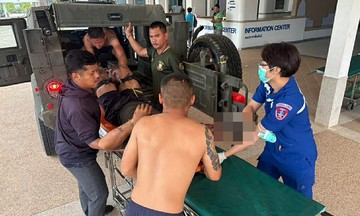
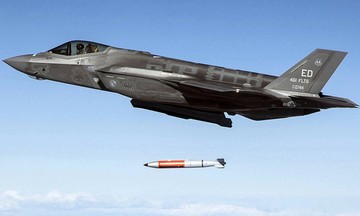
Last year, attacks by Iran-backed Houthi forces in Yemen disrupted shipping through the Suez Canal, a vital maritime route that accounts for about 12% of global trade traffic. This forced many shipping companies to take longer routes around the southern tip of Africa, increasing transportation costs.
Houthi conducted attacks on vessels in the Red Sea and Gulf of Aden after the Gaza conflict erupted in 10/2023, expressing solidarity with the Palestinian people. However, their growing impact on global shipping drew the attention of US President Donald Trump.
After repeated warnings that Houthi would be "wiped out" if they did not cease attacks on ships in the crucial Red Sea shipping lane, Mr. Trump launched Operation Rough Rider on 15/3/2025. This operation deployed a large military force to the Middle East to conduct intense airstrikes on Houthi infrastructure and bases.
US forces held a significant advantage over Houthi, partly due to F-16 fighter jet units nicknamed "Wild Weasels", specialized in suppressing enemy air defense systems. These units were equipped with HARM missiles capable of locking onto and destroying enemy radar signals.
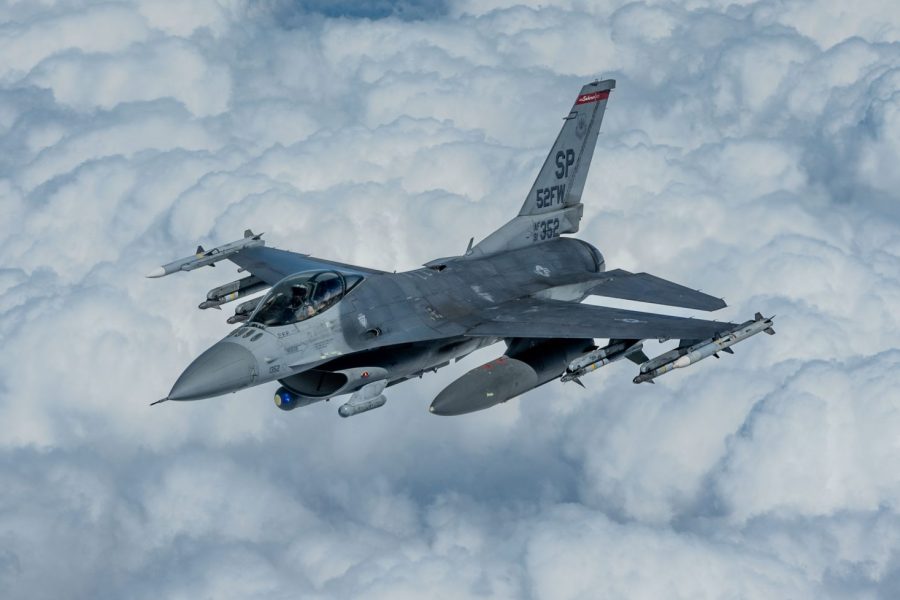 |
US F-16 fighter jet assigned to US Central Command. Photo: USAF
However, Houthi developed a sophisticated network for tracking US aircraft using ground reconnaissance systems, optical devices, and infrared sensors, a level of complexity the US did not fully understand.
12 days after Operation Rough Rider began, Lt. Col. William "Skate" Parks and Maj. Michael "Danger" Blea took off in two F-16 fighter jets from a regional base. Their mission was to destroy Houthi air defense systems near Sanaa, Yemen's capital, and create a diversion for B-2 stealth bombers to attack the group's missile production facilities elsewhere.
As they approached their target, Parks and Blea observed numerous flares being fired into the sky along their flight path. Some military officials believed this was Houthi's way of providing early warnings to each other about the presence of US fighter jets.
Despite this, the two pilots continued their mission and launched an attack on the target near Sanaa. As their F-16 fighter jets turned to return to base, everything remained quiet.
However, as they were about to leave the mainland and fly out over the Red Sea, a missile attack warning sounded in the cockpit. In a few brief seconds, Parks had to choose the risky option of making a sudden turn, pointing the fighter jet towards the incoming missile.
This emergency evasion technique aims to force the missile's guidance system to constantly recalculate its trajectory under extreme time pressure. When the distance was close enough, the pilot executed a sharp turn, preventing the missile from changing direction in time, causing it to overshoot the target.
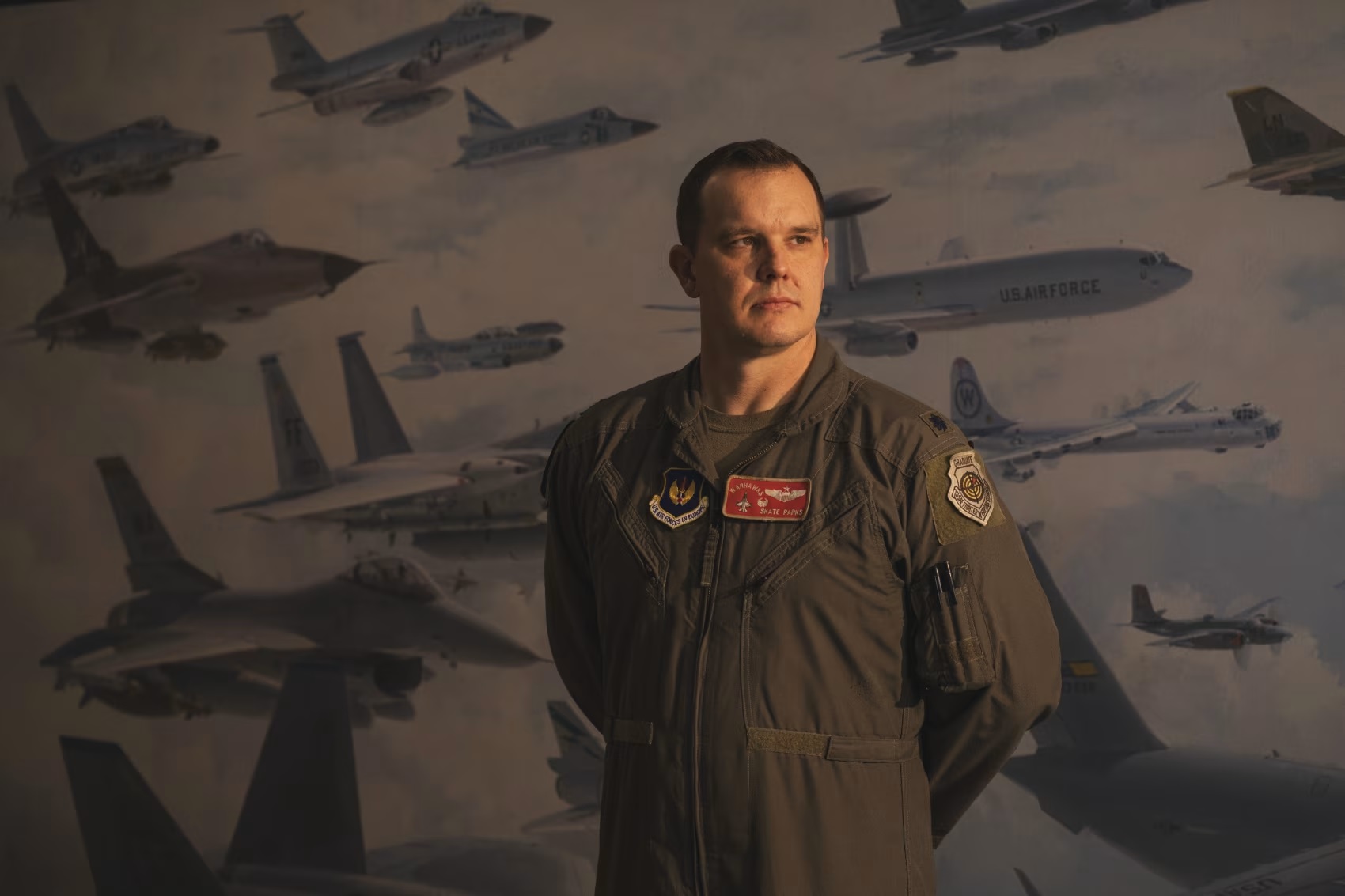 |
US Air Force F-16 pilot William "Skate" Parks. Photo: WSJ
As calculated, the missile missed Parks' fighter jet but flew directly towards Blea's F-16. On his heads-up display, he saw the warhead pass directly in front of the aircraft and then explode above the cockpit. It took a moment for him to realize he was still alive.
"The missile almost hit me. Let's go," Blea yelled over the intercom.
They were not yet out of danger. Houthi air defense forces continued to launch more missiles. The two US pilots engaged their F-16 afterburners to reach maximum speed, then repeatedly executed sharp turns to avoid being shot down over the rugged mountainous terrain.
However, fuel was running low. The commander at the Qatar base ordered a refueling aircraft operating over the Red Sea to change course and approach the two F-16 fighter jets. Blea urgently refueled his jet, which was nearly out of fuel.
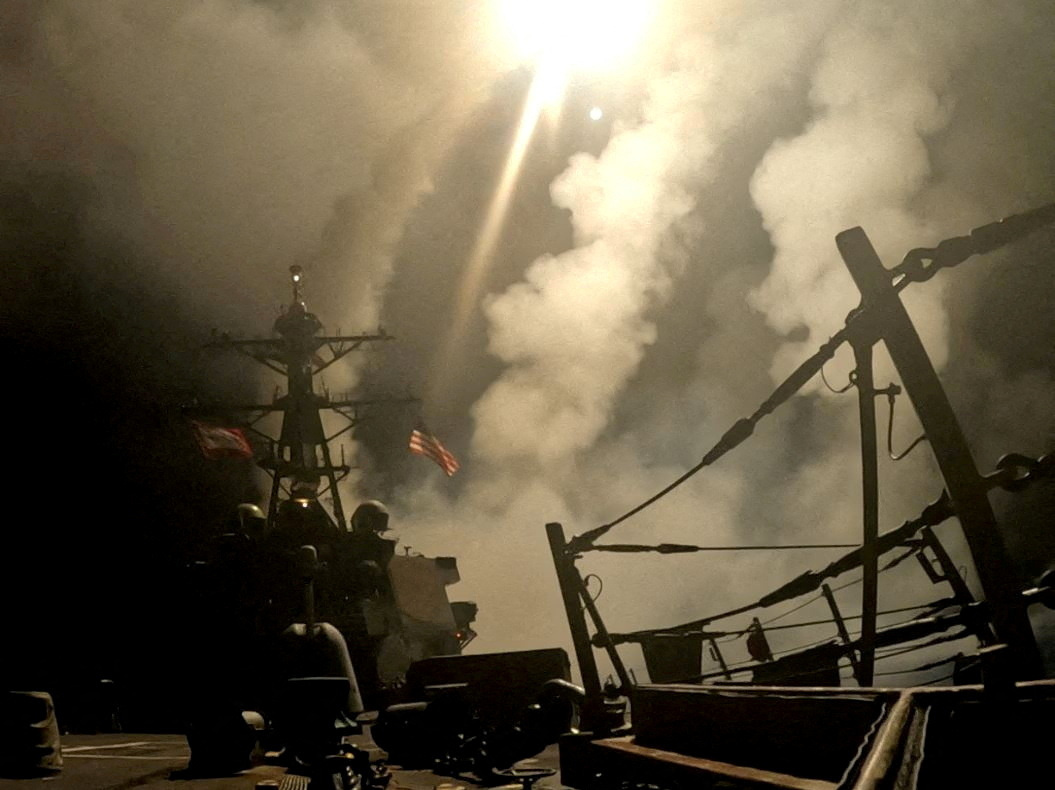 |
Missile fired from a US-flagged ship at an undisclosed location after Washington launched airstrikes against Houthi on 15/3/2025. Photo: Reuters
For 15 breathtaking minutes, the two US pilots struggled to evade 6 air defense missiles from Houthi. Recalling that near-death experience, Parks recounted that a Houthi missile "flew right under my jet's left wing, so close I could hear its roar."
After returning safely to base, the two pilots were awarded Silver Stars, while the refueling aircraft crew is expected to receive the Distinguished Flying Cross next month.
Beyond the air force, the US Navy last April also had to constantly contend with Houthi drones and missiles in the Red Sea. One early morning, sailors in the hangar bay of the aircraft carrier Truman were preparing for the next mission when they detected an incoming ballistic missile.
The massive ship immediately turned right, causing an F/A-18 fighter jet being towed into position to be violently thrown, hurtling out of the hangar bay. Sailors narrowly leaped out of the fighter jet's path at the last second.
For Mr. Trump, the primary objective of Operation Rough Rider was to ensure freedom of navigation for US ships in the Red Sea, rather than to eradicate Houthi forces. By May, Washington and Houthi reached a ceasefire agreement after Mr. Trump believed US forces had done enough in the campaign. Under the agreement, the US halted airstrikes and Houthi stopped attacking US ships.
The Pentagon praised the achievements of 53 days of engagement. They reported that the US had attacked over 1,000 targets and eliminated many Houthi missile and drone commanders. However, Washington did not eliminate Houthi's highest-ranking leadership.
"Rough Rider caused significant damage to Houthi. But the campaign did not defeat them or weaken them to the point where they cannot conduct future attacks in the Red Sea," Gregory Johnsen, an expert at the Gulf States Institute, noted.
 |
Image of Mr. Trump in a red baseball cap monitoring Houthi airstrikes, posted by the White House on 15/3/2025. Photo: The White House
As President Trump recently considered military measures against Iran, observers suggest that lessons from the confrontation with Houthi highlight the risks to US personnel and equipment if an all-out war were to erupt. The danger to US pilots is even higher because Iran possesses a much larger military force with more modern equipment than Houthi.
General Dan Caine, Chairman of the US Joint Chiefs of Staff, warned the White House that a prolonged conflict with Iran risks US casualties and depletes ammunition reserves needed for the future, while further straining US forces after recent campaigns.
Like Houthi, Iran has prepared for an existential war. The objectives of the US and whether military action can achieve them remain unclear. However, the risk is a prolonged conflict or escalation beyond Washington's control.
"Many unpredictable things can happen. And it is unlikely to benefit the US," Danny Citrinowicz, a senior expert at the Institute for National Security Studies in Tel Aviv, wrote on social media.