"We believe that the parties to the New START treaty are no longer bound by any obligations or reciprocal declarations within the framework of the treaty, including its core provisions, and are in principle free to determine their next steps," Russia's Ministry of Foreign Affairs stated in a declaration on the evening of 4/2.
According to the ministry, Russia had sought to maintain the framework of the New Strategic Arms Reduction Treaty (New START), with President Vladimir Putin publicly proposing in 9/2025 to maintain the treaty's restrictions for at least one year after its expiration.
However, Russia received no official response from the United States regarding this initiative through diplomatic channels, leading to the current deadlock. "Therefore, we announce that all obligations under the New START treaty have concluded," Russia's Ministry of Foreign Affairs emphasized.
Russia's Ministry of Defense also affirmed that Moscow now considers both countries no longer bound by the core provisions or related declarations concerning New START.
Russia pledged to develop its strategic weapons policy in a "responsible and balanced" manner, based on a "thorough analysis of U.S. military policy". However, the ministry warned of its readiness to take "decisive military-technical measures" to counter national security threats.
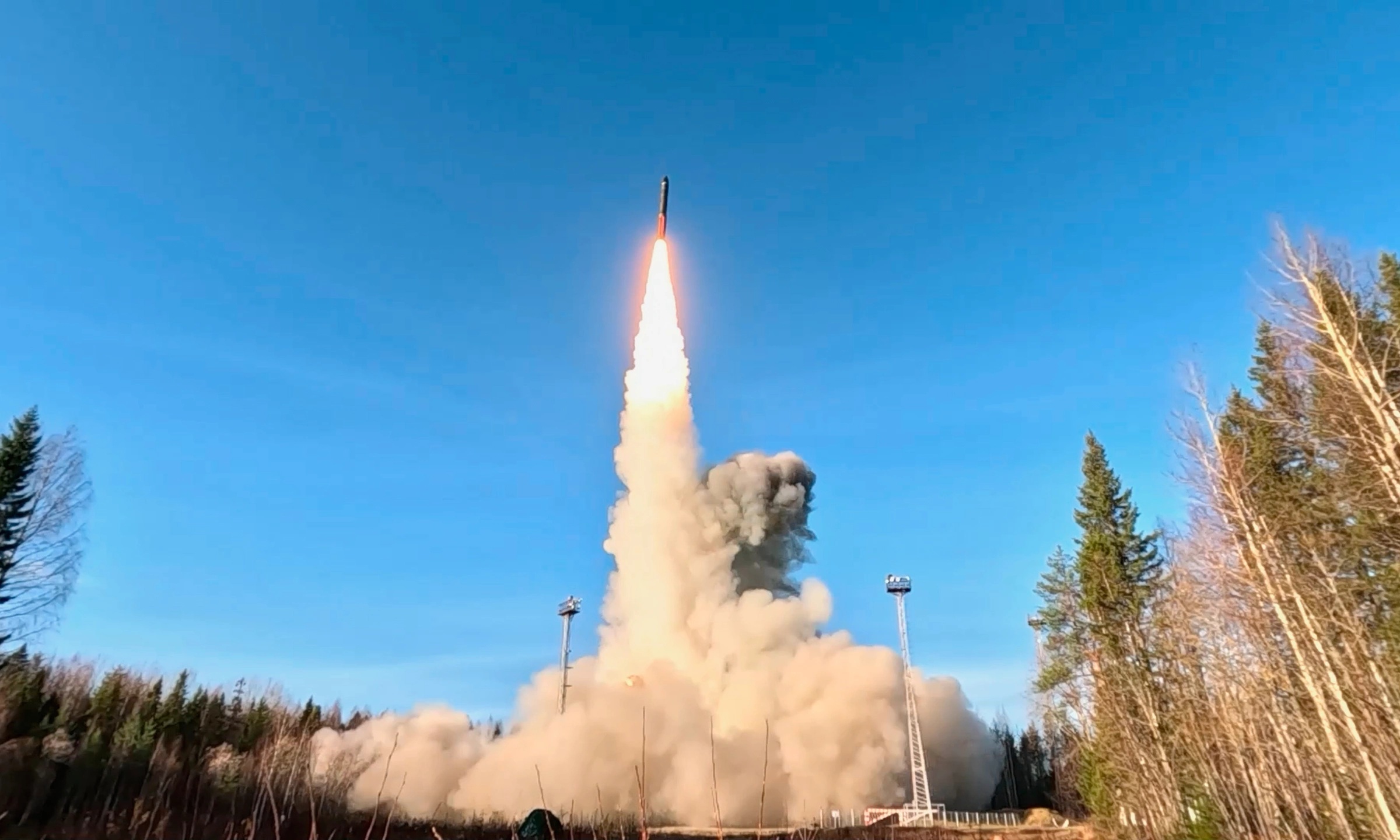 |
Russia's RS-24 Yars intercontinental ballistic missile launches from the Plesetsk test site in 10/2025. Photo: AP
While acknowledging the treaty's expiration, Russia still left open the possibility of future negotiations, expressing readiness to seek "political-diplomatic means to comprehensively stabilize the strategic situation based on equal and mutually beneficial dialogue", should conditions for such cooperation arise.
New START, also known as START III, was signed by the United States and Russia in 2010 and took effect one year later. The treaty stipulated that each party could not deploy more than 700 intercontinental ballistic missiles (ICBMs), submarine-launched ballistic missiles (SLBMs), and nuclear-capable bombers, and the number of nuclear warheads on these delivery vehicles could not exceed 1,550.
Both Russia and the United States could exceed these limits if New START is not extended or replaced by another agreement. The treaty also allowed each party to conduct on-site inspections of the other's nuclear arsenal, although this activity was suspended during the Covid-19 pandemic and has not resumed since.
In 2021, the two countries agreed to extend the treaty for an additional 5 years, concluding on 5/2. However, negotiations to further extend the agreement between the United States and Russia have collapsed in recent years due to tensions between the two countries, including the issue of Ukraine.
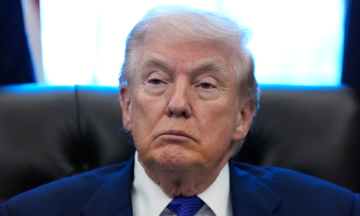
U.S. President Donald Trump had signaled that the United States would not extend New START, opting instead to "sign a better deal". United Nations Secretary-General Antonio Guterres on 4/2 urged Moscow and Washington to immediately negotiate a new treaty to replace New START.
Huyen Le (According to Anadolu, AFP)