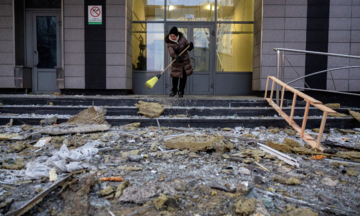
Ukraine's Air Force Command announced today that Russia launched a massive attack, including four Zircon hypersonic missiles or P-800 Oniks supersonic anti-ship missiles, 32 Iskander-M tactical ballistic missiles or modified S-300 air defense missiles, seven Kh-22/32 supersonic anti-ship missiles, 28 Kh-101 and Iskander-K cruise missiles, and 450 various unmanned aerial vehicles (UAVs).
The primary targets of this assault were the Kyiv, Kharkov, Dnipropetrovsk, Vinnytsia, and Odessa provinces.
Explosions as missiles struck Ukraine's capital, Kyiv, in the early hours of 3/2. Video: X/AMK Mapping
"Ukrainian air defense units intercepted four Zircon/Oniks missiles, 11 Iskander-M/S-300 projectiles, three Kh-22/Kh-32 missiles, 20 Kh-101/Iskander-K missiles, and 412 various UAVs. 27 missiles and 31 UAVs hit 27 locations, with debris falling in 17 areas. We are clarifying information on the remaining six missiles," the agency stated, without specifying their types.
This coordinated attack involved the largest number of Iskander-M ballistic missiles since the start of the conflict. The previous high was in 10/2025, when Russian forces launched 26 Iskander-M missiles at targets in Ukraine.
AMK Mapping, an X account specializing in open-source intelligence on the conflict, reported that the 750 kV "Kyiv" substation was hit by multiple Zircon and Kh-32 missiles. Additionally, six Iskander-M projectiles struck the CHP-4 and CHP-5 thermal power plants in the same province. The Trypillya thermal power plant in Kyiv province was targeted by Kh-32 and Kh-101 missiles.
One of the most severely impacted targets was the Prydniprovska power plant in Dnipropetrovsk province, which sustained hits from approximately 18 Iskander-M missiles. Another Iskander-M missile also targeted an unspecified location near Pavlograd city in the province.
The 330 kV "Bar" and "S/S Vynnytska" substations in Vinnytsia province were struck by several Kh-101 and Iskander-K missiles. Meanwhile, the TEC-5 thermal power plant and the Zmivska power plant in Kharkov province were targets of multiple Iskander-M missiles.
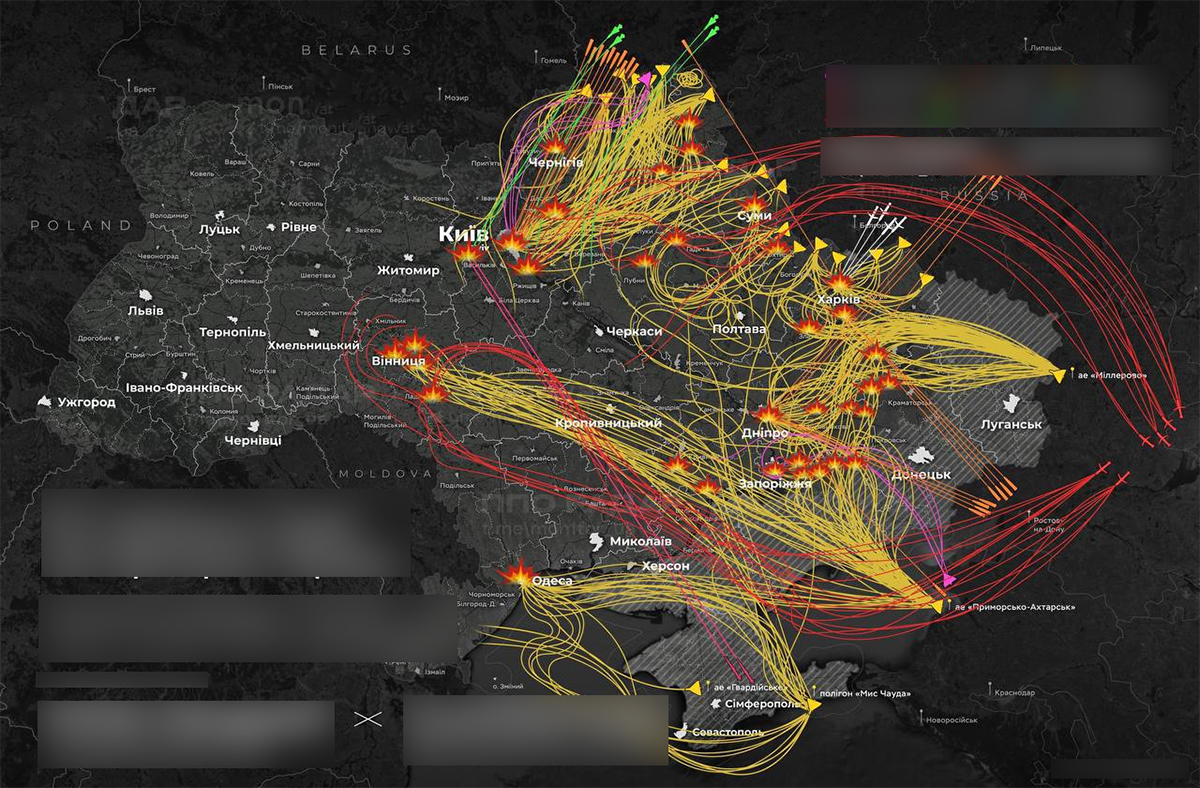 |
Flight paths of Russian missiles and UAVs during the 3/2 attack. Graphics: X/MonitorWar
Ukrainian Foreign Minister Andrii Sybiha accused Russia of "stockpiling UAVs and missiles, waiting for temperatures to drop" to attack Ukraine. He urged allied nations to bolster Ukraine's air defense capabilities and energy infrastructure, and to increase pressure on Russia.
Temperatures on 3/2 in the capital Kyiv reached -17 degrees Celsius, while Kharkov, Ukraine's second-largest city, experienced -23 degrees Celsius.
Ukraine's Minister of Reconstruction, Oleksy Kuleba, announced that over 1,100 homes in Kyiv lost heating after the attack. Kharkov city officials reported reducing capacity and cutting heating to 800 households to prevent the entire network from freezing, urging residents to seek shelter in city facilities if they needed warmth.
Russia's Ministry of Defense has not commented on the reports.
This attack occurred after Russia's commitment to "halt attacks on Kyiv for one week" concluded on 1/2. The Kremlin stated last week that the one-week ceasefire in Kyiv was directly proposed by US President Donald Trump to his Russian counterpart Vladimir Putin, aiming to facilitate negotiations.
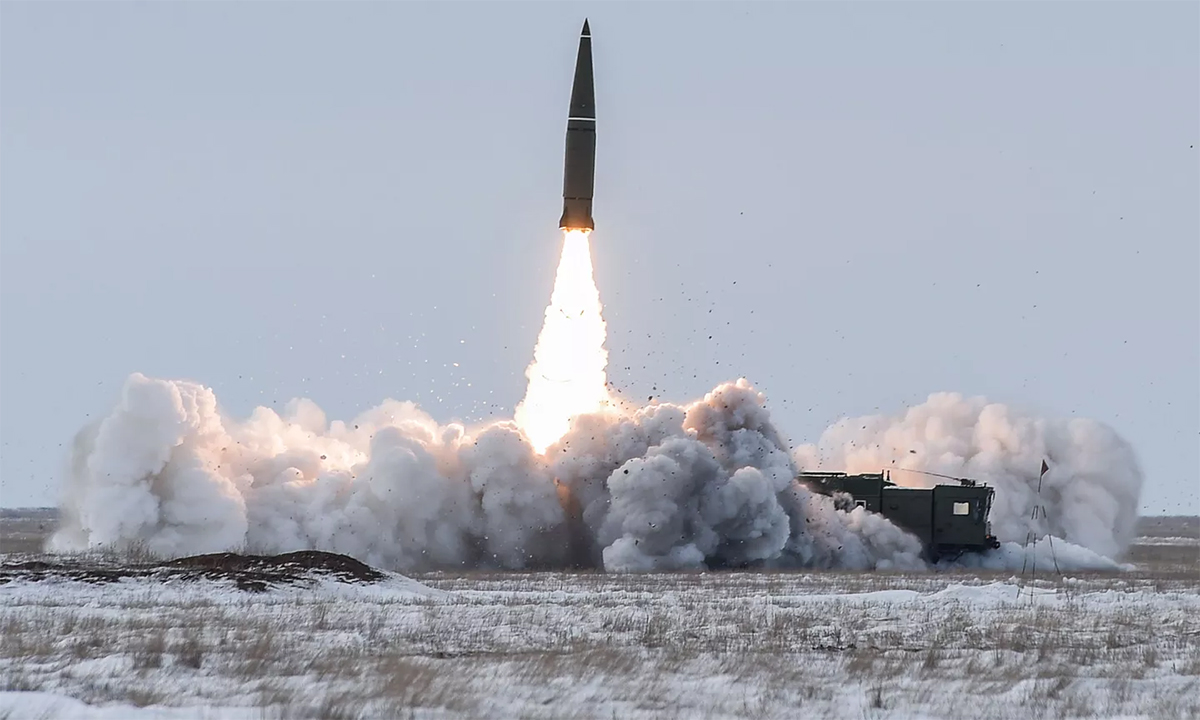 |
An Iskander-M missile launches at the Kapustin Yar training ground, Russia, 3/2018. Photo: Russian Ministry of Defense
Ukrainian experts warn that ballistic missiles will be one of Kyiv's greatest challenges this year, as Moscow focuses on increasing their use in attacks.
Western countries have supplied Ukraine with advanced air defense systems, including the powerful Patriot, SAMP/T, IRIS-T, and NASAMS. Ukraine's Patriot systems are equipped with the latest US-made PAC-3 MSE missiles, each costing an average of 4 million USD and capable of intercepting ballistic missiles at a range of 60 km.
However, Ukrainian air defense systems have repeatedly been overwhelmed and depleted of ammunition, with many batteries also targeted and destroyed by Russia. Russia continues to upgrade its Iskander-M ballistic missiles and deploy "zombie missiles" from S-300 systems, further complicating Ukraine's defensive network.
Nguyen Tien (According to AFP, AP, Reuters)