Images of cockroaches crawling on kitchen floors, cobwebs covering walls, and rotting vegetables might seem to belong to a struggling restaurant. However, these shocking scenes originated from a private club in Mumbai, India's financial capital.
Cockroaches crawling, uncovered food, poor kitchen staff hygiene... these were numerous violations found at the food processing facility of the Indian Railway Catering and Tourism Corporation and the ISKCON vegan restaurant chain in Mumbai in early september. Video: India Today
These were among dozens of images and videos that went viral on Indian social media since may, after the Maharashtra state Food and Drug Administration (FDA) began extensive inspections of restaurants, cafes, and food businesses across the state.
At the center of this crackdown is Tukaram Mundhe, 51, an Indian Administrative Service (IAS) officer with over two decades of experience, who is the new food safety commissioner for Maharashtra state.
Since taking office in may, he has launched a campaign to curb food safety violations, addressing India's concerning food safety landscape.
Data presented to parliament in july revealed that among 223,808 food samples tested across India between 2025 and 2026, nearly one-fifth were found to be "substandard", meaning unsafe, poor quality, or mislabeled.
"These actions are taken for public health. We will continue to apply them against violations", Mundhe said.
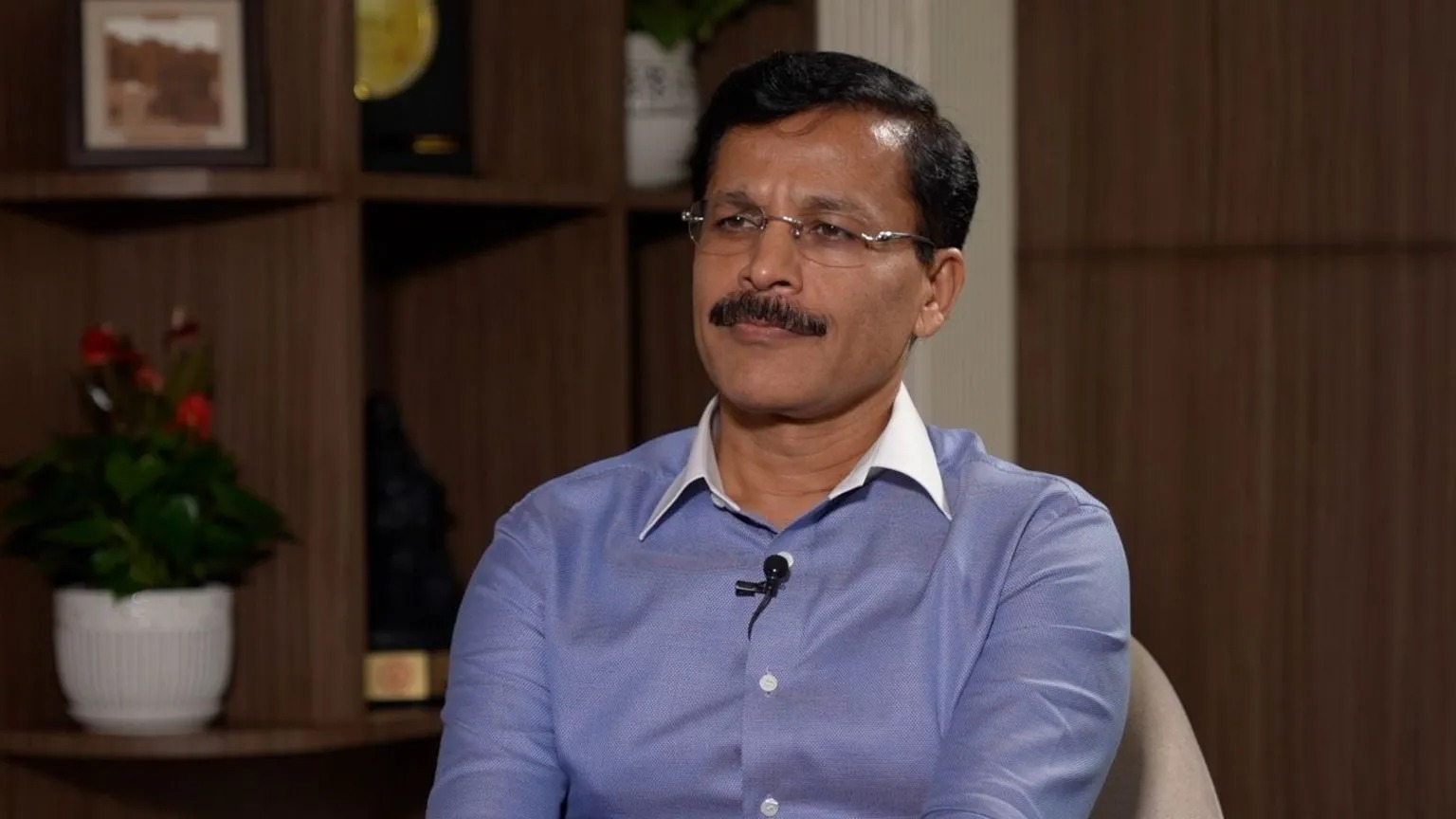 |
Maharashtra state food safety commissioner Tukaram Mundhe. *Photo: BBC*
To fulfill his commitment, Mundhe implemented a series of strict measures. His agency conducted over 4,000 inspections, suspended about 300 licenses, and issued over 1,000 rectification notices. They suspended licenses of quick delivery warehouses, sent notices to Bollywood stars warning about products they were promoting that fell into restricted categories, and launched a complaint portal, which received over 16,000 complaints in just three months.
Additionally, he enforced bans on using old newspapers for food wrapping, synthetic food dyes, and fake cheese, while tightening food safety management around school areas.
Beyond regulatory enforcement, the campaign transformed Mundhe into a social media phenomenon, garnering over 3,8 million Instagram followers. His inspection and press conference videos spread rapidly.
"Hygiene has always been a concern here. What Mundhe did differently was to make it public and transparent", noted Pawan Agarwal, former head of India's food regulatory body.
While consumers applauded his efforts, his working style faced sharp backlash from businesses and the judiciary. Restaurant associations accused him of disregarding legal procedures.
"Compliance is essential, but harsh approaches like public shaming, immediate license suspension for minor or rectifiable procedural errors, and severe penalties for administrative oversights create panic rather than reform", said Niranjan Laxman Shetty, chairman of the Legal Committee of the Indian Hotel and Restaurant Association.
These actions also faced legal challenges, with courts deeming them an "abuse of power". in august, the Bombay High Court ordered Mundhe's agency to compensate a sweet shop 500,000 rupees (5,291 USD) that had been unreasonably suspended.
The very next day, Mundhe's team conducted inspections and issued fines for numerous violations at the Bombay High Court canteen.
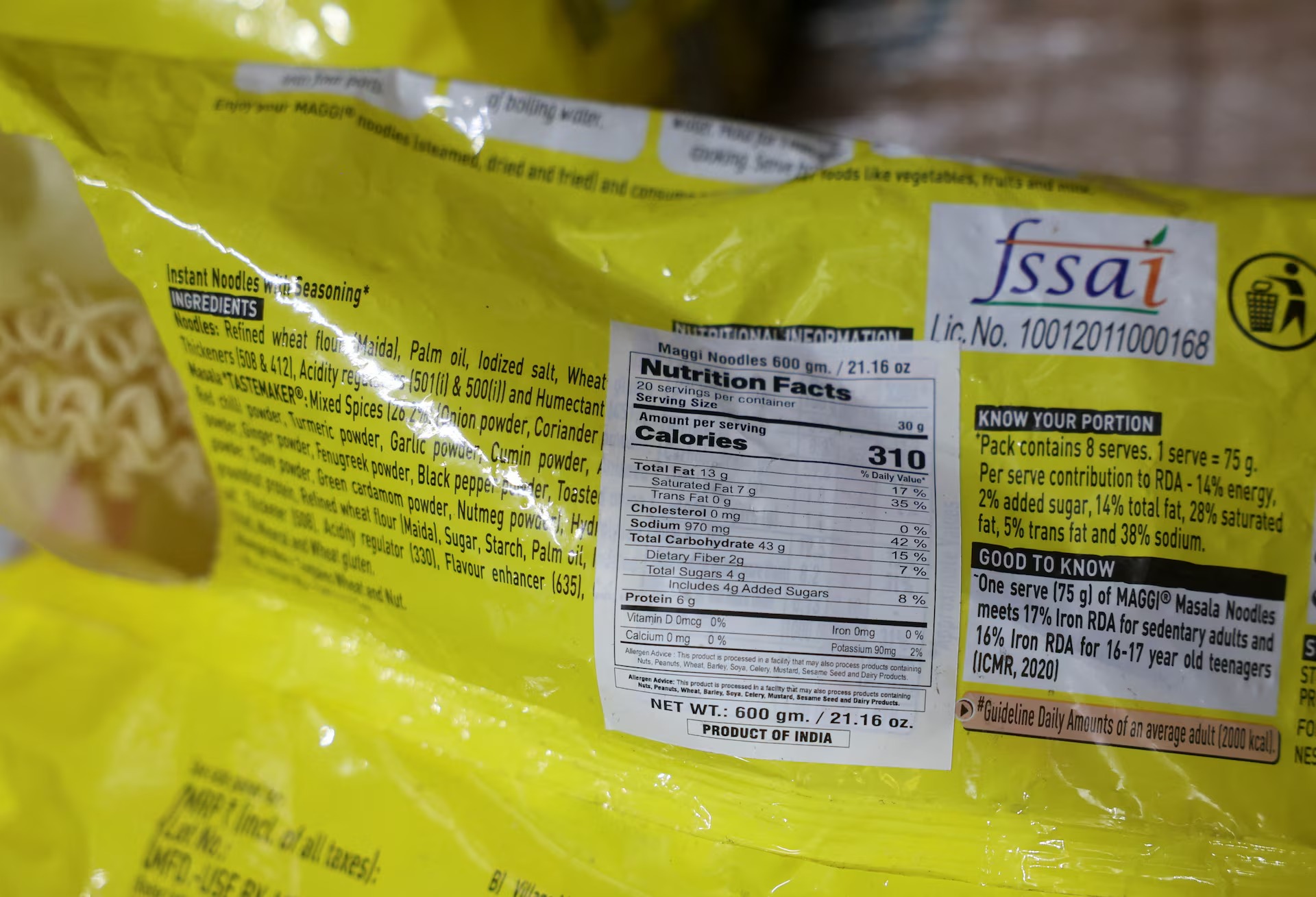 |
New labels pasted over original ones during a raid by Maharashtra state FDA at a warehouse in Turbhe, India, on 25/8. *Photo: Reuters*
Responding to negative feedback, Mundhe asserted that his actions comply with the law and aim to protect the community.
"If food establishments and businesses complied with existing regulations, I wouldn't need to take such actions", he stated.
"We are not here to shut down or suspend every licensed unit. We are here to ensure food is safe, of good quality, correctly labeled, and healthy for consumers", he said at an event last week.
The impact of Mundhe's campaign is visibly spreading to every street corner. Yuvraj Yadav, a sandwich vendor in suburban Mumbai, said he switched from using old newspapers to oil-absorbing paper for wrapping food.
"We started this a few months ago after newspapers were no longer allowed for food wrapping due to health concerns", he said.
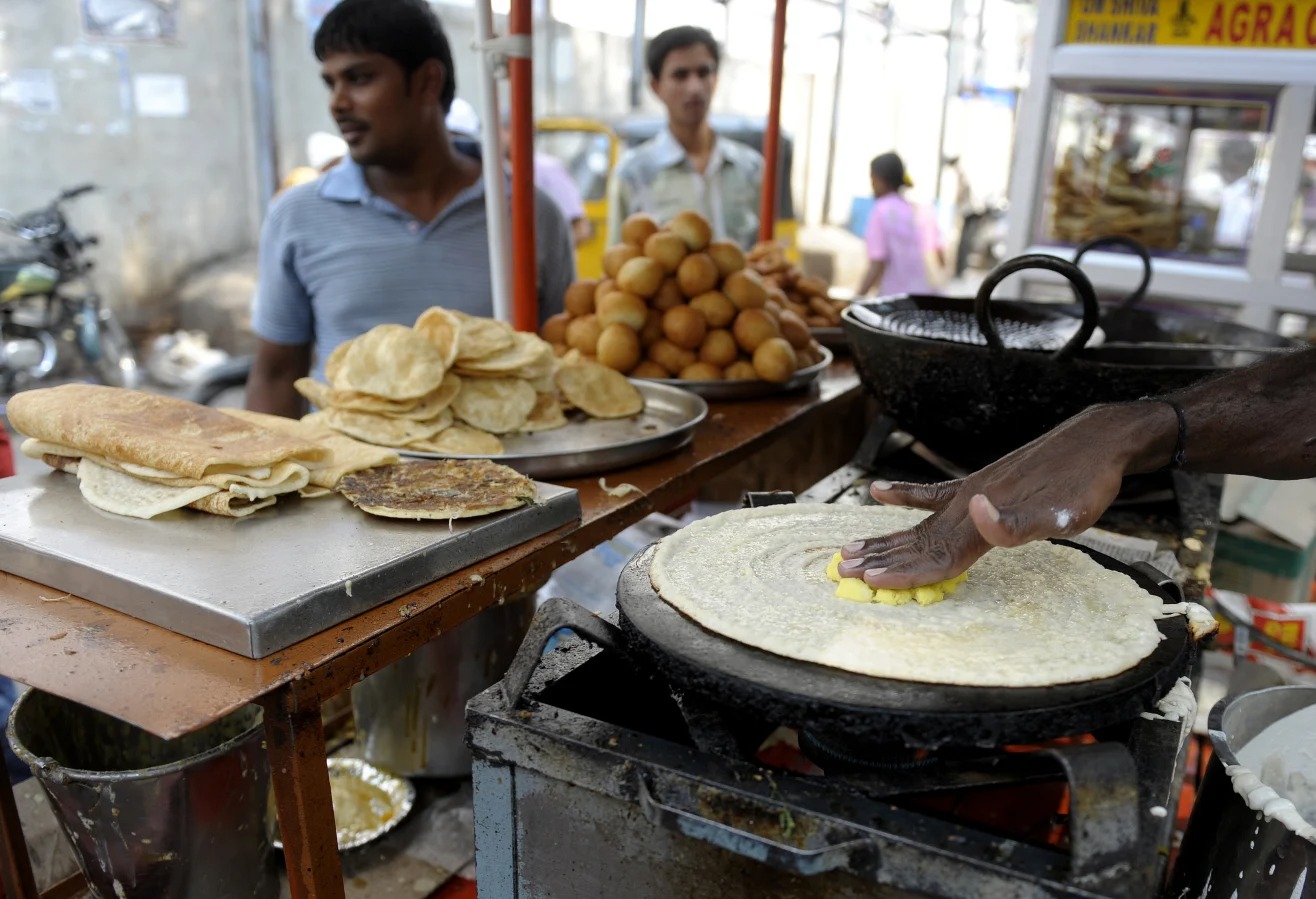 |
Masala dosa – a popular fermented crepe often eaten for breakfast in India – prepared at a street stall in Hyderabad. *Photo: AFP*
Hong Hanh (According to BBC)