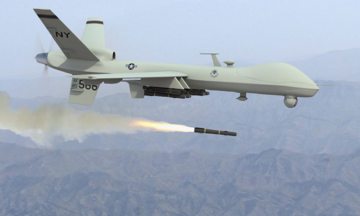
On 29/12, Russian Foreign Minister Sergey Lavrov accused Ukraine of carrying out a drone attack involving 91 unmanned aerial vehicles (UAVs) against President Vladimir Putin's residence in Novgorod province. Lavrov claimed Russian air defenses shot down all UAVs, with no reported casualties or damage. However, he asserted that "such reckless actions cannot go unanswered", though he provided no evidence for his accusation.
The figures provided by Russian officials regarding the alleged attack were inconsistent. On the morning of 29/12, Aleksandr Dronov, the governor of Novgorod province, posted on social media that 41 UAVs were shot down in the region. He did not specify their intended targets. Novgorod province is home to President Putin's Valdai residence, a secluded property built on a lake shore within a forest near Valdai town, where President Putin has never hosted public events.
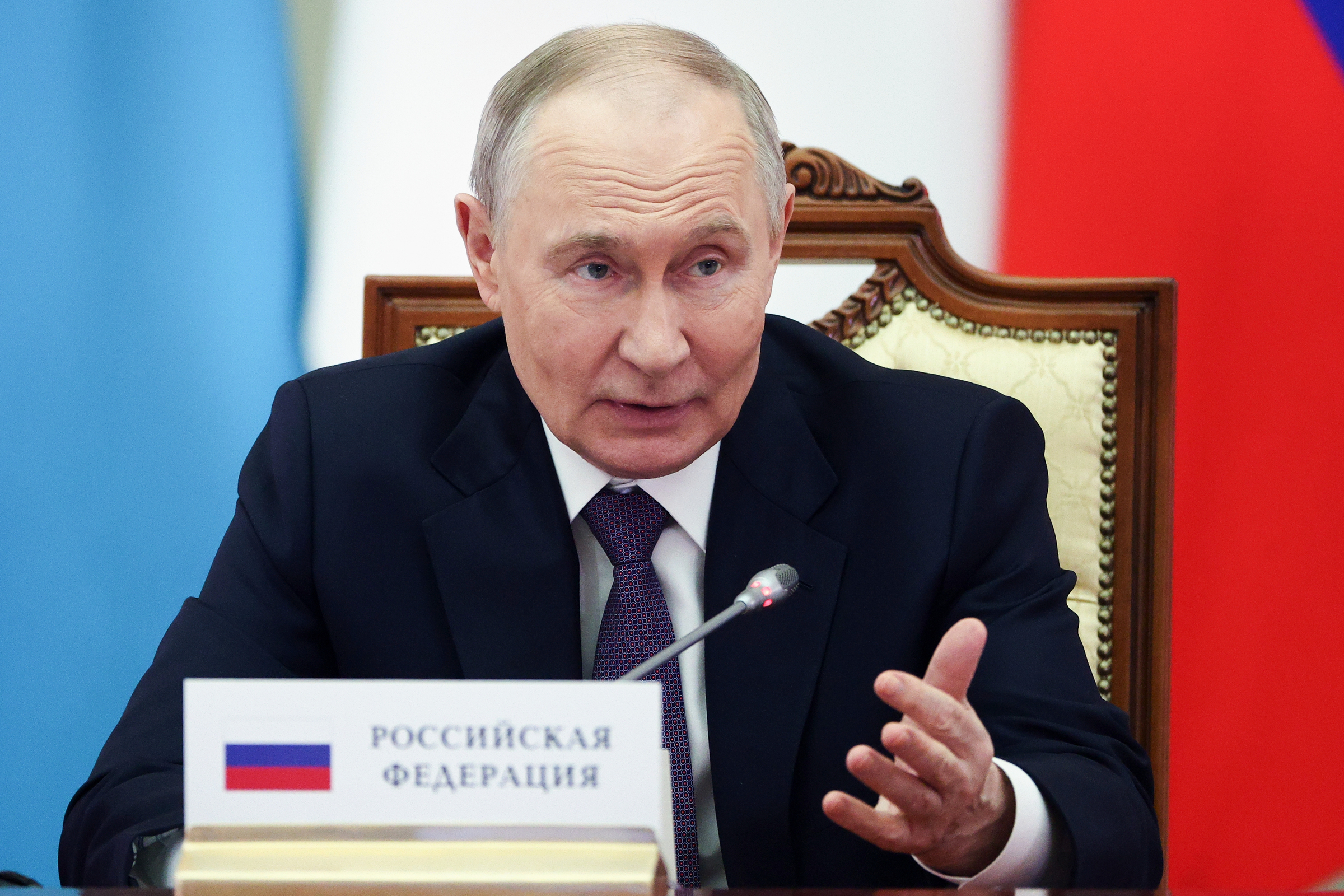 |
Russian President Vladimir Putin at an event in St. Petersburg on 21/12. Photo: AP |
The accusation of Ukraine attacking President Putin's residence emerged just one day after Ukrainian President Volodymyr Zelensky met US President Donald Trump at Mar-a-Lago, Florida, to discuss measures to end the conflict in Ukraine. President Zelensky immediately rejected the accusation, labeling the information from Russia as a "lie" designed to create a pretext for new attacks against Ukraine. He cautioned that Russia might target Kiev or government buildings in the near future and urged citizens to be vigilant.
Analysts expressed skepticism about the Russian foreign minister's statement, as Moscow provided no data to indicate such a large-scale attack occurred. Grace Mappes, an expert at the Institute for the Study of War (ISW) in the US, noted that when Ukraine conducts a deep strike into Russian territory, there is typically "information from residents and local authorities about UAVs or debris" when they are shot down. Such debris often causes explosions or large fires upon impact. However, on 29/12, no videos appeared on Russian social media showing UAVs flying, air defense systems activating, or images of fires, smoke plumes, or loud explosions at specific locations in Novgorod province. "We have not recorded any similar signs related to the attack on President Putin's residence", Mappes stated.
The credibility of Russia's accusation is further questioned by experts who point out that Ukraine would gain nothing from such an attack, especially given the current circumstances. At the time, President Trump was actively promoting negotiations with President Putin to find a resolution to the conflict. President Trump confirmed that President Putin informed him of the alleged attack during a phone call between the two leaders on the morning of 29/12. The US President conveyed he was "very angry about that", but also appeared to doubt the information. "You say the attack might not have happened? That's possible, I guess", President Trump told reporters.
Analysts believe Ukraine could not carry out precise long-range strikes into Russian territory without intelligence support from the US. Therefore, Kiev would not risk "provoking" President Trump by taking an action that crosses a red line, such as attacking a Russian leader's residence. Mappes and other Western experts suggest Russia may have made the accusation to portray Ukraine as an obstacle to peace. This could also serve as a precursor for Russia to revert to the hardline stance President Putin previously pursued in his demands towards Kiev.
Georgi Bovt, a member of the Russian Foreign and Defense Policy Council, commented that "after this incident, Russia could expand territorial claims to the entire Zaporizhzhia and Kherson provinces, instead of just Donetsk and Lugansk in the Donbass region as currently". Russian officials have already begun to demonstrate this. Yuri Ushakov, President Putin's foreign policy advisor, declared that following the alleged attack, Russia would "reconsider" its position on some previously reached agreements. He emphasized that Americans "need to understand this".
The Ukrainian President believes Russia is employing "dangerous statements" to impede the diplomatic progress achieved through US-led efforts to end the conflict. "This 'residence attack' story is entirely a fabrication to justify attacks against Ukraine, as well as Russia's refusal to take necessary steps to end the war", President Zelensky stated. When reporters asked President Trump if there was any evidence to support Russia's claims, he responded briefly, "we will soon know".
Thanh Tam (According to WSJ, Moscow Times, Kyiv Independent)