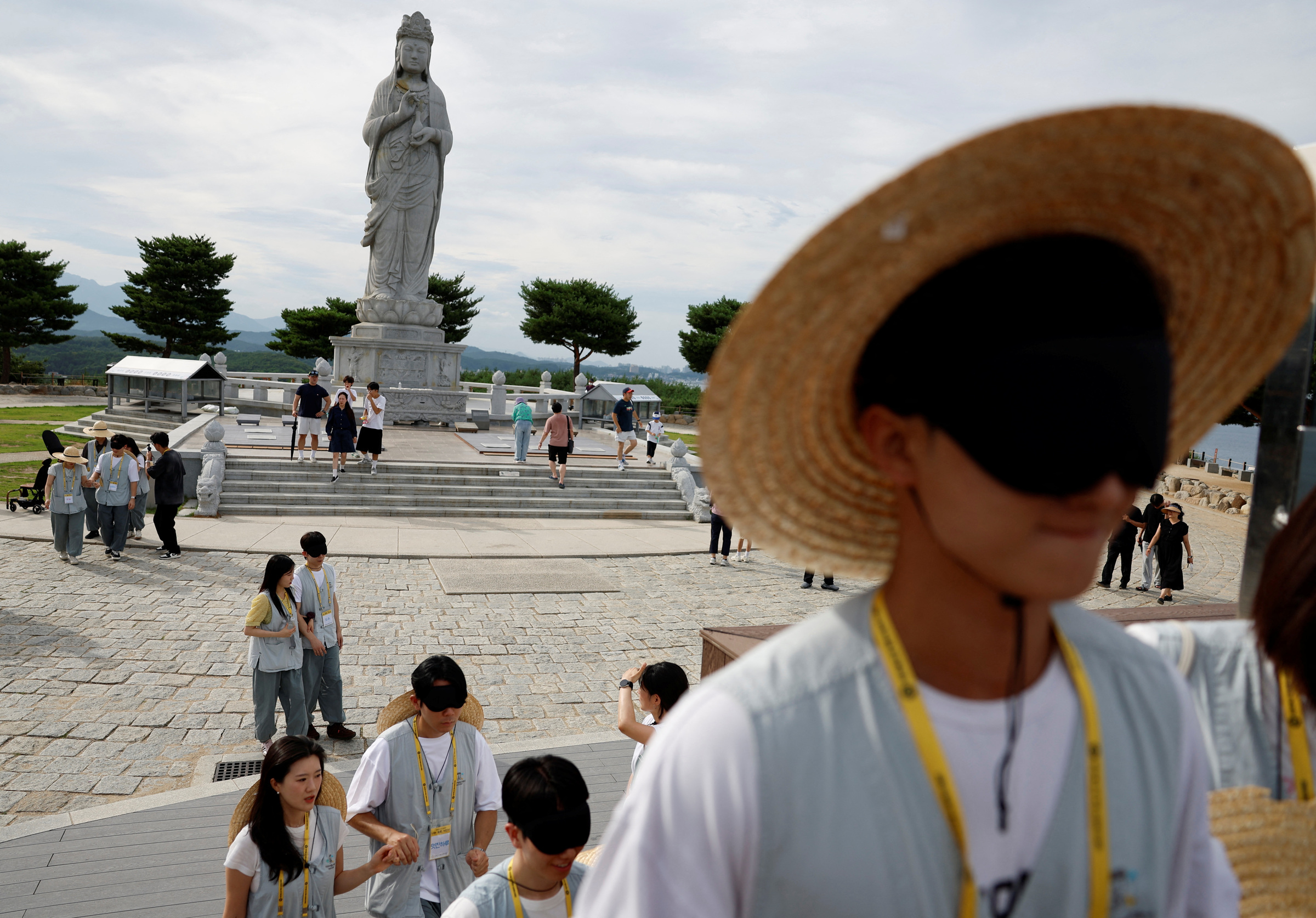
At an ancient Buddhist temple, young men and women walked hand in hand. One wore a blindfold, while the other guided them, describing the scenery ahead as they approached a gate rumored to make all wishes come true.
Under the watchful eye of a monk, this trust-building walk was part of a two-day matchmaking retreat at Naksansa, a temple established in 671 on a mountaintop along South Korea's northeast coast in Yangyang district.
Initiated by the South Korean Buddhist Social Welfare Foundation in 2023, this event aims to address the nation's low birth rate by connecting single young men and women. Interest in the program is surging, with the latest retreat drawing 4,225 applicants—the highest number to date—for only 20 spots.
“Honestly, people keep saying the birth rate is declining and more people are choosing not to marry, but everyone around me is getting married, has a partner, and is dating happily,” shared Choi Ye-ri, 30, a first-time participant.
“Given this is a selective program, I believe the men who attend will be more respectable, which is why I applied,” she said.
 |
A man and a woman chat during lunch at the matchmaking retreat program at Naksansa temple on 11/7. Photo: Reuters |
Young men and women, blindfolded, participate in a guided activity at Naksansa temple, South Korea, 11/7. Photo: Reuters
 |
A blindfolded woman holds hands with a man, following his guidance. Photo: Reuters
 |
A monk explains to young men and women participating in the matchmaking retreat. Photo: Reuters
 |
A tea ceremony takes place at the temple on 11/7. Photo: Reuters
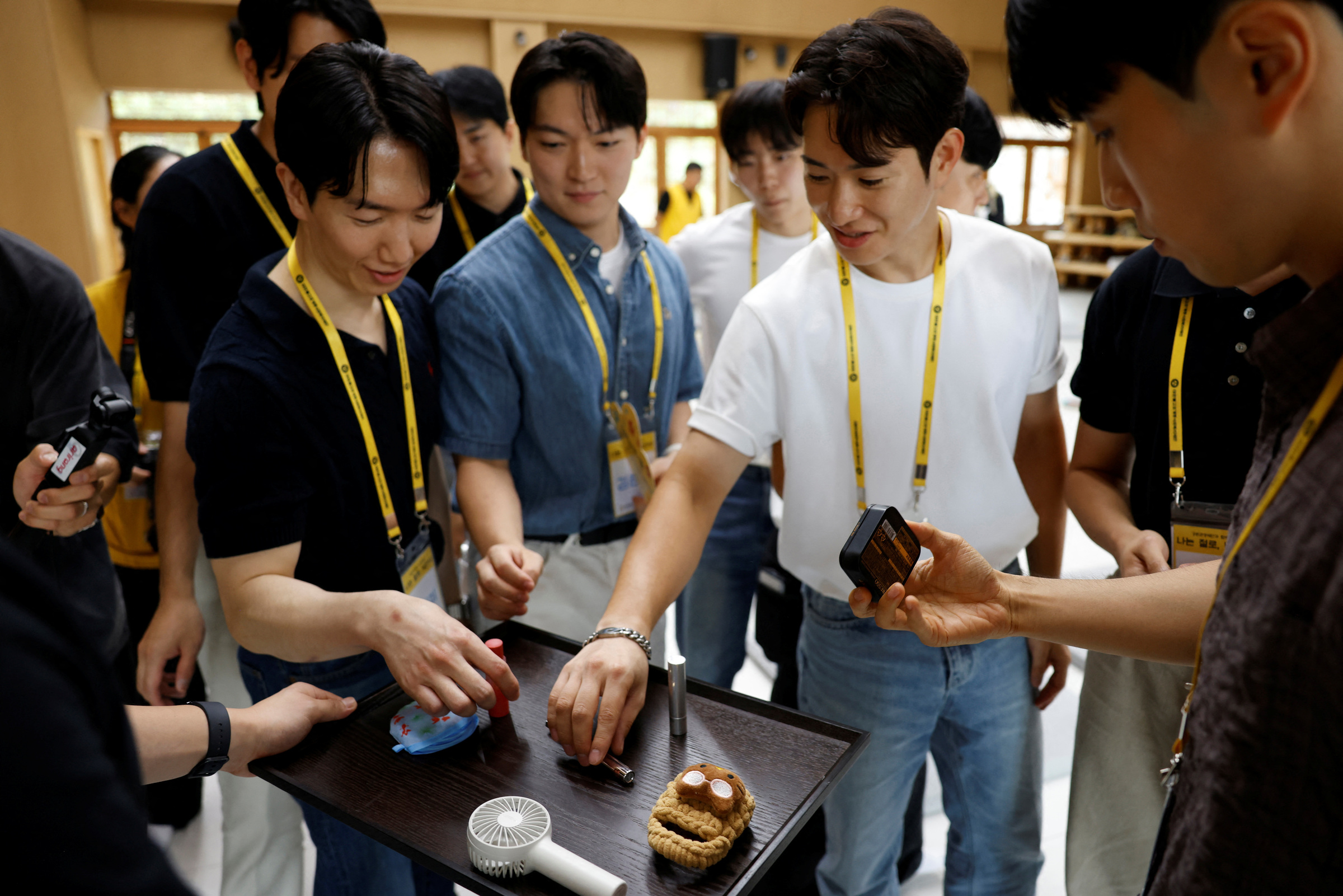 |
Male participants choose their date through items displayed on a tray. Photo: Reuters
Unlike traditional blind dates, which often last one evening, this weekend retreat format helps young people connect more deeply through diverse activities.
Participants are paired by drawing numbers or matching personal items. They then have opportunities to get to know each other better through group tea ceremonies or walks in the forest. Some pairs also experience beachside yoga classes and participate in one-on-one speed dating rounds.
“Meeting people in a temple setting is a completely new experience for me, it feels very refreshing. I think it helps you get to know someone more seriously,” said Kim Do-yeon, a participant.
The South Korean government projects the current population of 51,8 million will decrease by almost one-third by 2072. However, there is hope that the nation's demographic crisis could begin to ease, following two consecutive years of recorded birth rate growth.
 |
A man and a woman chat during lunch at the matchmaking retreat program at Naksansa temple on 11/7. Photo: Reuters
Organizers of the dating event emphasize their work extends beyond simple matchmaking.
“I hope this journey will be a time for us to re-evaluate the low birth rate issue and reflect on alternative solutions for the future,” stated Venerable Doryun, head of the South Korean Buddhist Social Welfare Foundation.
South Korean government data indicates the total fertility rate (the average number of children a woman has) reached 0,8 in 2025, an increase from 0,75 in 2024, marking the second consecutive year of growth.
By Hong Hanh (with reports from Reuters, Korea JoongAng Daily)