In a televised address on 8/12, Thai Prime Minister Anutin Charnvirakul announced that the National Security Council had met to discuss escalating tensions at the border with Cambodia and passed a resolution to "conduct military operations in all necessary circumstances".
He stated that the Thai military's next moves would depend on developments on the ground, with additional military measures potentially adopted based on the situation. He added that the Thai government is determined to protect national sovereignty and territorial integrity, in accordance with international law and the right to self-defense.
Prime Minister Anutin emphasized that Thailand does not desire violence and "has never been the instigator" of conflict, setting two top priorities: protecting the country and ensuring the safety of its people amidst the current tensions.
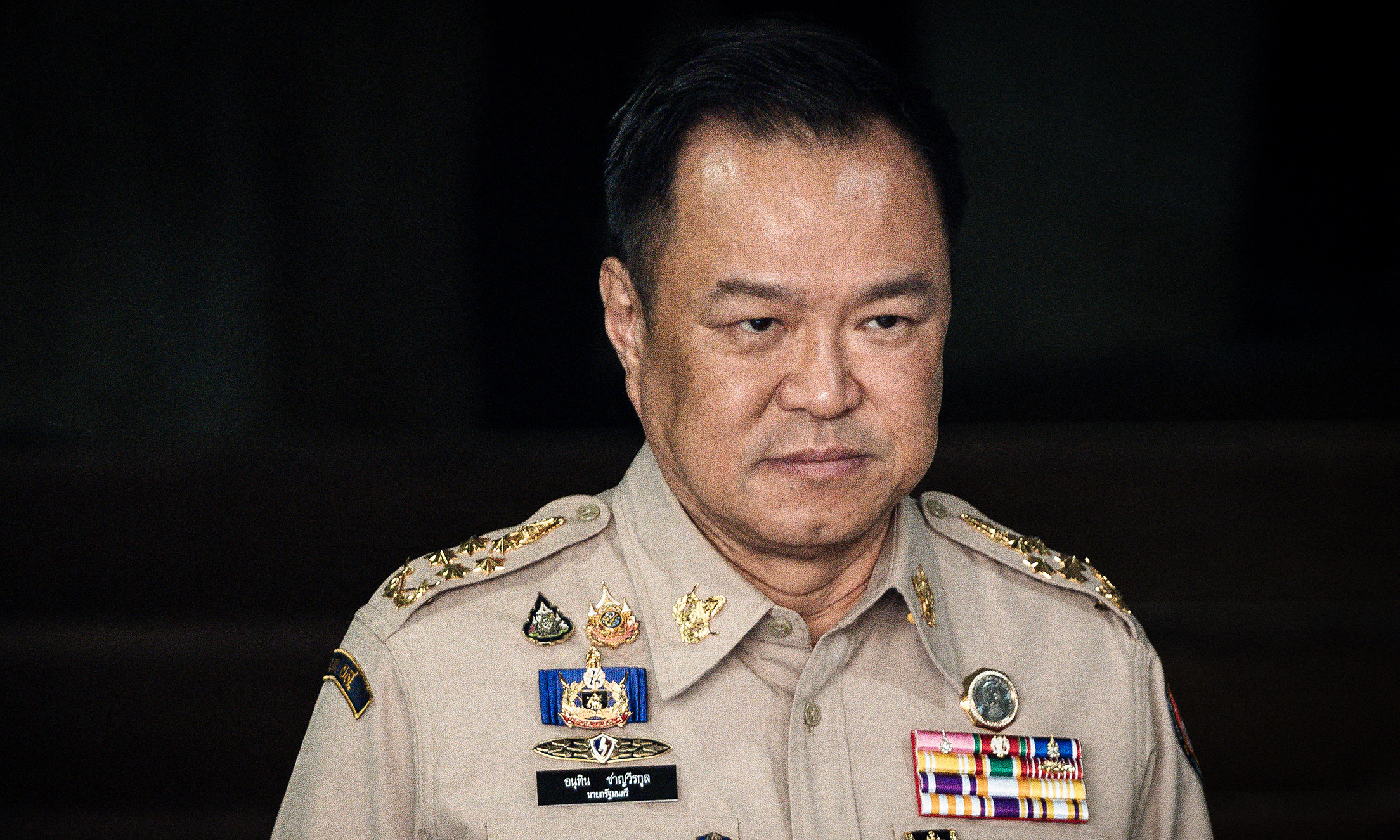 |
Thai Prime Minister Anutin Charnvirakul after a National Security Council meeting in November in Bangkok. *AFP*
Prime Minister Anutin's statement followed border tensions between Thailand and Cambodia escalating into clashes on 7/12. Troops from both nations exchanged gunfire along the disputed border, injuring two Thai soldiers and prompting civilian evacuations.
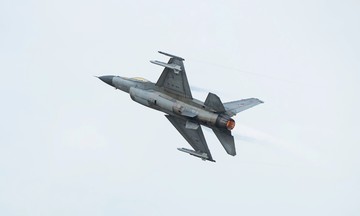
The situation further escalated in the early hours of 8/12, when Thailand accused Cambodia of using artillery and "air-dropped munitions" to attack Thai soldiers at Anupong base, resulting in one soldier's death. The Royal Thai Air Force subsequently deployed F-16 fighter jets to strike military targets within Cambodian territory.
Cambodia's Ministry of National Defense issued a strong statement on 8/12, criticizing Thailand's actions and accusing Thai military personnel of first firing upon Cambodian positions in the An Ses area from 5:04 h this morning. Thai tanks then shelled three areas: Tamone Thom temple, near Preah Vihear temple, and Chomka Chek.
Maly Socheata, spokesperson for Cambodia's Ministry of National Defense, described Thailand's military actions as "brutal and inhumane". Phnom Penh viewed this as a coordinated escalation following provocations the previous day.
Cambodia's Ministry of National Defense asserted that its military had exercised "maximum restraint" and did not return fire, adhering to its commitment to resolve conflicts peacefully. Cambodian commanders are monitoring the situation with extreme caution.
Phnom Penh condemned Bangkok's actions as a serious violation of the Joint Declaration on the Peace Agreement signed by the two countries on 26/10. Cambodia announced it had sent a second notification to the ASEAN Observer Team (AOT), urging the international community to pressure Thailand to immediately cease hostilities and respect the ceasefire agreement.
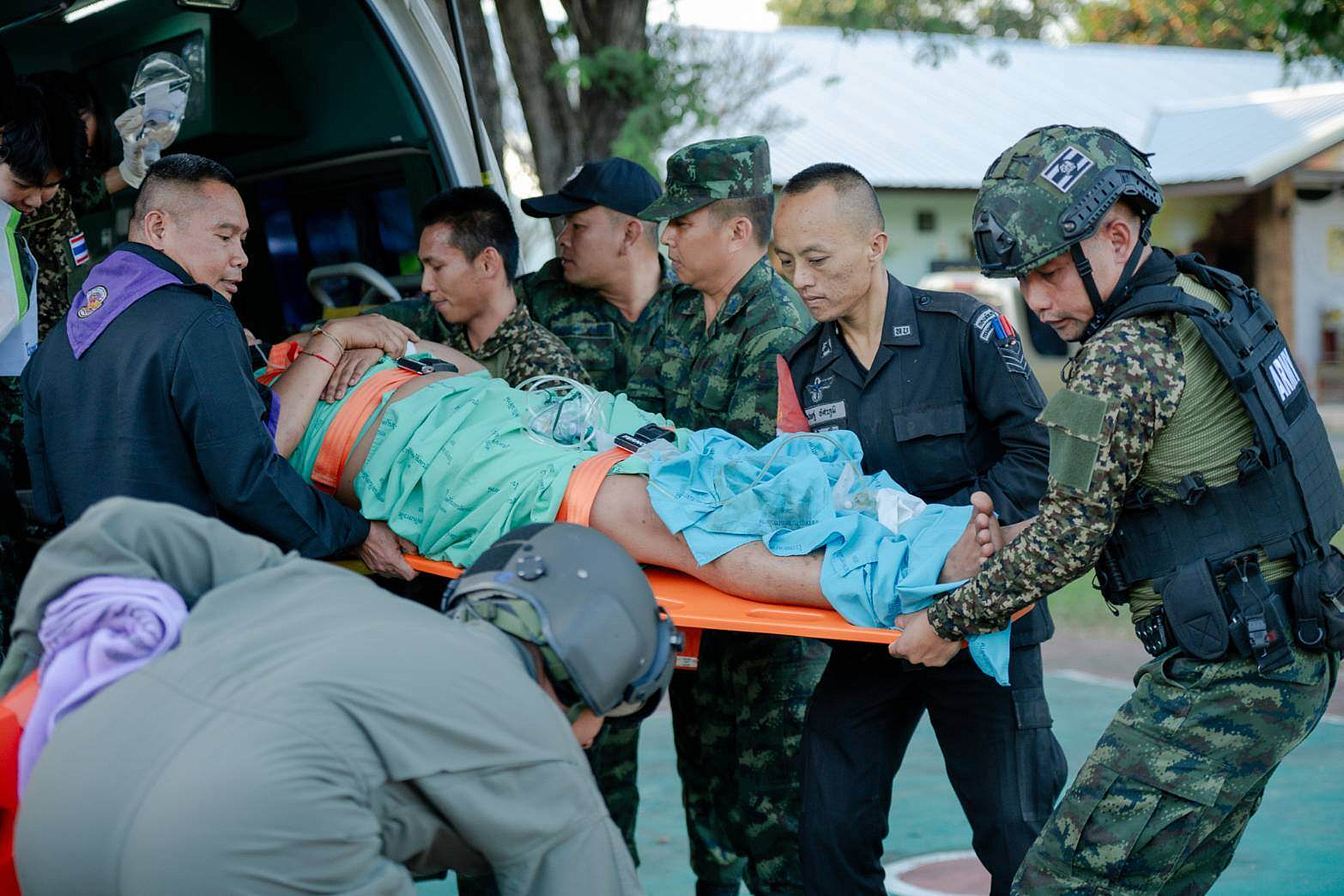 |
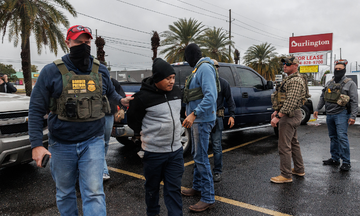
Thai military personnel injured during border clashes with Cambodia on 7/12 were transferred to a hospital in Sisaket province. *AP*
Thailand and Cambodia had a 5-day border conflict in July, which resulted in at least 43 deaths and the evacuation of over 300,000 civilians on both sides. Both sides subsequently signed a peace agreement in Kuala Lumpur on 26/10, witnessed by US President Donald Trump and Malaysian Prime Minister Anwar Ibrahim.
Thanh Danh (According to Reuters, Nation, Khmer Times)