The Jerusalem Post reported on 13/8 that many Israeli officials were "shocked" by Iran's recovery speed after it reached a ceasefire with the US in 4/2026. This included personnel from the Israel Defense Forces (IDF) and the Mossad intelligence agency, despite the IDF leading target selection and damage assessment for Iran's defense sector.
Israel previously believed that the joint operation with the US had set back Iran's defense industry by many years.
While many foreign media outlets had pointed out flaws in Israel's perspective, Tel Aviv remained convinced that the damage inflicted on Tehran was so extensive that the argument "Iran's defense capabilities have regressed by many years" remained accurate, even if some specific statements from the IDF might not have been entirely true.
"However, four months after the main phase of the Middle East conflict ended, the IDF is witnessing an astonishingly fast recovery from Iran, not just in one but in many different areas, including ballistic missiles," the Jerusalem Post stated.
Three instances of Iran's surprising resilience
Notably, Israel has been surprised twice before by Iran's recovery speed. After an attack on 20 important defense industry and ballistic missile targets in Iran in 10/2024, the IDF declared that it had slowed the adversary's missile production by at least one year.
In early 2025, the Israeli military observed that Iran had fully restored its ballistic missile production rate, prompting a decision to advance its attack plan against the adversary to 6/2025, instead of the initially projected 9/2025.
After striking approximately 100 targets in this campaign, the IDF claimed to have found the "true formula" to set back Tehran's missile production by many years. The number of targets attacked was five times higher, accompanied by a significantly larger deployment of weapons, which was believed to lend credibility to this statement.
"Once again, Iran somehow found a way to restore its missile production capability, continuing to baffle the IDF," the Jerusalem Post reported.
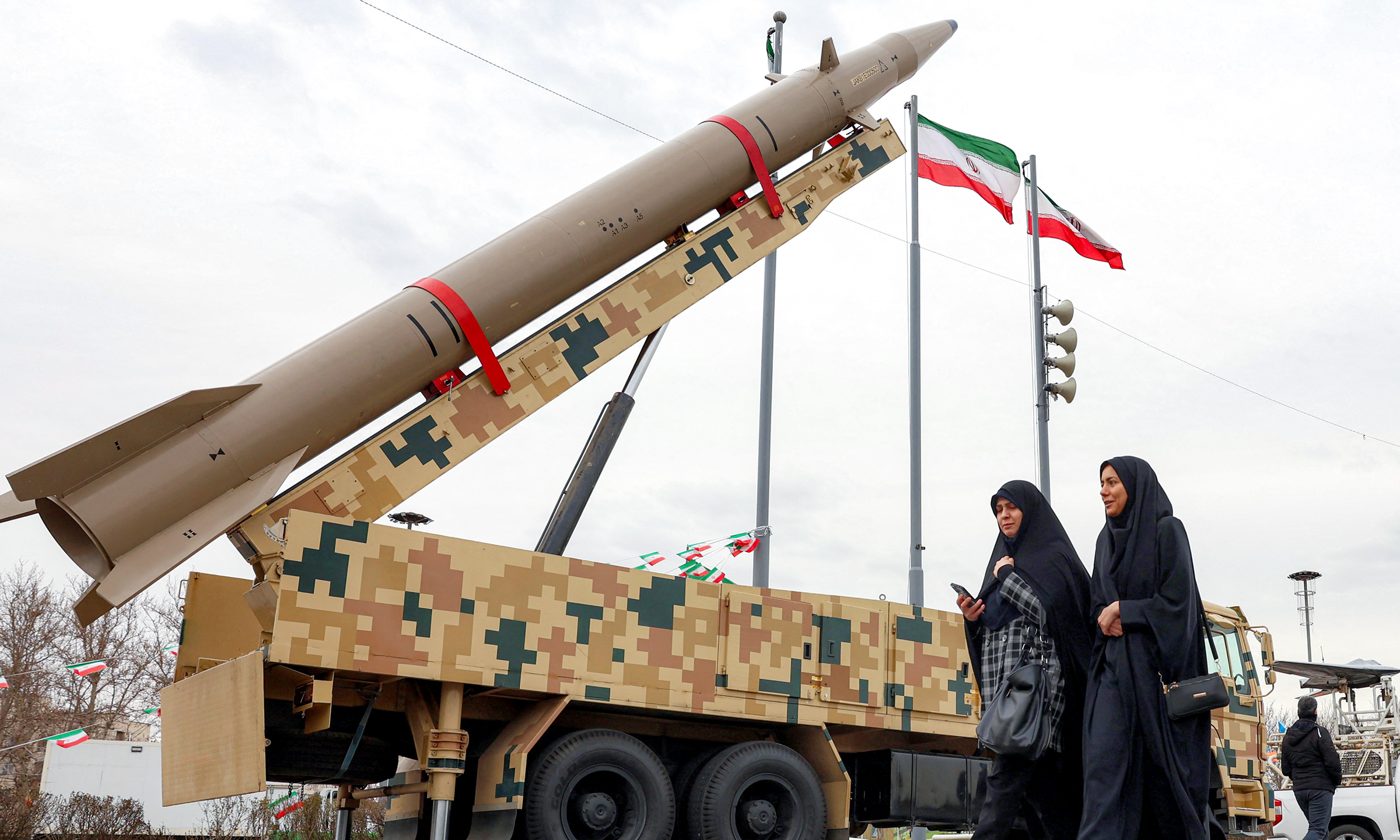 |
A ballistic missile launcher displayed in Tehran, Iran in 2/2026. Photo: AFP |
According to the Israeli newspaper, the estimated number of missiles Iran possessed in 2/2026 was 2,500, nearly double the 1,300 recorded in 6/2025.
During the initial 40 days of the Middle East conflict, over 2,600 Iranian defense industry and missile targets were attacked, 26 times more than in the 12-day war in 6/2025 and over 100 times more than the air strikes in 10/2024. IDF officials told the Jerusalem Post that "every major and minor component" of Iran's defense industry had been destroyed.
"How could Iran restore its missile stockpile to 2,500, and even to a much higher threat level, after suffering nearly 300 billion USD in military losses? The lesson the IDF needs to learn after three conflicts is to target more specific objectives, rather than trying to understand what shortcuts Iran found to quickly restore its capabilities," the Jerusalem Post concluded.
Israel's miscalculation
Despite this, the Jerusalem Post indicated that top Israeli defense officials admitted Iran had discovered "innovative methods" to rebuild its missile arsenal and other capabilities, though specific details were not provided.
The New York Times previously reported that Iran had used bulldozers to clear entrances to underground missile bases faster than Israel had anticipated. However, this only allowed Tehran to access existing missiles trapped underground, not to produce new weapons.
"We have been able to independently confirm statements by senior Iranian officials that the country is producing new equipment at a much greater rate than expected," the Jerusalem Post stated.
The question of how many missiles Iran retained after the conflict has been a widely debated topic, as the country was once thought to have lost almost all capacity to produce new weapons and would have to rely on remaining equipment for the next few years.
However, the new information from the Jerusalem Post suggests that this issue is no longer as important as Iran's missile manufacturing speed. If it returns to a production rate of 100-300 missiles per month, the country could restore its reserves to levels comparable to 6/2025 by early or mid-2027.
"Even if Iran cannot restore such a production rate, current steady progress indicates that the threat from their ballistic missiles will return within a few years," the Jerusalem Post warned.
These developments could influence Israel's overall strategy, specifically the decision of whether and when to launch another offensive operation against Iran, regardless of the outcomes of negotiations concerning the Strait of Hormuz and the nuclear issue.
Responding to the Jerusalem Post's information, the IDF stated it has closely monitored Iran's efforts to restore and rebuild its military capabilities. However, the force could not provide a specific assessment of the adversary's recovery capacity, as doing so would "expose sources and data collection methods."
"We will continue to analyze developments and prepare appropriate measures," the IDF affirmed.
Pham Giang (According to Jerusalem Post, New York Times)