"The affordable high speed strike missile (AHSS) is a new weapon", a spokesperson for the US Army's Combat Capabilities Development Command (DEVCOM) stated on 14/8.
According to DEVCOM, AHSS will have a low cost and the ability to hit targets at a distance of 1,000 km. The projectile could resemble a ballistic missile or use an air-breathing engine, similar to a cruise missile. It will be compatible with HIMARS rocket launchers or the unmanned CAML launcher currently under development.
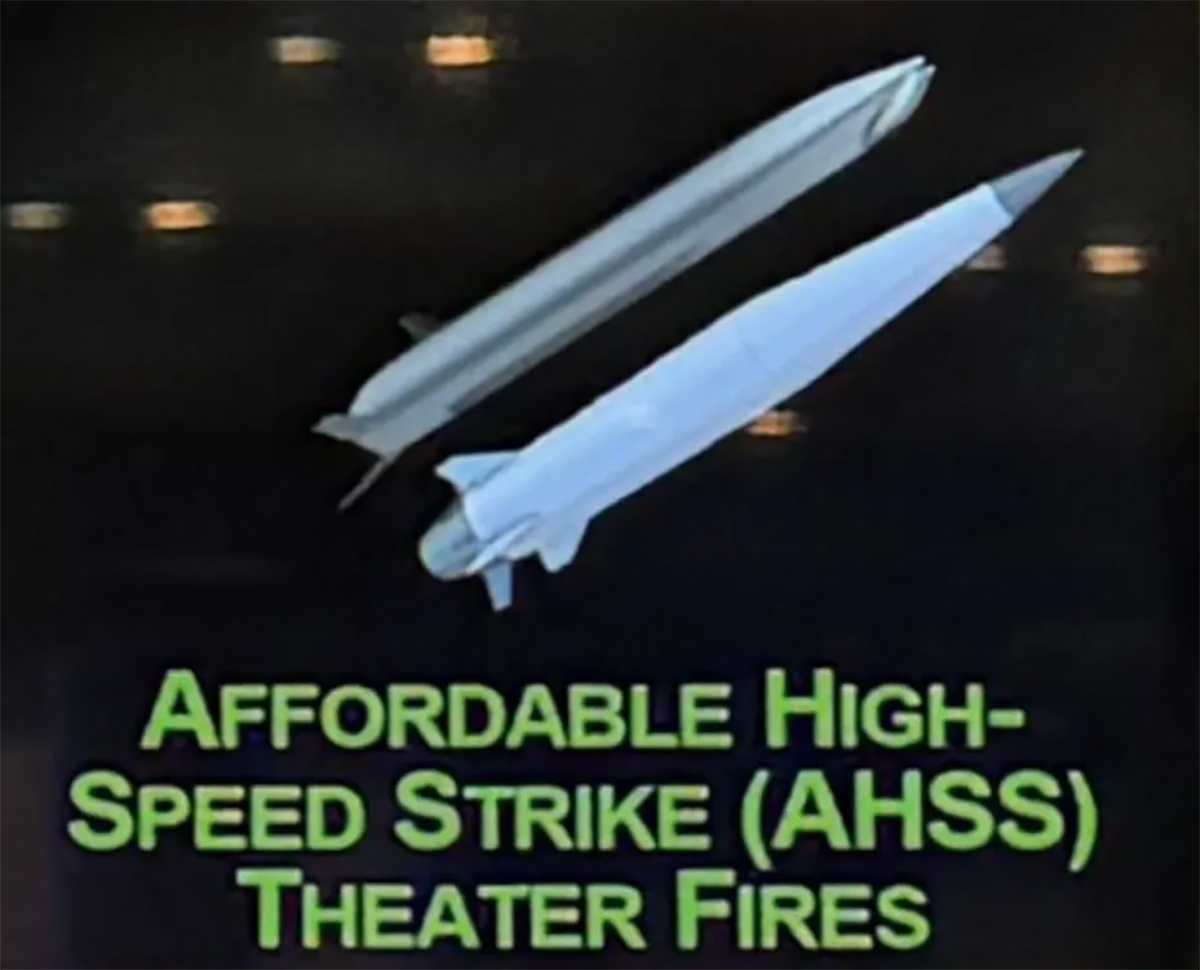 |
Simulation of the AHSS missile. Graphics: DEVCOM |
The US Army described the AHSS program: "The project will directly support the US Army's precision strike capability through an affordable, high-speed missile that ensures mobility, rapid deployment, high survivability, sustainability, and flexible response".
Graphics of AHSS show a ballistic missile, along with a projectile using an air-breathing jet engine with a nose air intake and long control fins along the body. This imagery was previously used to illustrate the Increment 4 variant of the precision strike missile (PrSM) tactical ballistic missile.
The price the US Army expects for AHSS is not yet clear. The PrSM, with a range of approximately 500 km, costs 1,6-3,5 million USD per missile, depending on the production batch. Extended-range or guided variants could be more expensive. Older army tactical missile system (ATACMS) missiles for the HIMARS system, with a maximum range of 300 km, cost 800,000-2 million USD per missile.
AHSS and PrSM represent two types of long-range strike weapons the US Army is pursuing.
"The US Army's long-range ground strike capabilities have been demonstrated through this year's conflict with Iran. They have frequently fired PrSM and ATACMS missiles against targets in Iran", noted Joseph Trevithick, editor of the US military specialized website War Zone.
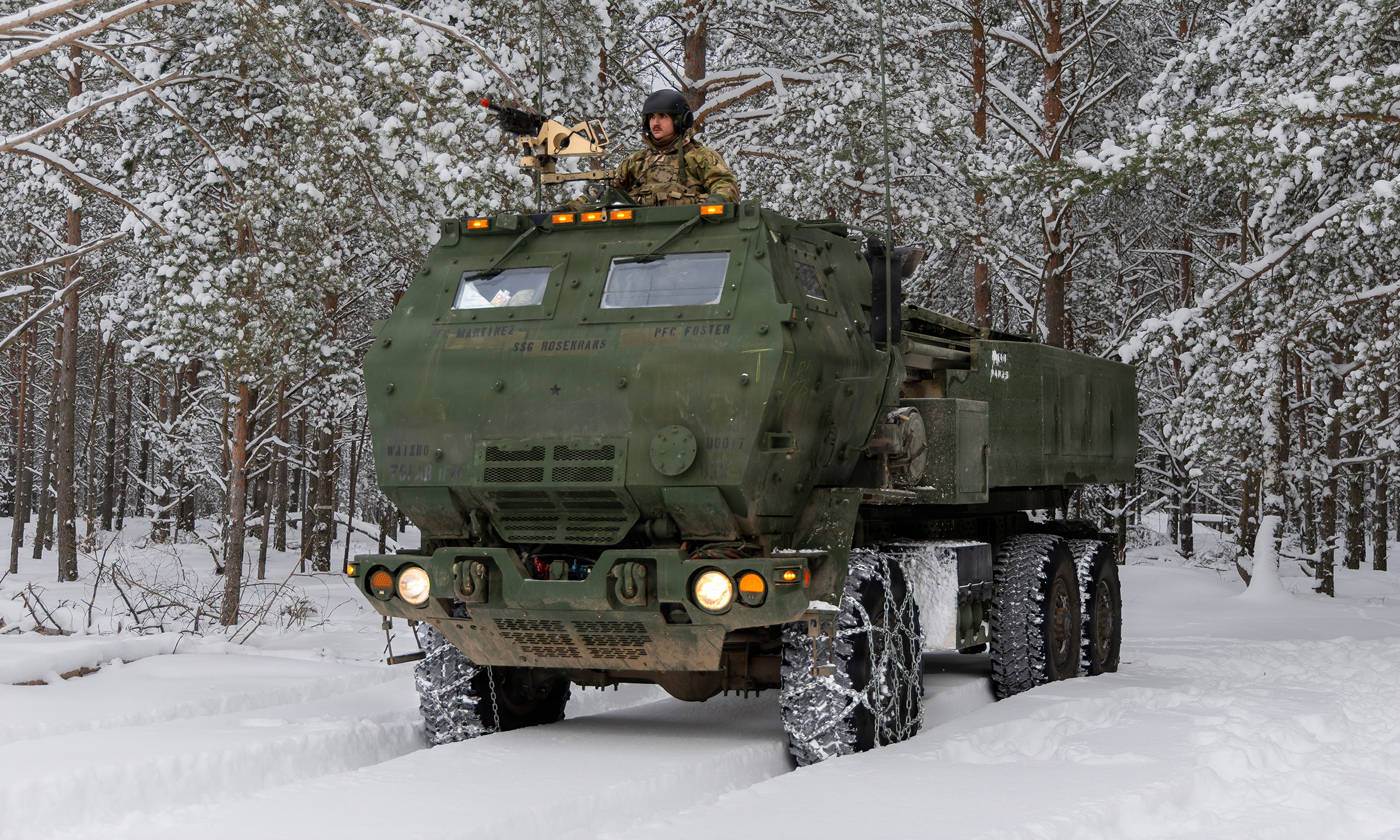 |
US HIMARS launcher participates in an exercise in Lithuania on 13/1. Photo: US Army |
However, the rate of depletion of the US Army's PrSM and ATACMS missiles has raised concerns about stockpiles. Three anonymous sources familiar with the situation disclosed to Reuters on 4/8 that the US Army had fired nearly all PrSM and ATACMS munitions accumulated before the Middle East conflict erupted.
Trevithick emphasized: "AHSS highlights the importance of acquiring new, cheaper, and more readily available munitions, which has been a focus of the US military in recent years. Meanwhile, the time from ordering to delivering PrSM missiles can extend for several years".
Nguyen Tien (According to AFP, AP, War Zone)