


US President Donald Trump told reporters in Davos, Switzerland, on 21/1, that Russian President Vladimir Putin "was invited and accepted" the invitation to join the council. "Many people have agreed to participate," Trump added.
Meanwhile, in Moscow, President Putin stated during a live televised cabinet meeting that he had directed the Russian Foreign Ministry to review the invitation.
"The Russian Foreign Ministry is tasked with studying the documents sent to us and consulting with strategic partners," Putin explained. "Only then will we provide an answer."
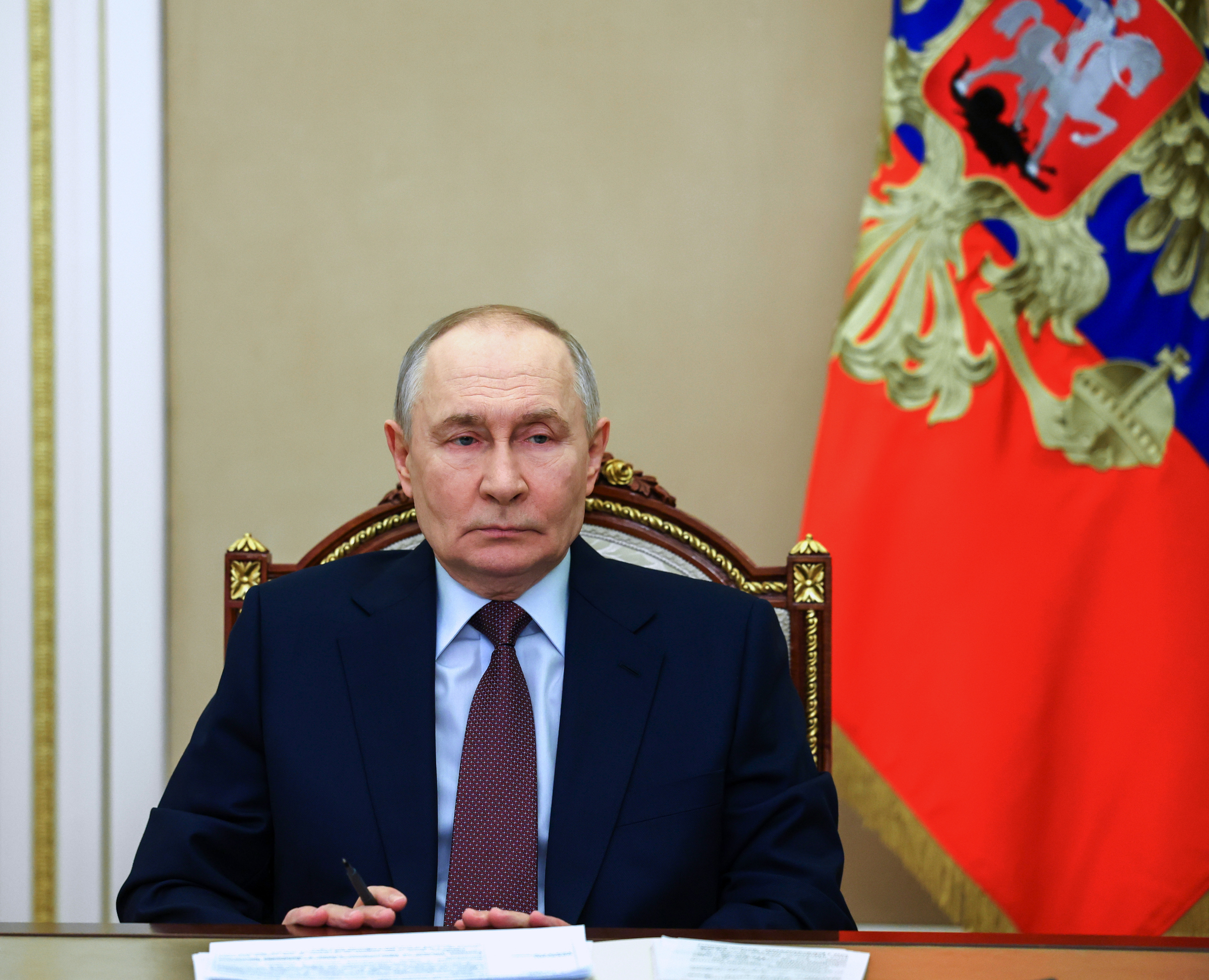 |
Russian President Vladimir Putin at a cabinet meeting in Moscow on 21/1. *Photo: AP* |
Securing a permanent seat on the Peace Council requires nations to pay a 1 billion USD fee. Putin suggested Moscow could cover this cost "from Russian assets frozen under the previous US administration." He also noted these assets could be used for "reconstruction of conflict-devastated territories, following the signing of a peace agreement between Russia and Ukraine."
Trump's initial vision for the Peace Council was a small group of world leaders tasked with overseeing the Gaza peace plan. However, its scope has expanded, with invitations extended to approximately 60 countries. Trump implied the council would soon mediate global conflicts, functioning like a "miniature UN Security Council."
On 21/1, Saudi Arabia and seven other Islamic nations: Qatar, Turkey, Egypt, Jordan, Indonesia, Pakistan, and the United Arab Emirates (UAE) – issued a joint statement confirming their participation in the Peace Council. They expressed support for Trump's "peace efforts" in the Gaza conflict. The Kuwaiti Foreign Ministry later announced its acceptance of the US invitation via a post on X.
France, Norway, and Sweden declined invitations to join the council. Slovenian Prime Minister Robert Golob stated "it is not yet time to accept" the offer.
The office of Israeli Prime Minister Benjamin Netanyahu confirmed acceptance of the invitation. However, Netanyahu objected to the involvement of Turkish Foreign Minister Hakan Fidan and Qatari diplomat Ali Al-Thawadi in the Gaza Executive Council, a secondary committee under the Peace Council.


