Democratic Representatives Rick Larsen, Bennie Thompson, and Andre Carson, members of the House Transportation and Infrastructure Committee, expressed profound surprise on 26/2 regarding reports that the Pentagon shot down a U.S. Customs and Border Protection (CBP) unmanned aerial vehicle with a high-energy weapon system. They criticized U.S. President Donald Trump for delaying a bipartisan bill aimed at training drone operators and enhancing coordination among the Pentagon, the Department of Homeland Security, and the Federal Aviation Administration (FAA). "This incident is a consequence of that incompetence," the lawmakers' statement read.
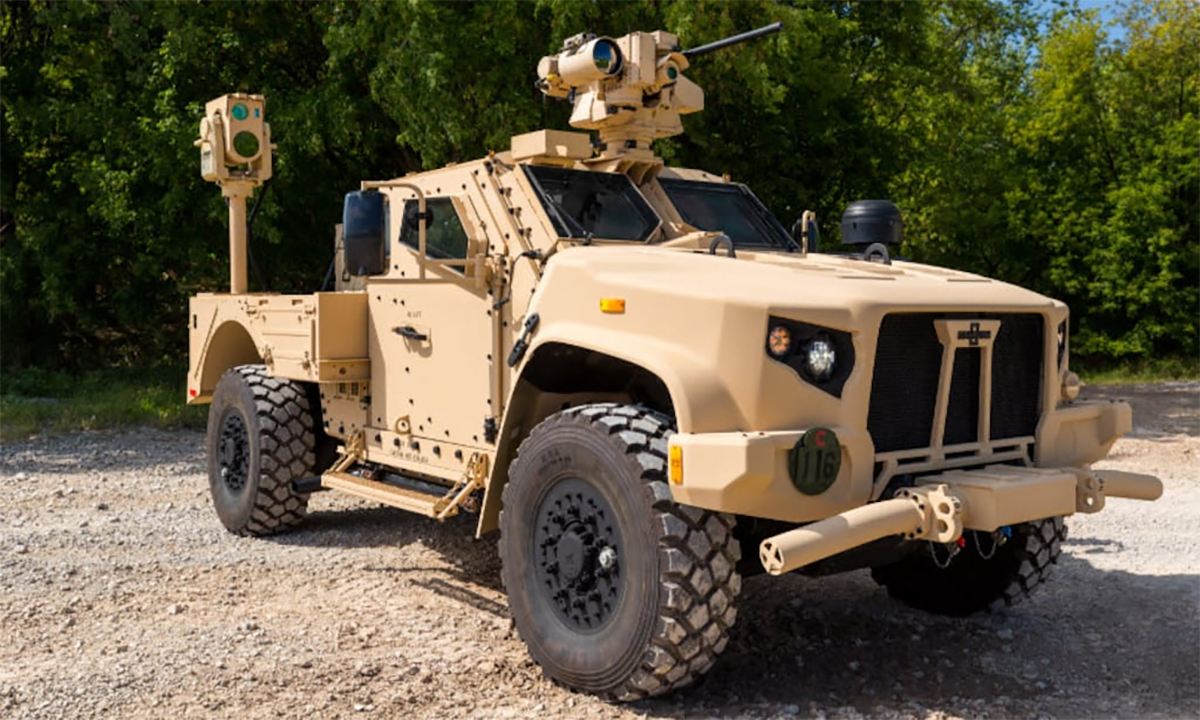 |
U.S. armored vehicle equipped with a counter-drone laser weapon system. Photo: Boeing |
Following the incident, the FAA issued flight restrictions around Fort Hancock, a base southeast of El Paso, Texas, to ensure security. This measure did not affect other flights in the area. The FAA, CBP, and the Pentagon subsequently announced that the U.S. military "exercised counter-drone authority to bring down an object that appeared to pose a threat to military air operations." The agencies stated the shootdown was part of border security enhancement efforts, occurring away from residential areas and commercial flight paths, though they did not specify the exact location.
This incident follows a previous event on 10/2 when El Paso airspace was closed for over 7 hours after the U.S. military unsuccessfully fired a laser weapon near Fort Bliss. That airspace closure led to the cancellation of some flights to and from El Paso. U.S. Secretary of Transportation Sean Duffy affirmed on 20/2 that the decision to close El Paso airspace was correct, stating that the issue was not a lack of inter-agency communication.
Concerns about the drone threat are increasing in the U.S., as these vehicles have demonstrated effectiveness in conflicts worldwide. Late last year, the U.S. Congress agreed to grant state and local law enforcement agencies the authority to bring down illegal drones. Previously, only a few U.S. federal agencies possessed this power.
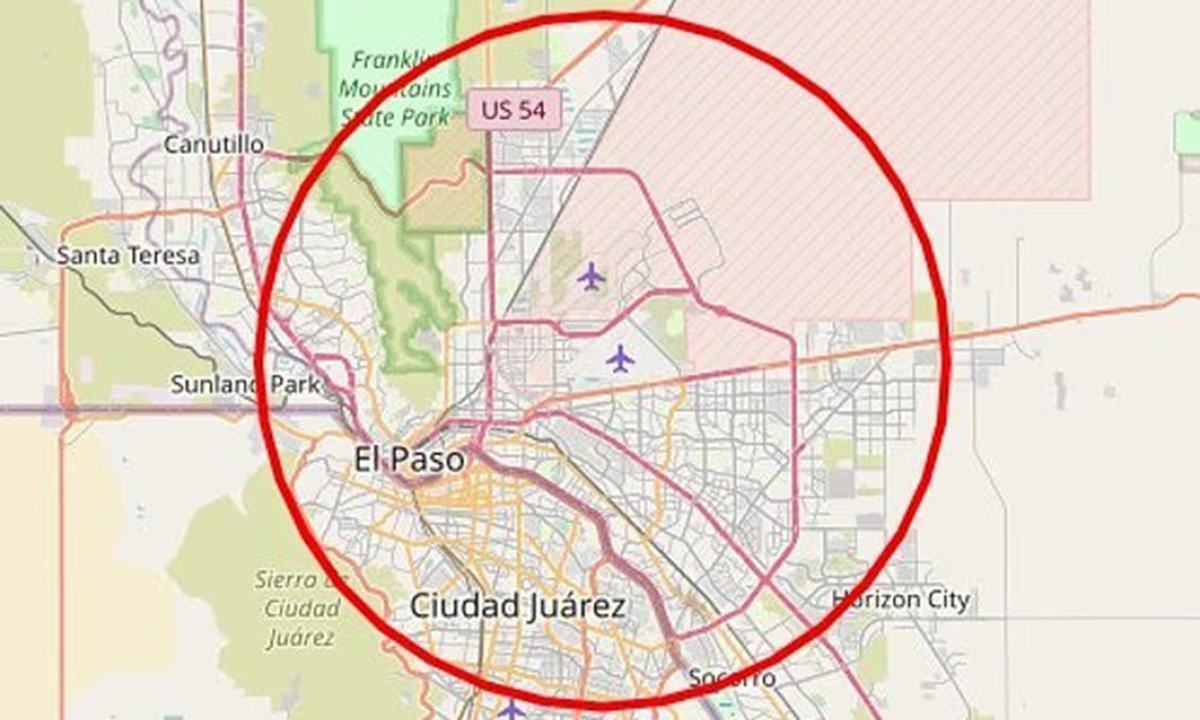 |
Airspace closed in El Paso, Texas, U.S., on 10/2. Graphic: FAA |
The U.S. government has allocated over 250 million USD to help states prepare for drones ahead of the 2026 World Cup and a series of ceremonies marking the nation's 250th anniversary this summer. Additionally, another 250 million USD is expected to be disbursed later this year to enhance U.S. counter-drone capabilities. Drug cartels frequently use drones to transport goods across the border from Mexico and monitor CBP operations. Drones also increase the risk of accidents near airports, with many vehicles narrowly avoiding collisions with passenger aircraft.
Nguyen Tien (According to AP, AFP, Reuters)