"Iran's insistence on not discussing ballistic missiles is a significant issue. The meeting on 26/2 will be the next opportunity for negotiations; we hope this activity is effective and that we will not only discuss nuclear issues," U.S. Secretary of State Marco Rubio stated on 25/2, ahead of a new round of talks between Washington and Tehran.
Rubio acknowledged Iran possesses a large number of ballistic missiles capable of threatening U.S. bases in the Middle East. He emphasized that Iran is attempting to develop weapons that could reach the U.S. mainland, including intercontinental ballistic missiles (ICBMs).
"Beyond its nuclear program, Iran also possesses conventional weapons designed to attack U.S. forces if it chooses. Iran already has weapons capable of reaching most of Europe," Secretary of State Rubio added.
Secretary of State Rubio stated that Tehran had been advised against attempting to restart its nuclear program after it was "dismantled." "However, they did so. They are consistently attempting to rebuild components of the program. Iran is currently unable to enrich uranium, but it is striving to achieve that," he said.
The U.S. Secretary of State avoided commenting on whether the outcome of negotiations in Switzerland would prompt the U.S. to launch military operations against Iran. "President Trump desires diplomatic solutions; he is very fond of them. The President has not yet decided on attacking Iran, so I am unsure if 26/2 will be a pivotal moment," he stated.
Iranian officials have not commented on the information.
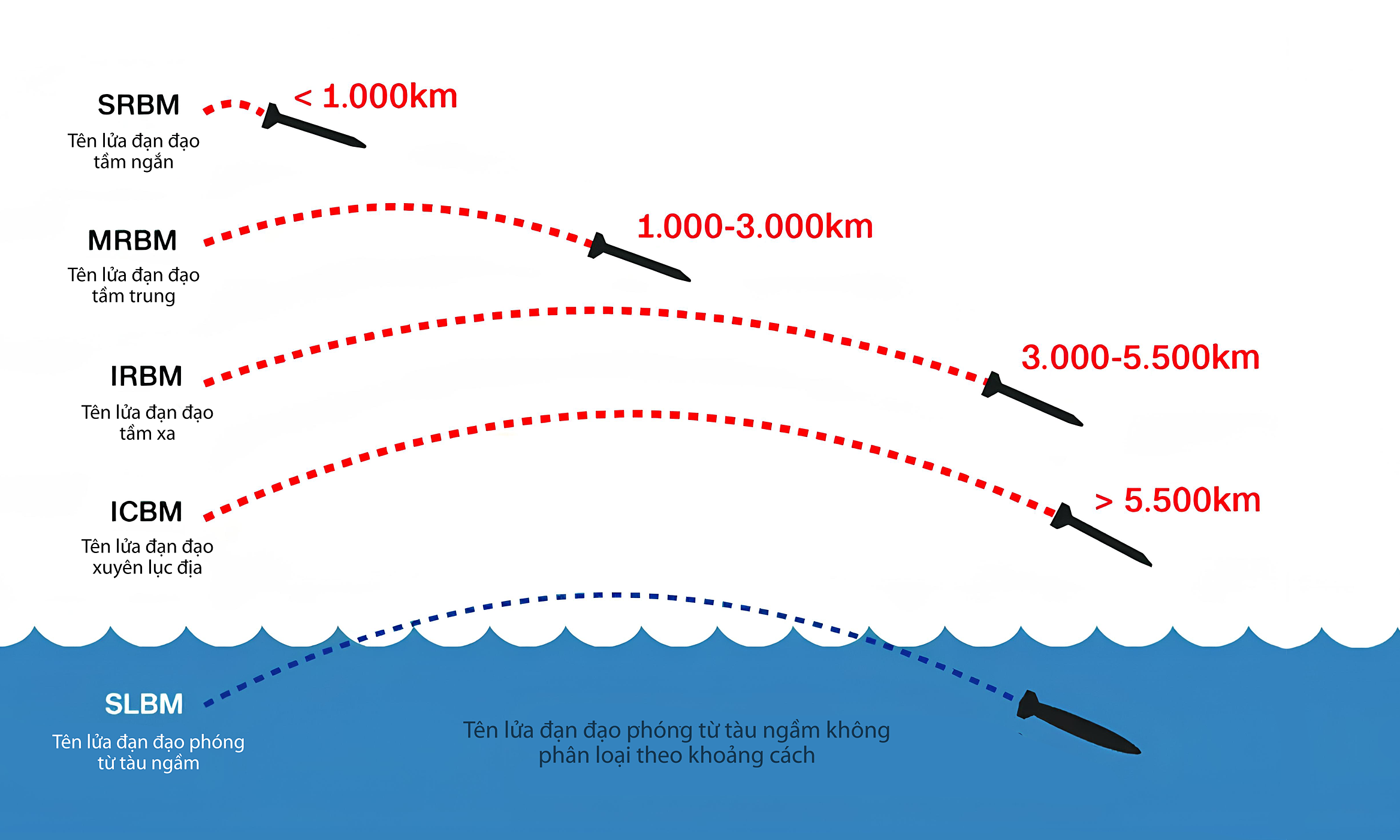 |
Ranges of various ballistic missiles. Click on the image to view full details. |
According to the U.S.-based Center for Arms Control and Non-Proliferation, ballistic missiles are categorized into four main types: short-range, with a flight capability under 1,000 km; medium-range, with a range of 1,000-3,000 km; long-range, reaching 3,000-5,500 km; and ICBMs, capable of striking targets over 5,500 km away.
In his State of the Union address on 24/2, U.S. President Donald Trump also affirmed that Iran has developed missiles capable of threatening Europe and U.S. bases, as well as weapons "soon capable of reaching the U.S. mainland."
Iranian Foreign Ministry spokesperson Esmaeil Baqaei later stated that the accusations made by the U.S. President were "repeated lies," but did not specifically address the remarks.
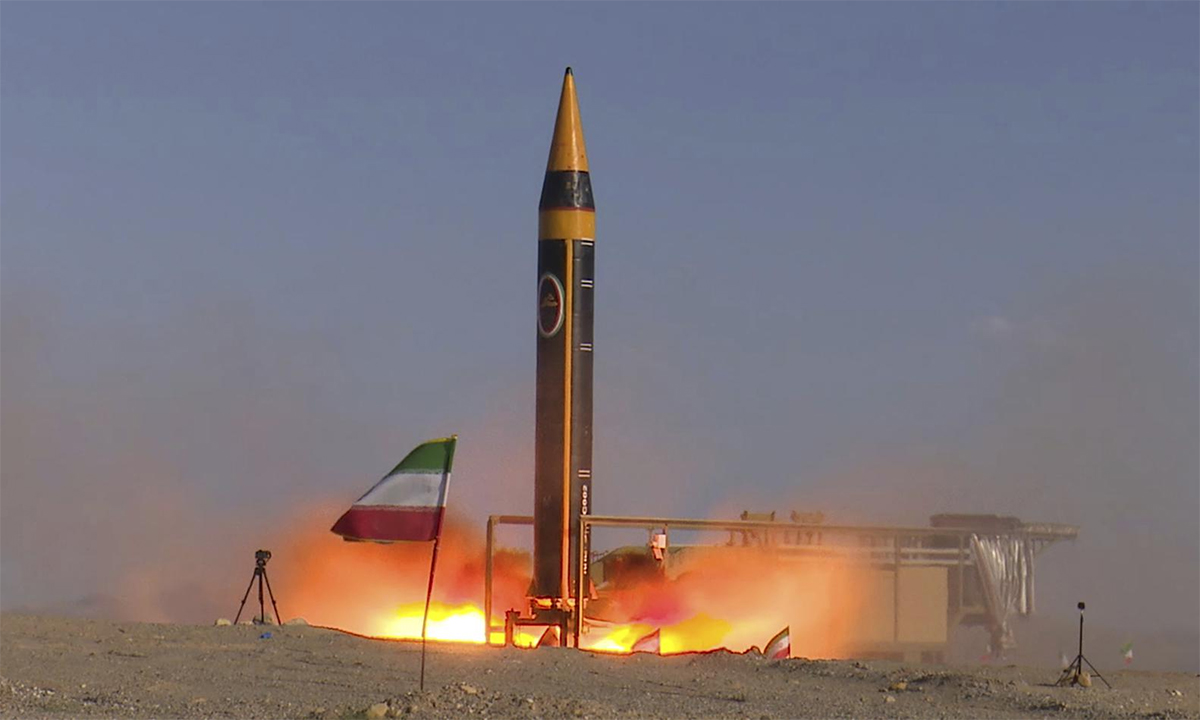 |
Iran's Khorramshahr missile launches during a test in 5/2023. Photo: AP |
Iranian officials have self-imposed a 2,000 km range limit on their missiles, reasoning that this is sufficient to reach Israel and ensure national defense. However, General Mohammad Jafar Asadi, deputy commander of Iran's Khatam al-Anbiya Central Headquarters, mentioned in 10/2025 the possibility of the country increasing its missile range.
The U.S. Office of the Director of National Intelligence believes Iran possesses the largest ballistic missile arsenal in the Middle East. The U.S. Defense Intelligence Agency (DIA) assessed last year that Iran is capable of developing ICBMs and deploying them from 2035 if it chooses, but did not specify whether Tehran has made such a decision.
Nguyen Tien (According to AFP, AP, Reuters)