"U.S. and Israeli universities in West Asia are legitimate targets for Iranian military forces," the Islamic Revolutionary Guard Corps (IRGC) warned last week. It advised faculty, students, and nearby residents to avoid these universities for their safety.
This threat followed attacks on Isfahan University of Technology and Iran University of Science and Technology in Tehran. Iran's Ministry of Science reported late last week that over 30 of the country's universities had been bombed.
U.S. educational institutions in the Middle East shifted to online learning, or a hybrid model, after the U.S. and Israel launched attacks on Iran in late february. Following Iran's warning, these institutions are implementing stricter protection measures.
The American University of Beirut (AUB) in Lebanon now restricts access, allowing only essential personnel on campus. Education City in Doha, Qatar, home to universities like Georgetown, Cornell, and Northwestern, has closed until further notice. New York University (NYU)'s campus in Abu Dhabi, United Arab Emirates (UAE), has taken similar action.
"Of course, I feel more anxious than usual," said Joseph Yonkers, 24, from Connecticut, who is studying archaeology at AUB. "My sleep schedule is disrupted by the sound of bombs."
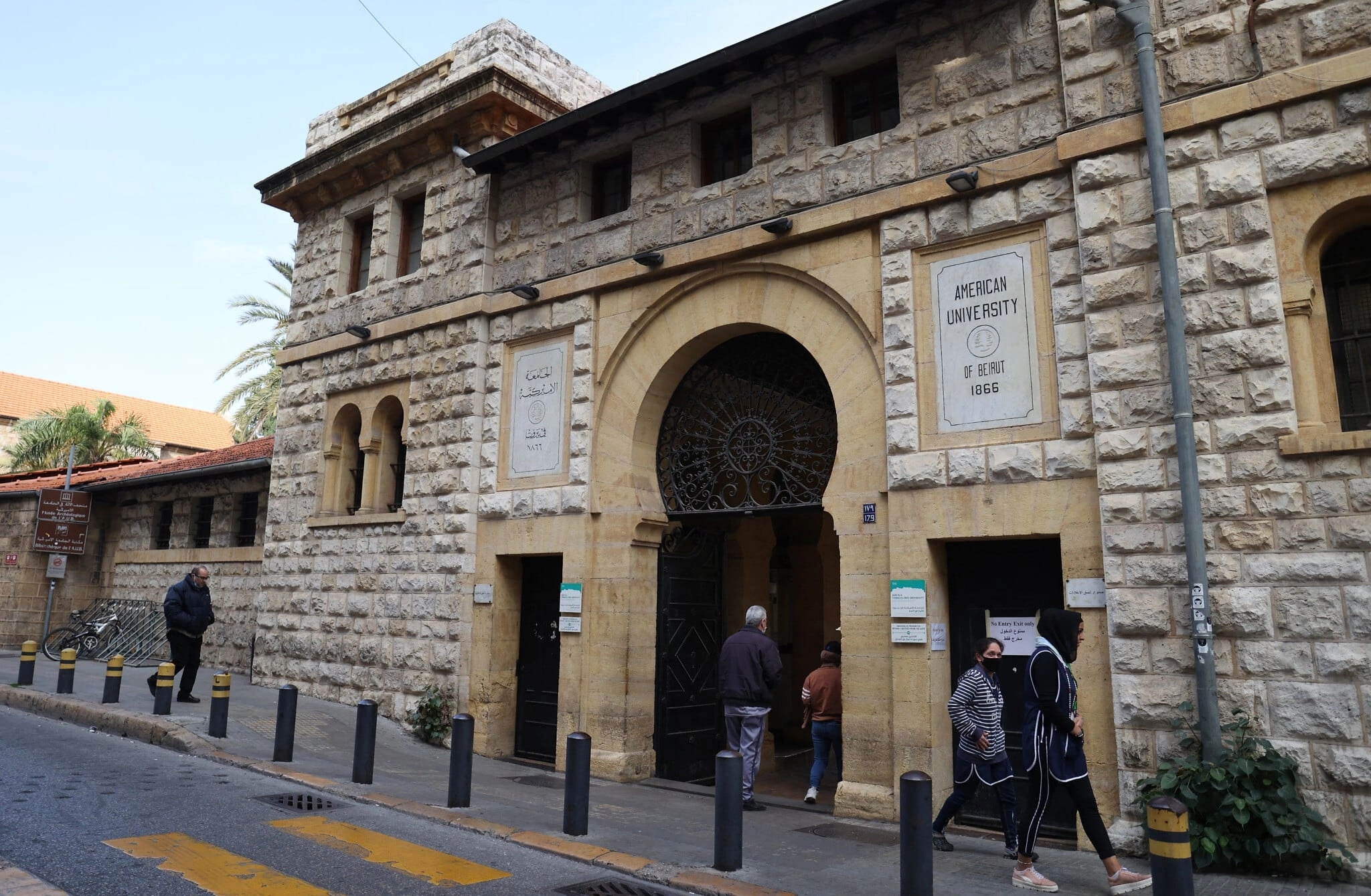 |
The main gate of the American University of Beirut in Lebanon's capital, 13/1/2022. Photo: AFP |
Lebanon faces renewed conflict between Israel and Hezbollah, an ally of Tehran in the country. The two sides reached a ceasefire in 2024, but after Israel killed Iran's Supreme Leader Ali Khamenei on 28/2, Hezbollah launched rockets toward Israel, and Israel responded by sending troops deeper into Lebanon, attacking Hezbollah members.
The conflict has displaced over one million people in Lebanon. Many are sheltering near the AUB campus. "We have quietly taken in several hundred people because they have nowhere else to go," said Fadlo R. Khuri, the university president. He added that AUB is providing meals for many in the surrounding neighborhood.
AUB has tightened security, allowing only key personnel access in recent days. They check bags at all campus gates and implement other precautions. The U.S. Embassy in Beirut on 3/4 continued to urge citizens to leave.
Meanwhile, Hezbollah supporters in Lebanon echo Iran's warnings. "Just as children are being killed by the U.S. and Israel," journalist Fadi Boudaya said on the LebanonON podcast, "there will be children at American institutions who are targeted."
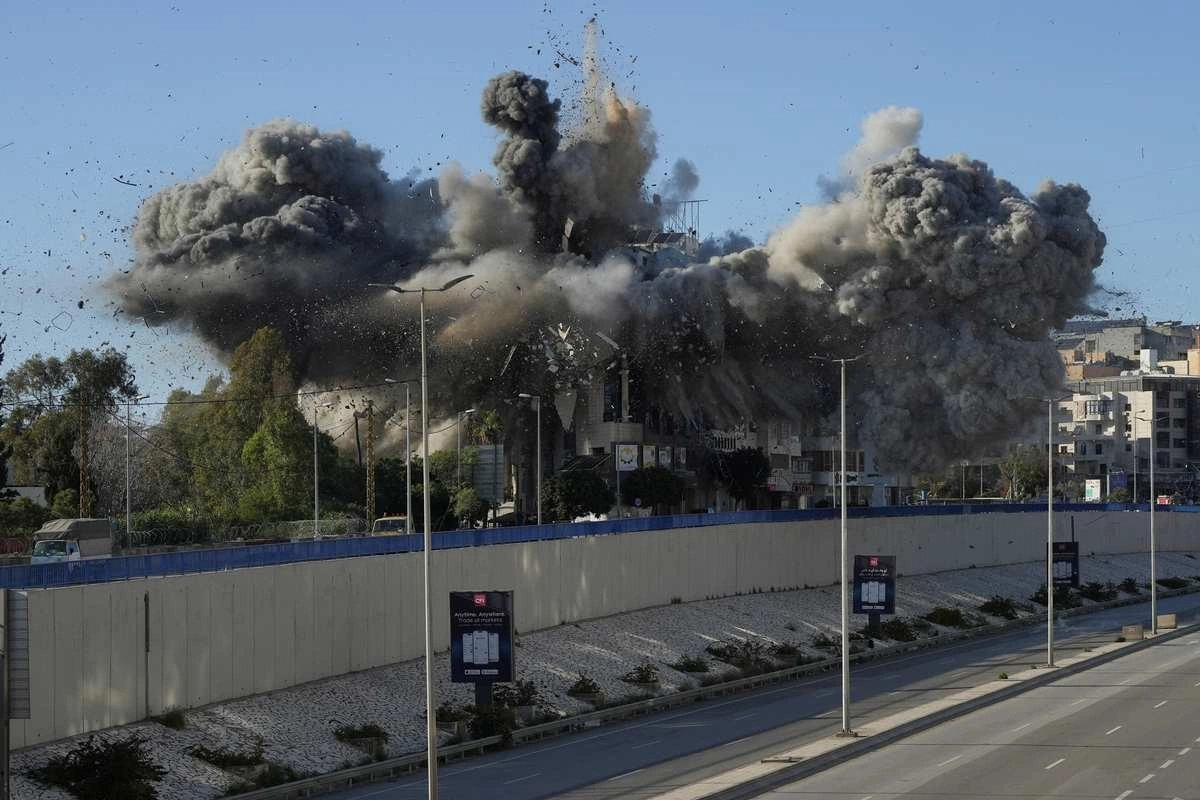 |
A building in Beirut hit by an Israeli missile on 31/3. Photo: Reuters |
U.S. universities have a long history in the Middle East, from schools in Beirut and Istanbul founded by New England missionaries in the 1860s, to recently opened satellite campuses of institutions like Virginia Commonwealth, Carnegie Mellon, and Texas A&M in the Gulf region.
American universities in Beirut and Cairo are among the most prestigious organizations in the region, attracting local and international students. They have educated presidents, prime ministers, experts, business leaders, and artists.
Georgetown closed its Qatar campus "until further notice" and stated that operational decisions would be based on the evolving situation. Wiley Norvell, an NYU spokesperson, said the Abu Dhabi campus closed as a precautionary measure.
"Our priority in every decision is the safety of our students, faculty, and staff," he said. Those living in dorms were relocated earlier. NYU also took similar steps at its Tel Aviv campus. Classes at both campuses continue online.
While the precautions taken by U.S. educational institutions are temporary, analysts warn of long-term consequences.
Filippo Dionigi, a professor of international relations at the University of Bristol, stated that Iran's threat reinforces the notion that Middle Eastern countries hosting U.S. educational facilities face security risks similar to military bases.
"These universities will find it difficult to attract foreign experts, which is key to their operations. This will also make international students hesitant and seek other options," he added.
Some U.S. schools in the region began scaling back operations even before the Israel-Hamas conflict ended. Texas A&M announced in 2024 that it would close its satellite campus in Qatar by 2028 due to concerns about "increasing regional instability." The Qatari government called this move a "mistake" and "influenced by a disinformation campaign."
During Lebanon's civil war, American faculty members of AUB were kidnapped. The university's president, Malcolm Kerr, an American scholar, was assassinated in 1984 by the Islamic Jihad Organization, a precursor to Hezbollah.
AUB President Khuri said the university's faculty and staff continue to do their utmost to protect the institution.
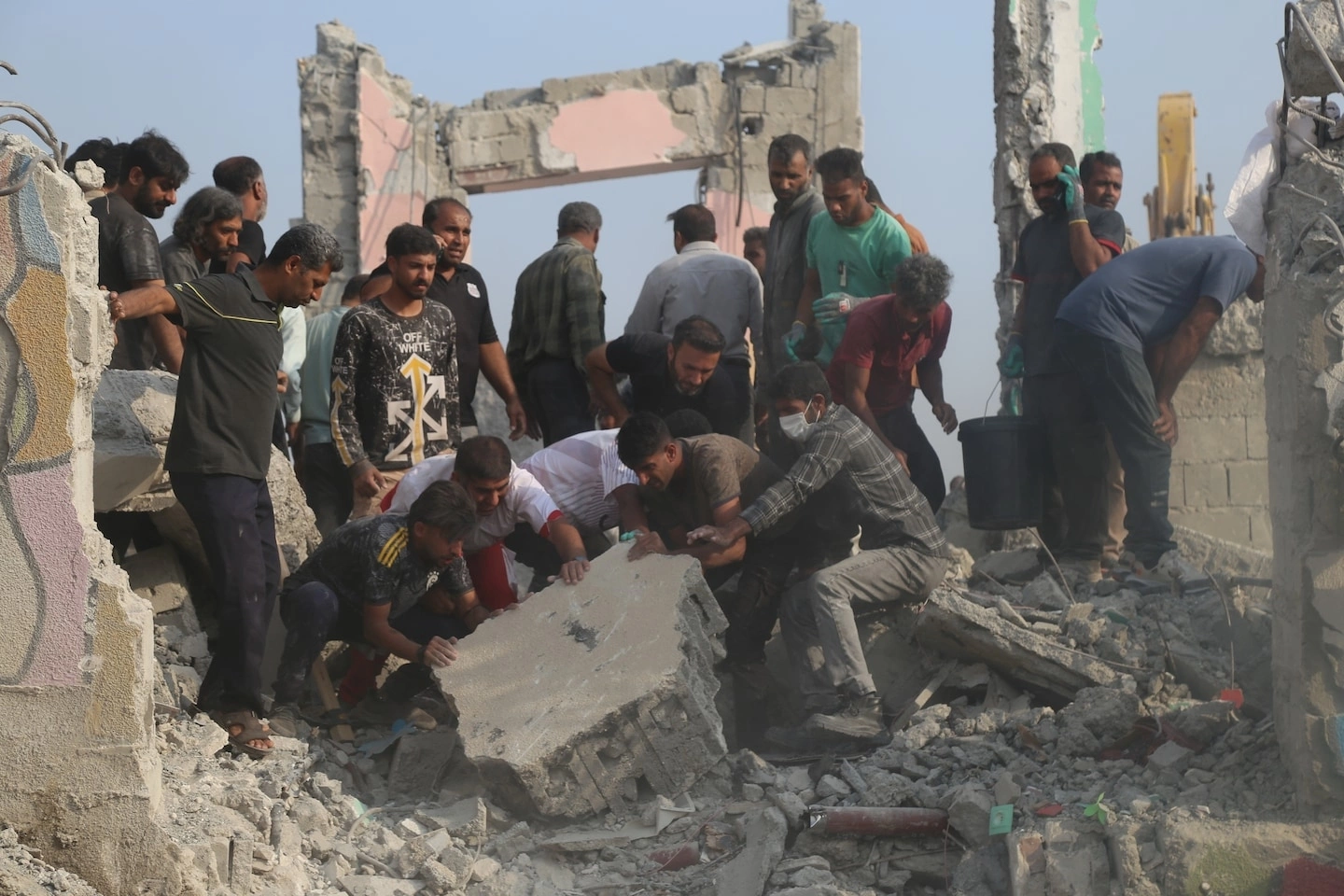 |
Residents and rescue workers in Iran at the scene of an attack on a school in Minab, Iran, 28/2. Photo: AP |
Dionigi believes that targeting universities could backfire on Iran. Many students at these universities already criticize U.S. foreign policy. One such student is Yonkers, who plans to remain in Beirut.
"My mother isn't really worried because this isn't the first time there's been conflict here," he said, referring to the 2024 war between Israel and Hezbollah. Campus life has become quiet. His classmates cannot attend classes in person.
"The professor is teaching online," Yonkers said, "and I'm the only one attending in person with him."
Hong Hanh (According to Washington Post)