The Security Service of Ukraine (SBU) reported on 18/12 that its Alpha special forces successfully conducted an overnight drone attack. This operation reportedly damaged a MiG-31 fighter, a Pantsir-S2 anti-aircraft missile system, a 92N6 radar (part of the S-400 air defense system), and two Nebo-SVU long-range radars at Belbek airbase in Crimea.
The SBU only released screenshots extracted from drone sensors, without accompanying video footage. Consequently, the extent of the damage and whether the targets were indeed hit remains unconfirmed.
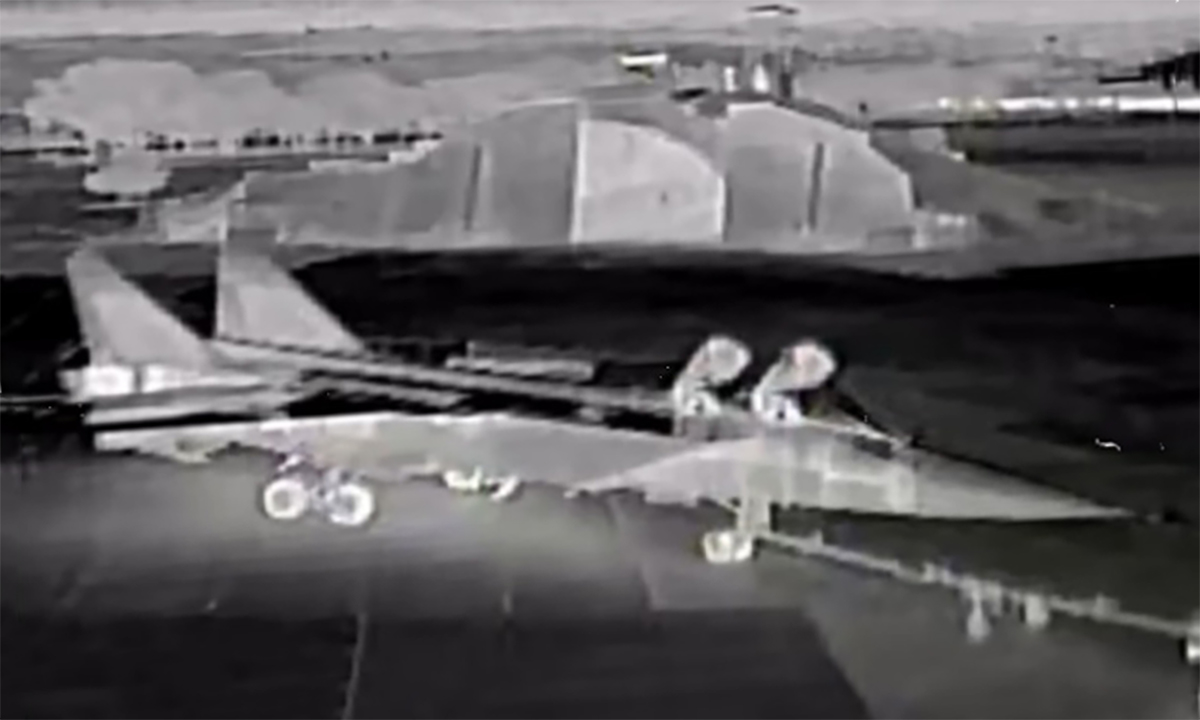 |
A MiG-31 fighter at Belbek in an image released by Ukraine on 18/12. Photo: SBU |
A MiG-31 fighter at Belbek in an image released by Ukraine on 18/12. Photo: SBU
Thomas Newdick, an editor at the US military news site War Zone, suggested that Ukrainian forces likely utilized drones launched from unmanned surface vessels for the attack.
While the SBU claimed the Russian fighter was fully armed during the attack, the released images do not support this assertion. The aircraft in the photo appears to lack any equipment on its underwing pylons, and no missile nose cones are visible under its belly.
"The MiG-31 looks more real than a custom-built model," Newdick commented, "but it's possible this was a decommissioned aircraft used as a drone decoy."
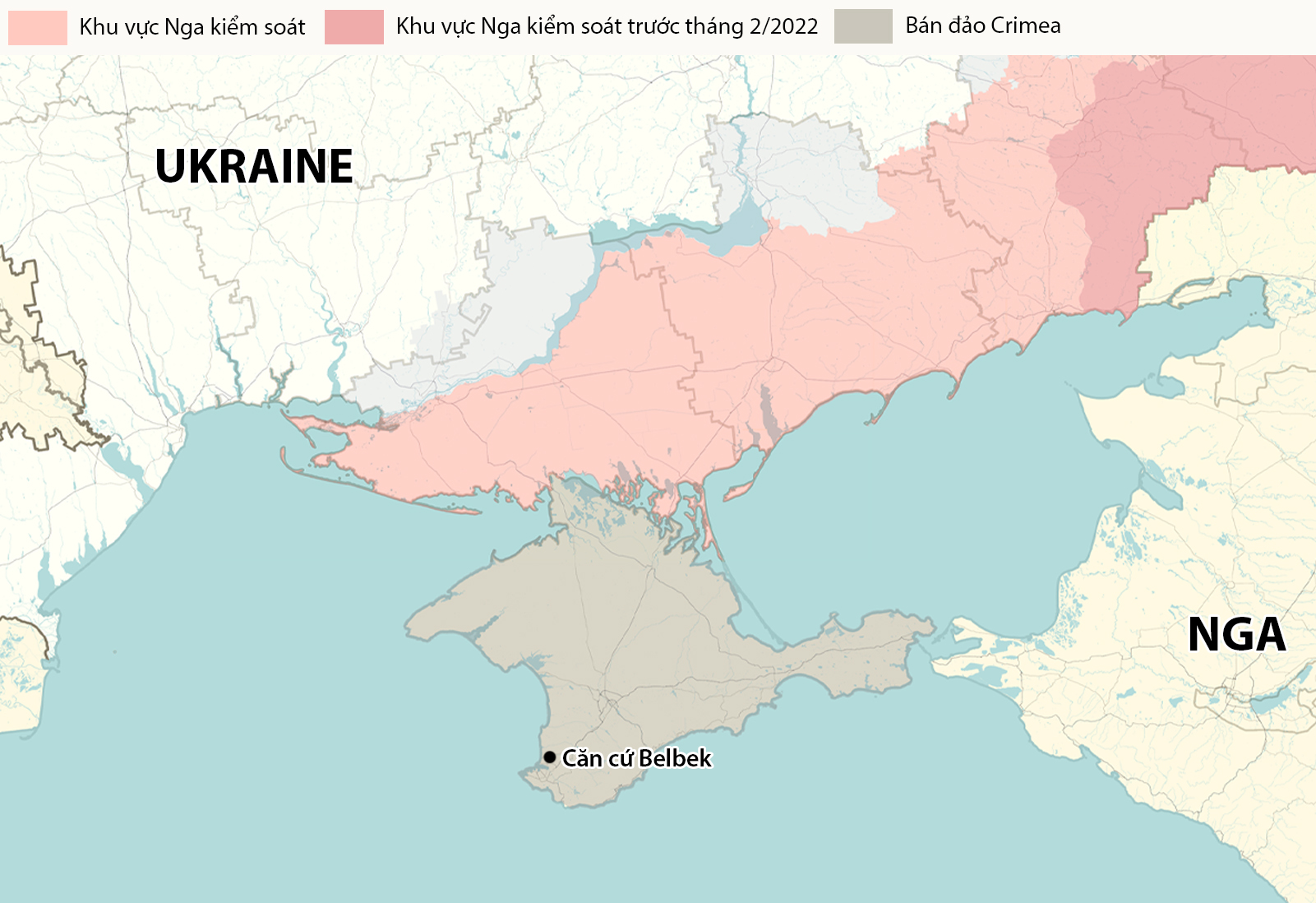
Belbek airbase, situated north of Sevastopol, is a key Russian military installation. Russian military aircraft and air defense systems are deployed there to protect the naval base in Sevastopol and cover a large area of the Black Sea and southern Ukraine.
This facility has been repeatedly targeted by Ukraine with drones and ATACMS tactical ballistic missiles carrying cluster munitions. Open-source intelligence indicates Russia recently constructed shelters and additional structures at Belbek to protect its equipment from Ukrainian attacks.
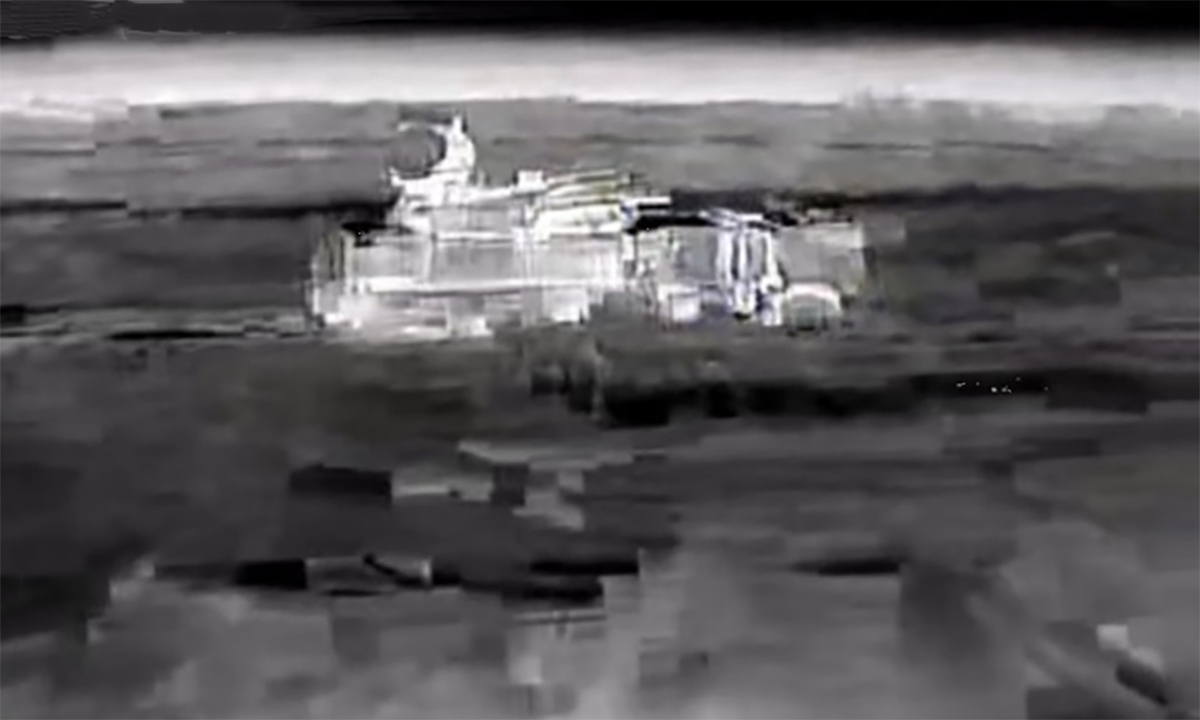 |
An alleged Pantsir-S2 system in an image released by Ukraine on 18/12. Photo: SBU |
An alleged Pantsir-S2 system in an image released by Ukraine on 18/12. Photo: SBU
The MiG-31 fighter, developed by the Soviet Union in the 1970s based on the MiG-25 fighter jet, entered service in 1981. Its primary mission is to intercept and destroy multiple aerial targets from long distances.
The MiG-31 was the world's first fighter equipped with a passive electronically scanned array (PESA) radar, capable of simultaneously tracking 24 targets and engaging 6 targets. The aircraft can reach speeds of 3,000 km/h and has a range of up to 5,400 km.
Over 500 units were produced and deployed with the Russian and Kazakhstan air forces after the dissolution of the Soviet Union. As of early 2024, the Russian military maintains an active fleet of approximately 120-150 MiG-31s, with up to 150 additional units in storage.
The MiG-31K variant is modified by Russia to carry the Kinzhal hypersonic missile, boasting a range of 2,000 km and a top speed exceeding 12,000 km/h.
 |
Location of Belbek airbase in the Crimean peninsula. Graphic: RYV |
Location of Belbek airbase in the Crimean peninsula. Graphic: RYV
By Nguyen Tien (War Zone, AFP, AP)