Reuters and AP reported on 13/4, citing US officials and diplomats, that delegations from the United States and Iran could "move towards a second round of negotiations" on 16/4. Despite the first talks in Islamabad, Pakistan, ending without an agreement, sources indicate that the US and Iran are continuing to work together.
Two Pakistani officials also stated on the same day that Pakistan had proposed hosting a second round of talks between the US and Iran in the coming days, before the two-week ceasefire agreement concludes. The current ceasefire has been in effect since 8/4.
A US official suggested that Geneva could also serve as a potential venue for the next round of discussions.
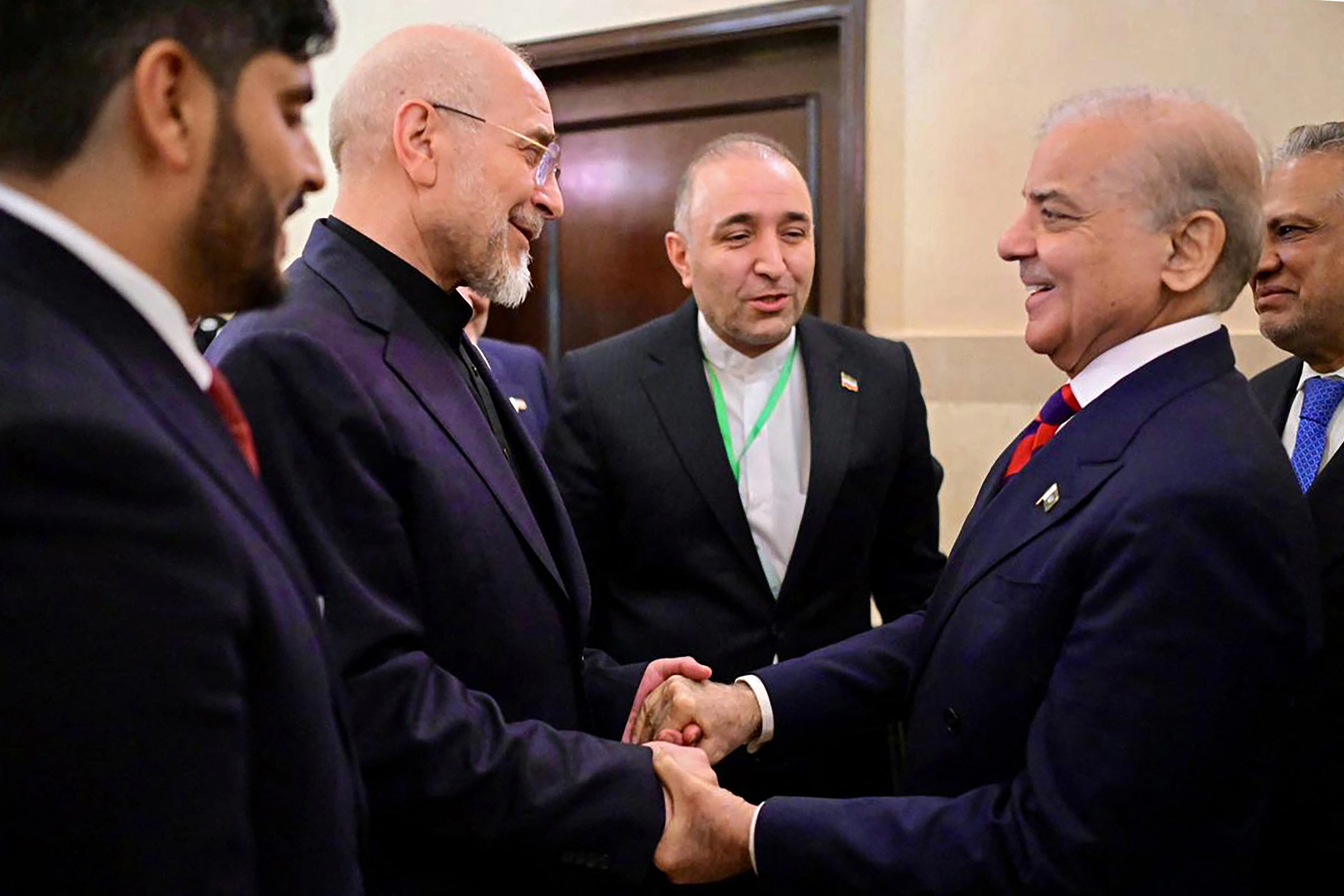 |
Pakistan Prime Minister Shehbaz Sharif (right) shakes hands with Iranian Parliament Speaker Mohammad Bagher Ghalibaf (left) ahead of talks on 11/4. Photo: AFP
On 12/4, Iranian President Masoud Pezeshkian expressed his readiness to accept "a balanced and fair agreement" aimed at ensuring long-term peace and security across the entire region. He identified "double standards" from the US as the primary obstacle in current negotiation efforts, emphasizing that any deal could only be achieved if Washington "adheres to international legal frameworks."
Conversely, US Vice President JD Vance stated that the continuation of direct negotiations rests with Iran. Vance articulated the US position: "We need them to make a definitive commitment not to develop nuclear weapons. If Iran is ready to meet that demand, this could be a very good deal for both countries. If they are not ready, it's up to them."
The US Vice President noted that during discussions held last weekend in Pakistan, Washington and Tehran engaged in a positive exchange. He clarified that the US outlined its mandatory terms, alongside areas where it could offer concessions or flexibility. Vance added that the US delegation departed the negotiating table after concluding that the Iranian representatives lacked sufficient authority to finalize an agreement and required further consultation with higher authorities in Tehran.
The US and Iran engaged in approximately 21 hours of negotiations in Islamabad, Pakistan, with the host country's participation. The US delegation was led by Vice President Vance, while Iranian Parliament Speaker Mohammad Bagher Ghalibaf headed the Iranian team. Ultimately, the two sides did not reach a consensus on key issues, including control of the Strait of Hormuz and the continuation of Iran's uranium enrichment program.
By Ngoc Anh (Sources: Times of Israel, CNN, Al Jazeera)