Egyosint, an X account monitoring Middle East conflicts, today released commercial satellite images of Prince Hassan base in Jordan. The images show two black marks, suspected to be scorch marks from an Iranian attack a day earlier. One mark is on the runway, while the other appears at a hardened aircraft shelter.
"This base houses US MQ-4C unmanned aerial vehicles (UAVs), which daily conduct reconnaissance and surveillance missions off the coast of Iran. If the scorch marks are confirmed to be from a direct ballistic missile strike, the runway could be out of operation for a period," the account stated.
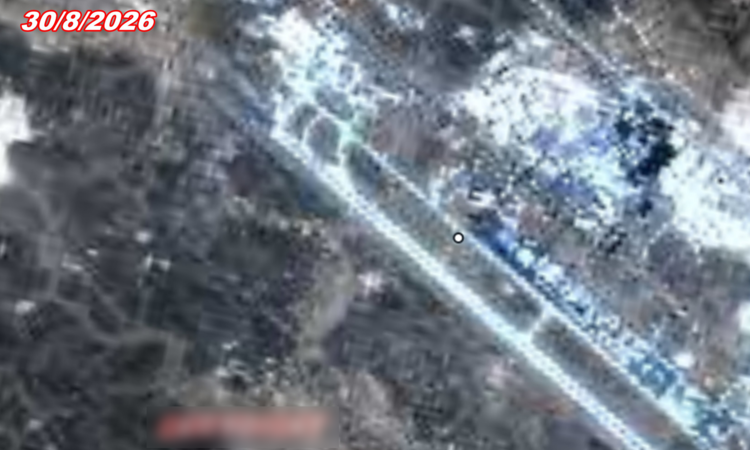 |
The black marks (circled in red) in satellite images of Prince Hassan base on 30/8 and 2/9. *Photo: X/EGYOSINT*
OSINT Technical, an X social media account specializing in open-source intelligence data analysis, also posted a video today showing an Iranian ballistic missile impacting near Aqaba city in Jordan, creating an explosion. The US Marine Corps' Titin base is also located near Aqaba.
The US Central Command (CENTCOM), responsible for US military operations in the Middle East, has not commented on this information.
Iran's Islamic Revolutionary Guard Corps (IRGC) previously announced a large-scale ballistic missile attack targeting US RQ-4 and MQ-9 Reaper long-range UAV hangars at Prince Hassan air base in Jordan. This attack was in retaliation for a previous enemy strike.
The IRGC claimed the strike on Prince Hassan base destroyed several UAVs and killed US pilots and technicians. They also stated that the attack on Titin base "killed many soldiers, wiped out infrastructure, and destroyed several helicopters."
The Jordanian army reported intercepting 10 of the 13 missiles launched by Iran into the country, with the three remaining missiles falling in uninhabited areas. A US official told Al Jazeera that there were no casualties or significant damage at Titin base, but did not mention Prince Hassan base.
A moment believed to be an Iranian ballistic missile striking a location near Aqaba, Jordan, in a video posted on 2/9. *Video: X/Osinttechnical*
The RQ-4 Global Hawk long-range UAV, manufactured by US corporation Northrop Grumman, has a maximum speed of 630 km/h and a ceiling of 18,000 m. It can operate continuously for over 34 h and is equipped with modern synthetic aperture radar and electro-optical/infrared reconnaissance systems. Each unit costs approximately 130 million USD, excluding development costs and advanced reconnaissance equipment.
The MQ-4C Triton is a UAV designed for the US Navy, developed from the RQ-4 Global Hawk model. The Triton system provides real-time intelligence, surveillance, and reconnaissance data over vast ocean areas and near-shore coastlines. It also participates in maritime patrol, search and rescue operations, and supports P-8A Poseidon reconnaissance aircraft.
Each MQ-4C aircraft costs 180-230 million USD, depending on the production batch. The US Navy initially planned to order 70 units but later reduced the order to 27 aircraft. According to the specialized news site Inside Defense, the entire Triton project has cost about 13 billion USD, potentially raising the price of each MQ-4C aircraft to over 600 million USD when including research and development costs.
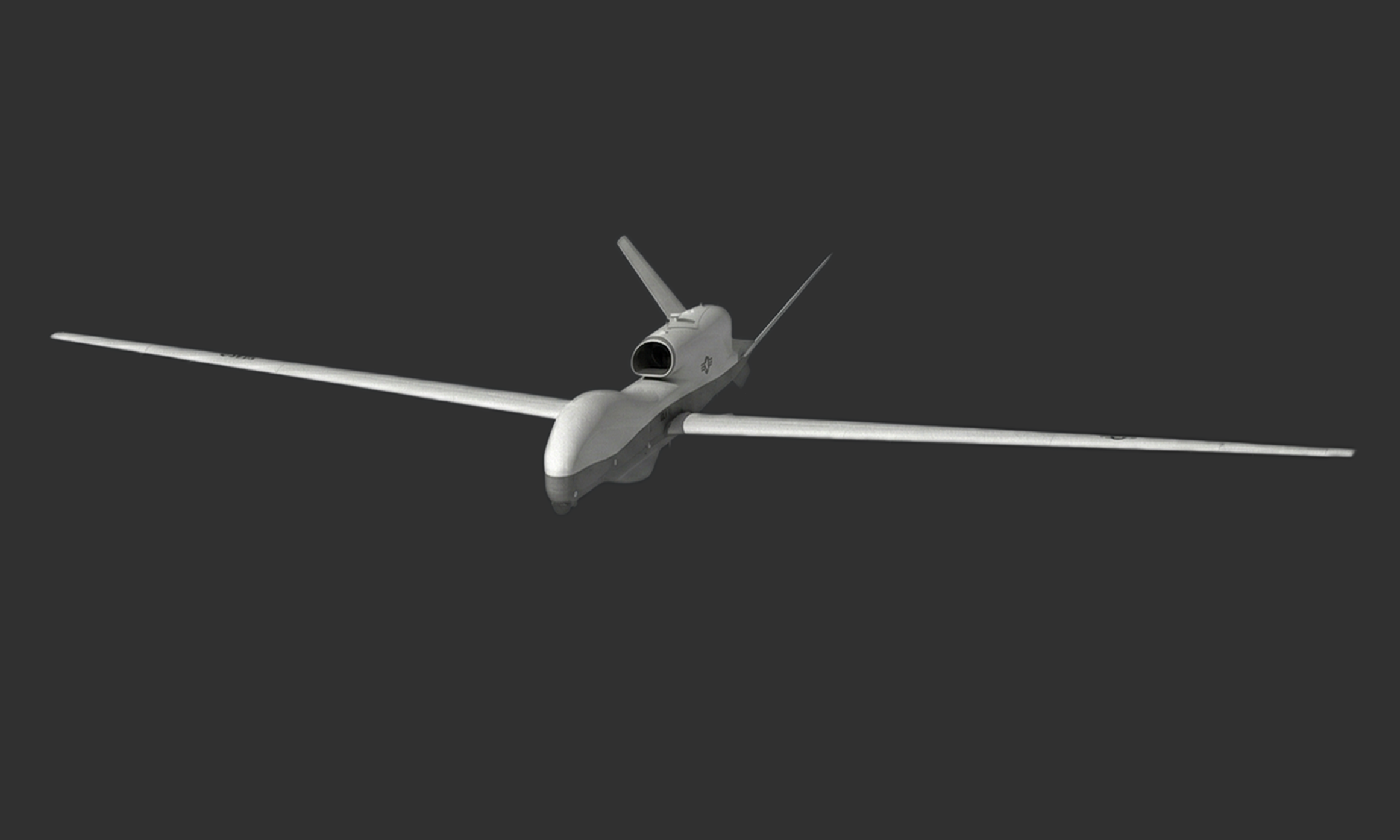 |
Features of the US Navy's MQ-4C UAV. Click image for full details.
Fighting resumed between the US and Iran after Washington attacked two Iranian rocket launchers on Larak island late last month. The US then claimed it detected Iranian military personnel preparing to launch rocket-propelled mines into the Hormuz strait. Iran subsequently attacked US bases in the region in retaliation.
The renewed conflict occurs as President Donald Trump's administration is intensifying efforts to pressure Iran through economic measures rather than military operations. However, the US leader warned on 25/8 that any vessel attempting to deploy more mines "will be destroyed immediately."
Pham Giang (According to Tasnim, Al Jazeera, AFP)